
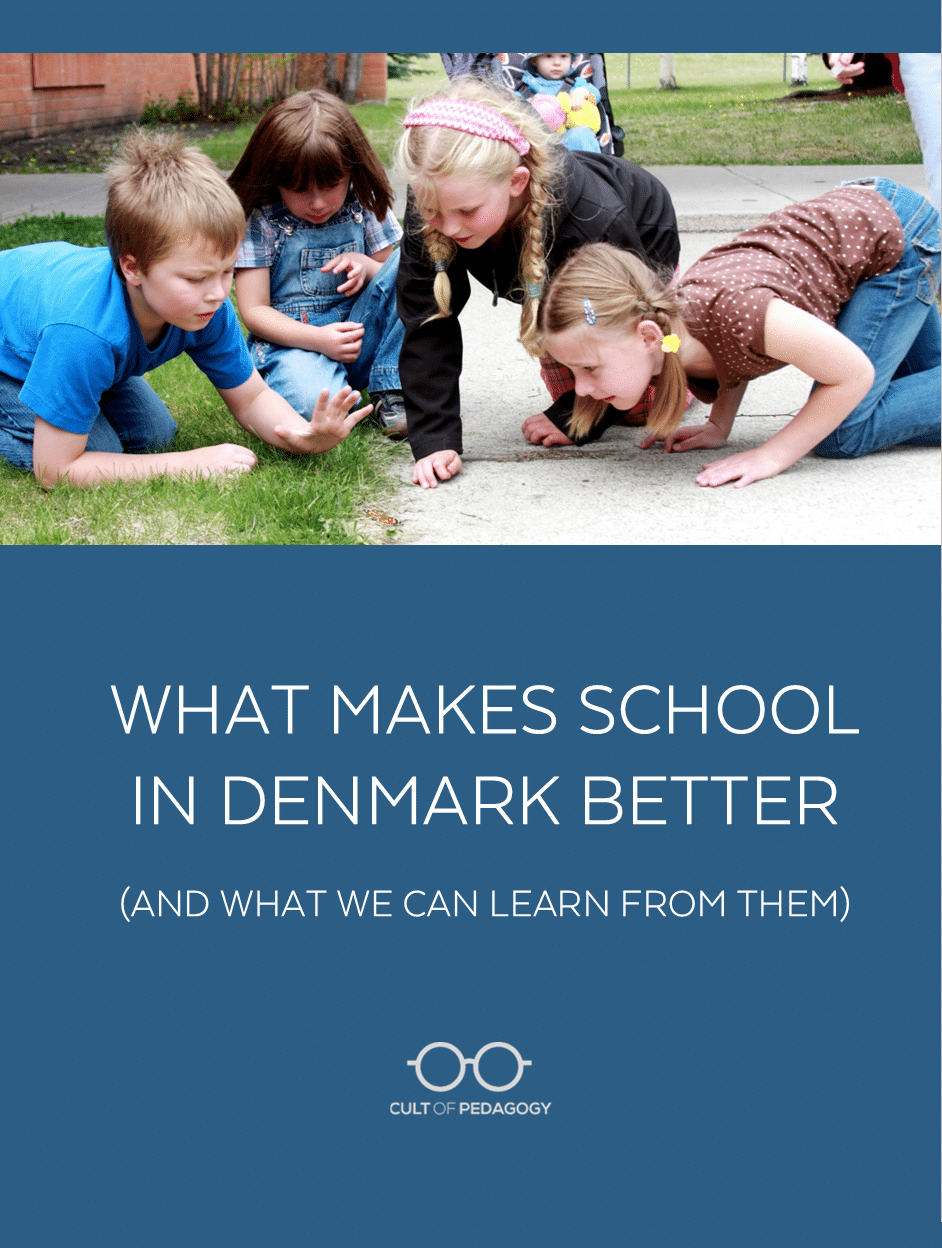
Danish Schools: A Blueprint for Less Stress, More Learning?
Imagine a school system where teachers are trusted implicitly, students are given ample time for play, and the relentless pressure of constant assessment is replaced by a focus on deeper understanding. This isn't a utopian fantasy; it's the reality in Denmark, and educators in the United States are beginning to look across the ocean with a mix of envy and inspiration. Pernille Ripp, an American educator who has lived and taught in Denmark for several years, offers a compelling insider's perspective on what makes Danish schools tick—and what lessons can be drawn for classrooms back home.
Trusting the Professionals: A Foundation of Competence
One of the most profound differences, according to Ripp, is the fundamental assumption of teacher competence. In Denmark, the educational landscape is characterized by broad, age-based learning goals rather than rigid pacing guides or endless checklists. Teachers are empowered to determine the most effective pathways to achieve these objectives, fostering a sense of professional autonomy that is often missing in other systems.
The Danish government has significantly streamlined its educational goals, reducing them from hundreds to a mere ten. This shift allows for more agile decision-making at the school level, enabling educators to collaborate and implement innovative ideas without bureaucratic hurdles. Different schools can tailor their curricula to the unique needs of their students, a flexibility that fosters a more responsive and effective learning environment.
"The system assumes that I know what I'm talking about and that the experience that I have with my students is one that is valid and also valuable," Ripp explains. This inherent trust empowers teachers to be true professionals, rather than simply implementers of prescribed directives.
Translating Trust to U.S. Classrooms
For educators in the U.S., the challenge lies in shifting the paradigm from control to collaboration. Ripp suggests starting by viewing mandated curricula not as rigid scripts, but as starting points for professional adaptation. Asking teachers how they would modify existing programs, and then providing the space and time to implement and reflect on those changes, can be a powerful first step.
This process doesn't require significant financial investment. It's about fostering a culture where teacher expertise is valued and their insights are actively sought. By questioning the necessity of every existing policy and procedure, schools can begin to loosen the reins and empower their teachers.
Beyond Control: Embracing Autonomy and Flexibility
The contrast in how teachers are treated is stark. In the U.S., Ripp observes, a multitude of restrictions—scripted curricula, mandatory pacing, and policies that limit teacher movement—often communicate a lack of trust. In Denmark, trust is the default setting, manifesting in seemingly small but significant ways.
The freedom to take students outside without extensive paperwork or to embark on spontaneous learning excursions, like a train ride to a teacher's home for an afternoon of cake and trampoline time, exemplifies this trust. "There is a huge professional trust in me and it's given to me until I lose it," Ripp states. "It's mine to lose rather than mine to gain."
Reclaiming Teacher Energy
Administrators can begin to cultivate this trust by explicitly and consistently communicating their belief in their teachers. While many administrators do trust their staff, this sentiment often goes unspoken, and the constant influx of new mandates can send a contradictory message. Examining existing policies around field trips, sign-out procedures, and permission processes can reveal opportunities to reduce restrictions and free up valuable teacher energy.
Redefining Work Conditions: The Danish Model
Pernille Ripp's work week in Denmark is structured around a 40-hour commitment, with approximately half of that time dedicated to direct student instruction. This balance allows for essential planning and professional development. When faced with an overloaded schedule, her principal's immediate response was to identify what could be removed from her plate, rather than simply expecting her to manage more.
Her school provides a dedicated prep space, separate from student areas, where teachers can work without interruption. This physical separation, coupled with clear norms around respecting focused work time, creates an environment conducive to deep preparation. The elimination of the pressure to personally decorate and maintain individual classrooms also contributes to a more sustainable workload.
A Humane Approach to Absence
The system's approach to teacher illness is also remarkably humane. A simple phone call before 7 a.m. is sufficient when a teacher is unwell; there are no expectations for sub plans. Denmark employs permanent substitute teachers attached to each school, individuals who are familiar with the students and come prepared with their own engaging activities.
"It allows me to be sick. And it allows me to actually stay in bed," Ripp notes. This system not only supports teacher well-being but also ensures continuity of learning for students, preventing curriculum disruption when a teacher is absent.
Making Prep Time Sacred in the U.S.
For U.S. schools, protecting dedicated prep time is paramount. This means establishing clear boundaries against coverage requests, announcements, or unscheduled interruptions during these crucial periods. If shortening the school day isn't feasible, restructuring the schedule to allow for longer, more concentrated blocks of prep time can be a viable alternative.
Rethinking the substitute teacher system is also essential. Setting an expectation that sick teachers do not need to create sub plans, cultivating a pool of consistent substitute educators who understand the school community, and developing school-wide activity banks can ensure that learning continues seamlessly, even in a teacher's absence.
Empowering Students: Autonomy as a Developmental Right
Danish schools foster a culture of autonomy from an early age. Students are entrusted with responsibilities such as packing their own backpacks and managing their learning materials, and they are given the freedom to make choices about their learning environment. Ripp recalls her daughter, upon moving to Denmark in third grade, being surprised that she wasn't expected to pack her own lunch, a task that had been largely unnecessary in her previous U.S. school where everything was provided.
Rather than meticulously scripting every aspect of the school day, Danish schools provide clear expectations and then trust students to navigate them. When mistakes occur, they are viewed as valuable learning opportunities, not as systemic failures. "We are constantly asking children in Denmark to take responsibility in ways that we don't do in America," Ripp observes.
Cultivating Self-Direction
U.S. educators can begin to foster greater student autonomy by gradually increasing opportunities for decision-making, even in small ways, and by resisting the urge to micromanage every student action. When students make poor choices, framing these instances as teachable moments rather than disciplinary infractions can be transformative. Schools can also review their existing rules and identify which ones could be relaxed to allow for more student independence.
Design for Life: Movement, Play, and Outdoor Learning
The Danish school day is intentionally designed to incorporate movement, outdoor time, and unstructured play as integral components of student development. Students engage in outdoor activities daily, regardless of the weather, and are encouraged to participate in "risky play." Ripp notes her shift in instinct from intervening in rough play to asking if the students are having fun.
Her school even designates specific areas for activities like snowball fights, where students can engage in more boisterous play with an understanding of potential consequences. "I'm not out at recess yelling at children going, put the snow down. Here instead it's like, OK, let's make this as safe as we can," she says.
Play Without an Agenda
Crucially, play in Danish schools does not require an educational justification. Ripp's principal's reaction to a class outing for cake and trampoline time was one of simple delight ("Oh, that's so fun!") rather than an inquiry into learning objectives. This highlights a fundamental difference in how the purpose of school time is viewed.
Integrating Movement and Unstructured Time
U.S. schools can begin to integrate more authentic outdoor experiences by prioritizing longer recess periods and incorporating movement that isn't tied to digital platforms. Allowing for a degree of physical roughness in play, within safe parameters, is something individual schools can pilot without requiring district-wide mandates. The emphasis is on providing genuine opportunities for children to be active and explore.
The Case for Less Homework: Prioritizing Childhood
Homework is intentionally minimal in Denmark, and when assigned, it is always purposeful. Ripp recounts a parent's polite but firm response when she sent books home for a research project: "I would like you to focus on what you're doing in school — we've got the evenings covered." This feedback prompted Ripp to re-evaluate her approach, recognizing the importance of allowing children time for unstructured activities and family life.
"Kids are expected to be kids," she emphasizes. "If there is homework, it should be very specific and manageable. And if not, there will be pushback." This sentiment underscores a societal value placed on allowing children to experience their childhoods without the constant pressure of academic tasks outside of school hours.
Intentionality Over Volume
For U.S. educators, the question to ask is: Why does this homework exist, and what would truly be lost if it were not assigned? Prioritizing evenings as family time and trusting that the learning and development occurring at home are equally valuable is a crucial shift. School does not need to be responsible for every aspect of a child's growth.
Student Voice: A Cornerstone of Community
Instead of adding separate social-emotional learning lessons, Danish schools embed student voice into the fabric of the school day. A dedicated class meeting time is allocated for community building, self-regulation, and understanding the impact of individual choices on the collective. This time is used to navigate real-life conflicts, discuss authentic situations, and learn how to function effectively in shared spaces.
"Schools are for community and not for individualism in Denmark. You're expected to be able to function within a community," Ripp explains. This focus on collective well-being and responsibility is a fundamental aspect of Danish education.
Creating Space for Dialogue
U.S. schools can carve out regular time for community meetings or class discussions that are not tied to specific curriculum objectives. This dedicated space allows students to share their experiences, discuss challenges, and collaboratively problem-solve how to improve their school environment. Viewing this time as an integral part of the curriculum, rather than time taken away from academics, is key.
Furthermore, actively soliciting student input on how to improve the school day and genuinely considering and implementing their suggestions can foster a sense of ownership and engagement.
Academic Rigor, Minus the Pressure Cooker
High expectations are a hallmark of Danish education, but they are delivered without the pervasive sense of urgency that can characterize U.S. classrooms. Formal grading does not begin until seventh grade, and the formal introduction to reading development occurs in first grade (equivalent to second grade in the U.S.). Entering kindergarten without knowing all the letters is considered entirely normal.
The underlying philosophy is one of doing fewer things better. Ripp describes a situation where a unit on purpose was two weeks behind schedule due to student engagement, yet there was no panic. The focus remained on the depth of understanding rather than the pace of coverage.
The Power of Slowing Down
For U.S. educators, the invitation is to intentionally slow down. Even without explicit permission, choosing to delve deeper into fewer topics can be a powerful pedagogical choice. Ripp suggests approaching the school year as if operating on "80 percent time."
"What would you have to cut from your schedule in order to only teach 80 percent? And then go back and do that. Cut that out," she advises. This exercise encourages a critical evaluation of time and priorities, allowing for the recovery of energy that can be redirected outside of the school day.
A Message for U.S. Educators: Embrace "Good Enough"
When asked for advice for teachers in the U.S. who may not have the authority to enact sweeping systemic changes, Pernille Ripp's primary message is one of self-compassion. "I think my biggest thing is that I would give myself grace in good enough," she shares.
Even without external validation to slow down, teachers can begin to do so purposefully. This involves a critical examination of the curriculum, a willingness to cut beloved but non-essential elements, and a commitment to involving students in the learning process. Ripp encourages educators to view planned activities as opportunities for differentiation, offering students various pathways to engage with the material.
"And again, bring students in. Like, where do you find most meaning and maybe use some of the things that you have planned or that you’re coached to do as differentiation opportunities," she suggests. Ultimately, the key is to forgive oneself for doing less, to embrace the idea that "good enough" is often more than sufficient, and to find a more sustainable and humane approach to teaching.




 Explore AI Teaching Tools
Comments (0)
Please login to comment
No comments yet
Be the first to comment on this article