
Navigating Financial Aid: California Students' Resilience in Pursuing Higher Education
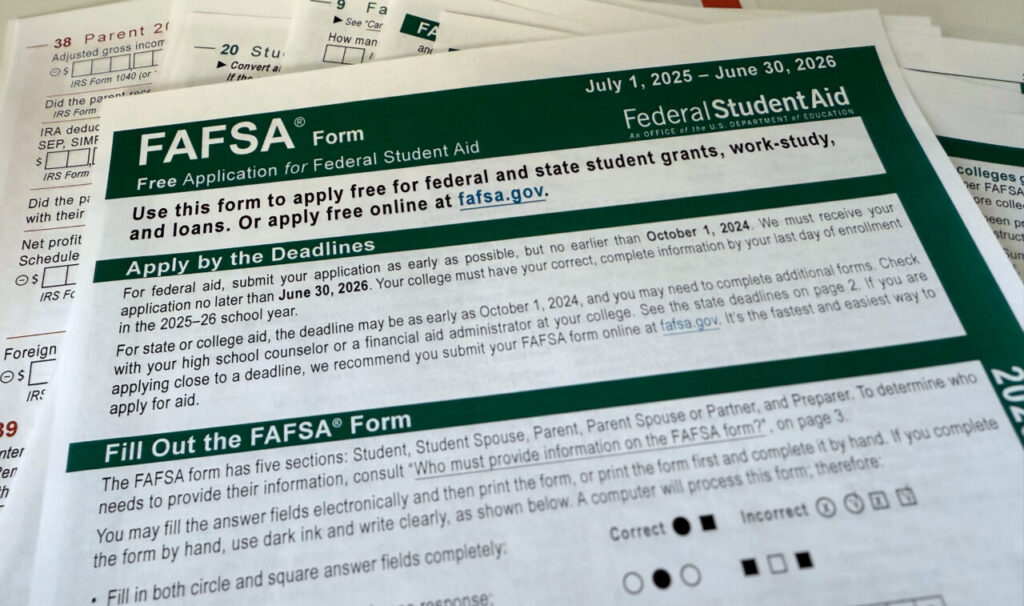
The journey to higher education is often paved with complex applications and financial planning.For many students, particularly in California, the Free Application for Federal Student Aid (FAFSA) serves as a critical gateway to essential financial resources.
Despite facing a landscape fraught with unexpected challenges, including application delays, natural disasters, and anxieties surrounding immigration policies, California's high school seniors have demonstrated remarkable determination by increasing their applications for financial aid.
This surge in engagement highlights a profound need for financial assistance and a resilient spirit among students striving for college access.
The Evolving Landscape of FAFSA Applications in California
The process of securing financial aid for college can be daunting, and for the graduating class of 2025 in California, this year presented a unique set of obstacles.The traditional timeline for accessing the FAFSA form was significantly disrupted, leading to a delayed availability that added an extra layer of pressure to an already stressful period for students and their families.
This delay, coupled with the impact of devastating wildfires that affected communities, particularly in the Los Angeles area, created an environment of uncertainty.
Furthermore, concerns regarding student data privacy and the potential implications of immigration enforcement policies cast a shadow over many families, raising questions about the safety and accessibility of applying for aid.
Despite these considerable hurdles, emerging data from the California Student Aid Commission (CSAC) paints a picture of unexpected resilience.
The commission reported an 11% year-over-year increase in applications for state and federal financial aid submitted by public high school students.
This represents a significant uptick, with an additional 33,300 applications, bringing the statewide total to nearly 340,000.
This recovery is seen as a partial rebound following the turbulent and delayed rollout of the previous year's FAFSA form.
School-Level Success Stories
The positive trend is reflected at the school level.Camino Nuevo Charter Academy in Los Angeles, for instance, has reported its highest rate of FAFSA completion in at least five to six years.
Elizabeth Nicho, the academy's director of college and career success, stated that an impressive 99% of their students successfully completed either a FAFSA or a California Dream Act Application.
This achievement underscores the effectiveness of targeted support and proactive engagement within educational institutions.
Factors Driving Increased FAFSA Engagement
Several key factors appear to be contributing to this encouraging rise in financial aid applications among California students.College access advocates point to a 2021 state law that mandates schools and districts to actively encourage high school seniors to apply for state or federal financial aid.
While students retain the option to opt out, this legislation has clearly fostered a culture of application and awareness.
Beyond legislative mandates, strategic outreach efforts have played a crucial role.
Targeted regional initiatives aimed at counties with historically lower application rates have helped to bridge information gaps and provide tailored support.
Moreover, consistent and clear messaging on sensitive topics, particularly those related to immigration status, has been instrumental in building trust and encouraging participation from vulnerable student populations.
The Critical Need for Financial Aid
Daisy Gonzales, the executive director of the California Student Aid Commission, emphasized the fundamental importance of financial aid in making higher education accessible.She stated that the observed trends in financial aid applications clearly demonstrate that families rely on this assistance to afford college.
With more high school seniors actively seeking financial aid, it is anticipated that California's higher education institutions will be able to serve a greater number of students.
This sentiment highlights the direct correlation between financial aid accessibility and increased college enrollment.
Addressing Lingering Challenges and Future Outlook
While the recent increase in FAFSA applications is a cause for celebration, it is important to acknowledge that challenges persist.The commission's data does not yet detail the number of students who ultimately enrolled in college or the specific amounts of aid they received.
This indicates that the application is just one step in a longer process that includes enrollment and aid disbursement.
Looking at a broader timeframe, California still has room for improvement in its overall FAFSA application rates.
The FAFSA is the primary pathway for students to access vital state aid programs, such as Cal Grants, and federal aid, including Pell Grants, subsidized loans, and work-study opportunities.
Data from CSAC reveals that recent high school graduates filed approximately 13,900 fewer federal aid applications by the state financial aid deadline in September 2025 compared to the same deadline in September 2023.
It is also crucial to note that the 11% increase does not encompass all prospective college students, as it excludes returning college students and those who do not pursue higher education immediately after high school.
The Impact of FAFSA Glitches
Marcos Montes, policy director for the Southern California College Attainment Network, highlighted the ongoing need for follow-up with prospective students who may still be facing barriers due to FAFSA glitches that originated as far back as 2023.He expressed concern that some students might not have been successfully re-engaged or guided back onto a path toward post-secondary education.
This underscores the long-term consequences of technical issues and the importance of sustained support systems.
Supporting Mixed-Status Families in Financial Aid Applications
A particularly vulnerable group that has garnered significant attention is families with mixed immigration statuses, where a student may be a U.S. citizen while one or more parents are not.Concerns were raised that financial aid data could potentially be used for immigration enforcement purposes, creating a chilling effect on applications.
However, data from CSAC indicates a positive trend for these families as well.
By the state financial aid deadline this month, 69,000 high school seniors from mixed-status families had filed a FAFSA, an increase from nearly 64,700 in September 2023.
This resilience among mixed-status families can be attributed to several factors.
Clear and consistent information provided by the student aid commission and other advocates has helped these families understand the calculated risks and potential financial benefits of pursuing state or federal aid.
Joshua Hagen, vice president of policy and advocacy at the Campaign for College Opportunity, emphasized the importance of this transparent communication in empowering families to make informed decisions.
The California Dream Act Application (CADAA)
In addition to the FAFSA, the California Dream Act Application (CADAA) plays a vital role for certain students.While the commission reported a slight decrease in recent high school graduates filing the CADAA compared to the previous two years (excluding mixed-status families), it's important to understand its function.
The CADAA is primarily used by undocumented students and has recently been expanded to include mixed-status students.
It provides access to state aid but does not qualify recipients for federal Pell Grants or subsidized loans.
The slight dip in CADAA applications might reflect a shift towards FAFSA for mixed-status families who are now eligible for federal aid, or it could indicate other influencing factors that require further investigation.
Innovative Strategies for College and Career Success
The experience at schools like Camino Nuevo Charter Academy offers valuable insights into successful strategies for encouraging FAFSA completion.By participating in a pilot program that provided early access to the 2025-26 FAFSA, the school was able to proactively support families, especially those with mixed immigration statuses.
Counselors maintained constant communication with families to gauge their concerns and provide the most up-to-date guidance on financial aid options.
This hands-on, empathetic approach proved highly effective in navigating the complexities of the application process.
Overcoming Anxiety and Building Trust
Eric Blanco, a school counselor at Ernest Righetti High School in Santa Maria and former president of the California Association of School Counselors, acknowledged that some families most concerned about immigration enforcement may have been hesitant to attend school functions related to the financial aid process.Despite this anxiety, he and his colleagues made concerted efforts to inform families about the potential financial aid their children could be eligible for.
Blanco noted that attendance at some events was lower due to this underlying anxiety, but the school's commitment to providing essential services and reassurance was paramount.
The message conveyed was clear: "Please don't worry about that.
We are going to provide the services that you need." This dedication to support and reassurance is crucial in fostering trust and encouraging participation.
Looking Ahead: The Next Financial Aid Cycle
As the academic year progresses, the focus shifts to the upcoming financial aid cycle.The next application window opens on October 1st for students expected to graduate in the spring.
The priority deadline for state aid is March 2, 2026, and community college students are encouraged to apply by September 2, 2026.
Traditionally, colleges issue financial aid packages in the spring, allowing students ample time to make informed decisions about their college choices for the fall semester.
Ryan Alcantara, interim president and CEO of the Parent Institute for Quality Education, highlighted his organization's commitment to proactively educating parents about college and career opportunities for their children throughout the school year.
He noted that last school year, an escalation of immigration raids in California communities occurred during the spring, coinciding with the critical financial aid application season.
To mitigate such potential disruptions, Alcantara's goal is to ensure parents are equipped with comprehensive information and resources, enabling them to make well-informed decisions.
He recognizes that various factors can create a "chilling effect" that discourages participation in the college application and financial aid process.
The Mentofy Advantage: Empowering Students for Financial Success
At Mentofy, we understand the multifaceted challenges students face in their pursuit of higher education.Our platform is dedicated to providing comprehensive educational resources that demystify complex processes like financial aid applications.
We empower students with the knowledge and tools they need to navigate the FAFSA, understand their eligibility for various aid programs, and make informed decisions about their academic futures.
By offering clear, accessible, and up-to-date information, Mentofy aims to support every student's journey toward achieving their educational and financial goals, ensuring that circumstances do not become insurmountable barriers to success.
Conclusion
The increased FAFSA application rates among California students, despite a challenging year, are a testament to their unwavering ambition and the critical importance of financial aid in making college a reality.The resilience shown by students, particularly those from mixed-status families, highlights the effectiveness of targeted support, clear communication, and a strong commitment from educational institutions and advocacy groups.
While the journey to college access is ongoing, the data from California provides a hopeful outlook, underscoring the profound impact that financial assistance has on empowering students to pursue their dreams and contribute to a brighter future for that state and beyond.
Mentofy remains dedicated to supporting these aspirations by providing the essential educational resources needed for success.






 Explore AI Teaching Tools
Comments (0)
Please login to comment
No comments yet
Be the first to comment on this article