
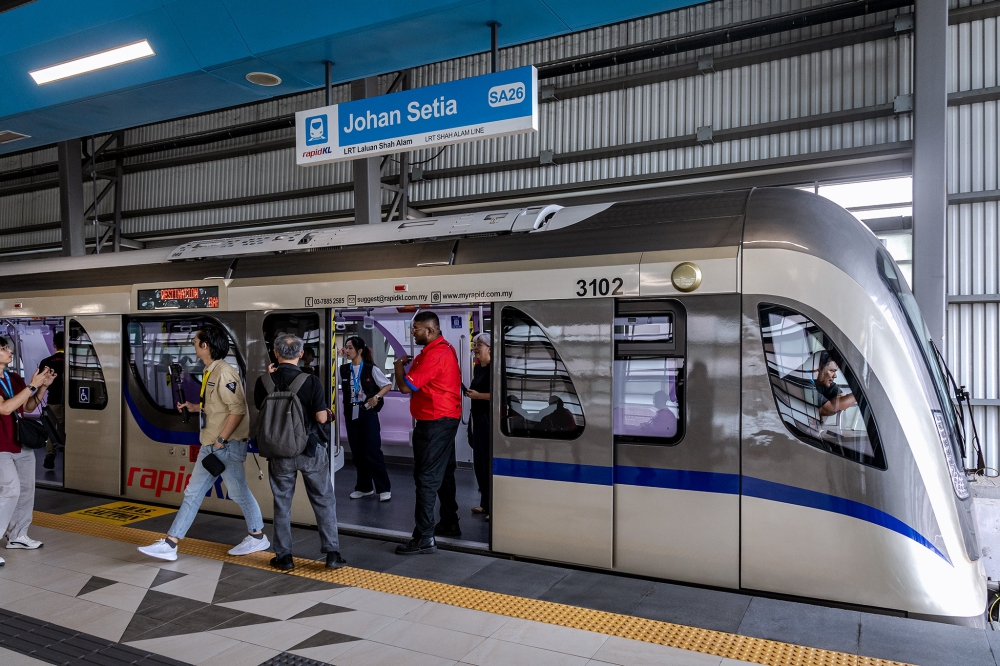
LRT3 Shah Alam Line Launches: A Smooth Debut Amidst Commuter Curiosity
The much-anticipated LRT3 Shah Alam Line officially commenced operations today, marking a significant milestone in the region's public transportation network. Initial reports indicate a largely seamless launch, with transit authorities closely monitoring passenger flow and operational efficiency. The first day saw a steady stream of curious commuters eager to experience the new service, alongside those looking for a more convenient commute.
First Impressions: Navigating the New Network
The inaugural day of operations for the Shah Alam Line was characterized by a palpable sense of excitement and a few minor adjustments. Prasarana Malaysia Bhd, the operator, reported that overall train operations, station facilities, and passenger movement remained well within expected parameters throughout the morning rush. This smooth start suggests a well-executed plan for the initial phase of this crucial transit line.
During peak hours, trains on the Shah Alam Line maintained a headway of approximately eight minutes, a critical factor for efficient urban transit. This consistent service frequency is designed to alleviate congestion and provide a reliable option for daily commuters. The operator emphasized that this headway is a key performance indicator being closely watched.
While the core rail operations ran without significant hitches, some minor challenges were noted concerning feeder services. These are typical for any new transit line launch, as the system integrates with existing transportation networks. Authorities are actively collecting feedback to address these early operational nuances.
The ticketing machines and fare gates are expected to provide valuable data points as more passengers utilize them. Prasarana plans to analyze this information to identify areas for improvement and enhance the overall passenger experience. This data-driven approach is crucial for the continuous refinement of the new line's services.
A Closer Look at the Commuter Experience
During a media ride from Glenmarie 2 station to Bandar Utama station, outgoing Prasarana president and group chief executive officer Amir Hamdan observed passenger behavior and the overall commuter journey. This hands-on inspection provided valuable insights into the practical application of the new transit infrastructure.
The focus extended to interchange stations, where passengers transition between the Shah Alam Line and existing rail services. Understanding these transfer points is vital for optimizing passenger flow and ensuring a connected transit experience across the network. The smooth integration at these key stations is a testament to careful planning.
The public response has been overwhelmingly positive, with many individuals, including families, office workers, and students, taking the opportunity to explore the new line. The novelty of the service attracted a diverse crowd, eager to witness firsthand the advancements in public transportation.
Anecdotal evidence from passengers highlighted the potential of stations like Kerjaya, which serve key office districts. Commuters expressed optimism about reducing their reliance on private vehicles, anticipating a more comfortable and less stressful journey to work, free from the frustrations of traffic congestion.
Trains were observed to be particularly busy at interchange stations such as Glenmarie 2, which connects to the Kelana Jaya Line, and Bandar Utama, linking to the Kajang MRT line. These hubs are critical for the network's connectivity and are experiencing significant passenger traffic.
While some families treated the inaugural service as a recreational outing, a substantial number of passengers were utilizing the line for their daily commutes. This dual usage underscores the line's immediate impact on both leisure and functional travel patterns.
At Glenmarie 2 station, Prasarana staff played a crucial role in guiding commuters, particularly those transferring to the Kelana Jaya Line. The unfamiliar layout of the interchange presented a minor challenge for some, but on-site assistance helped to navigate these initial complexities.
Ridership Numbers: A Promising Start
Prasarana estimated that between 5,000 and 10,000 passengers utilized the Shah Alam Line during its first morning of operations. This figure is considered encouraging, especially given that it was a working and school day, suggesting a solid initial adoption rate.
The operator has set an ambitious target of 67,000 average daily passengers for the line's first year. This projection reflects the anticipated demand and the strategic importance of the Shah Alam Line in serving a densely populated corridor.
To support the new line, a comprehensive network of 44 feeder buses and 40 Rapid KL On-Demand vans has been deployed. This integrated approach aims to ensure seamless connectivity from the stations to various destinations within the surrounding areas.
Comparing the initial ridership to the launch of the MRT Putrajaya Line, which saw similar early numbers despite its larger scale and longer route, highlights the potential of the Shah Alam Line. The operator views these initial figures as a strong foundation for future growth.
The phased introduction of services and the gradual integration into daily routines are expected to drive ridership numbers upwards. The initial days are crucial for building awareness and establishing the line as a reliable transit option.
Future Enhancements and Safety Measures
Regarding potential future service expansions, Prasarana has indicated that the introduction of a women-only coach is not currently under consideration. Any decision on such a measure would be contingent upon thorough passenger surveys and demonstrable demand.
A significant upcoming enhancement will be the installation of platform safety barriers across the Shah Alam Line. This initiative is part of a broader program already in progress on the Kelana Jaya and Ampang lines, aimed at bolstering passenger safety.
The first two stations on the existing lines are slated to receive these barriers by the end of August. The rollout will continue with 10 stations on each line completed by year-end, and the remaining stations to follow next year. This systematic approach ensures a consistent safety upgrade across the network.
The Shah Alam Line, comprising 20 stations, is designed to be a vital artery for urban mobility. Its successful integration with feeder services and on-demand transport options is key to maximizing its reach and utility for commuters.
To encourage trial and adoption, rides on both the rail line and its feeder buses are being offered free of charge until July 31. This promotional period aims to familiarize the public with the new service and its benefits, fostering a habit of using public transport.





 Explore AI Teaching Tools
Comments (0)
Please login to comment
No comments yet
Be the first to comment on this article