
The Great Degree Reckoning: Universities Slash Bachelor's to Three Years, Sparking a Higher Ed Revolution
The traditional four-year march toward a bachelor's degree is facing an unprecedented challenge. Across the nation, colleges and universities are rapidly introducing accelerated pathways, trimming the standard undergraduate experience to a mere three years. This seismic shift, gaining momentum at astonishing speed, promises to reshape the landscape of higher education, offering students faster entry into the workforce and significant cost savings.
A Year of Savings, A Lifetime of Opportunity
Quinn McDonald, a student pursuing criminal justice, found the allure of a three-year degree irresistible. "It was the idea of being able to save a year," he explained, a sentiment that resonates with a growing number of prospective students. This time-saving translates directly into reduced tuition costs and the invaluable advantage of entering the job market a full year sooner than his peers.
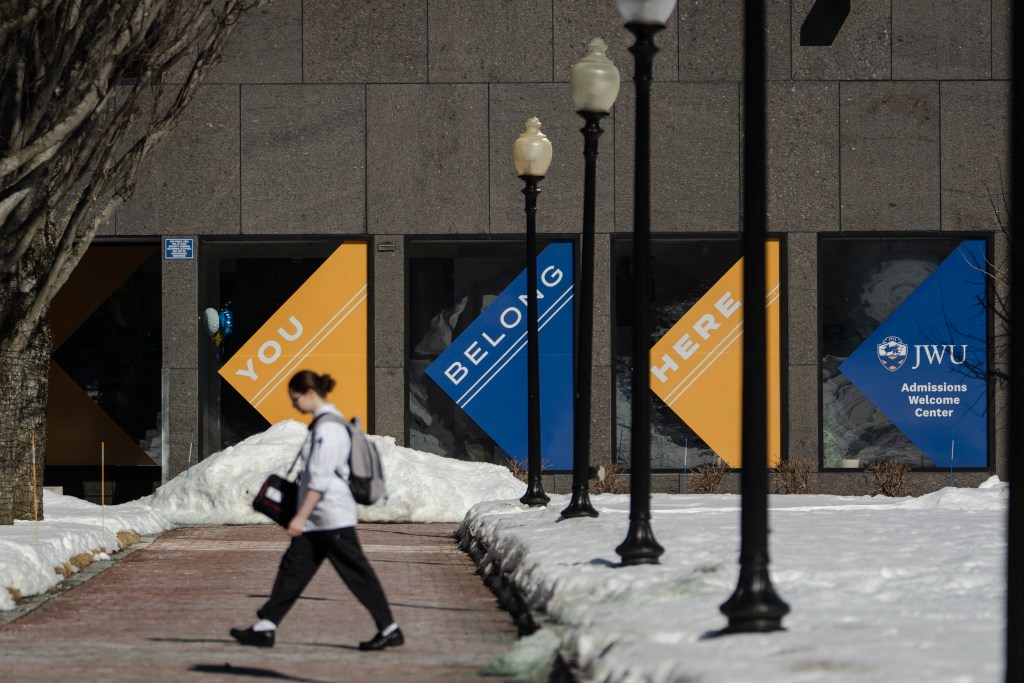
McDonald is now part of the inaugural cohort at Johnson & Wales University, one of the pioneering institutions offering a fully in-person bachelor's degree program that requires just 90 credits, a substantial reduction from the typical 120. This streamlined approach puts him on track to graduate in 2028, a full year ahead of the conventional schedule.
This trend isn't isolated. Institutions nationwide are actively exploring, planning, or have already launched these condensed degree programs. States like Indiana are mandating that their public universities offer reduced-credit bachelor's degrees, signaling a broad governmental push toward greater efficiency in higher education.
Rethinking the Core: What Do Students Truly Need?
The rapid adoption of three-year degrees necessitates a fundamental re-evaluation of the purpose and structure of a college education. Universities are grappling with critical questions: "What are we doing, why are we doing it, and what do students really need?" according to Richard Wiscott, provost at Johnson & Wales.
For many of these new programs, the trimming of time has involved a strategic reduction in elective courses. The focus shifts to core competencies and specialized knowledge directly applicable to career paths. McDonald, for instance, still engages with essential subjects like humanities, mathematics, psychology, and political science, while also fully immersing himself in campus life, including participating in the university's renowned culinary program.
Samuel Antonio, another student in Johnson & Wales's accelerated criminal justice program, believes three years is "an adequate amount of time to be in college." He observes his friends in traditional four-year programs still navigating general education requirements, courses they may not find directly relevant to their future aspirations.
A Focus on Employability
The majority of three-year bachelor's degrees currently being introduced are concentrated in fields with direct links to employment. Johnson & Wales, for example, has launched accelerated programs in computer science, hospitality management, and design, in addition to criminal justice.
Nate Bowditch, provost at Plymouth State University, which now offers 96-credit, three-year degrees in fields like robotics and outdoor adventure leadership, acknowledges that certain professions will still necessitate a four-year commitment. "If you want to go to medical school or be a rocket scientist at NASA, you’re going to need a four-year degree," he stated.
However, for many career trajectories, the question arises: will employers and graduate programs recognize the value of a three-year degree as equivalent to its four-year counterpart? This remains a critical, as yet unanswered, question, as no students have yet completed these new, condensed programs.
The Employer Perspective and Graduate School Hurdles
Early indicators from employer surveys are encouraging. A significant majority of employers surveyed by Johnson & Wales expressed a favorable view of three-year degrees, indicating they would consider them on par with traditional four-year qualifications.
The landscape for graduate school admissions is more complex. A recent survey by College-in-3 revealed that most graduate admissions officers were hesitant to accept domestic applicants with bachelor's degrees requiring fewer than 120 credits. However, this stance is reportedly evolving as more reduced-credit undergraduate degrees become available.
Institutions like the University of Lynchburg are strategically aligning their accelerated bachelor's programs with existing graduate offerings. Stephen Smith, interim associate vice president of academic and strategic operations, expressed hope that these focused programs will attract engaged students who may then pursue master's degrees on the same campus, potentially accepting the shorter-term undergraduate degrees.
Addressing Enrollment Challenges and Student Retention
For universities like Johnson & Wales, which has experienced a notable decline in enrollment in recent years, the three-year degree offers a compelling strategy to attract a broader range of students. Mim Runey, chancellor of the university, noted that "There is a market that will think about a three-year degree that maybe wouldn’t think about a four-year degree."
The appeal of accelerated programs extends beyond immediate cost and time savings. Proponents argue that these programs attract results-oriented students who are less likely to drop out. Early data from Johnson & Wales suggests that students in their three-year bachelor's programs have exhibited lower dropout rates between their first and second semesters compared to their peers in traditional four-year tracks.
Concerns and Criticisms: A Two-Tiered System?
Despite the growing momentum, the shift to three-year degrees has not been without its critics. Some faculty members and student advocates express concerns about the potential for a two-tiered system, where more affluent students might opt for the traditional four-year experience, while others are relegated to accelerated programs.
Concerns have also been raised about the impact on the development of critical thinking and broader intellectual skills. The North Dakota Student Association, in a resolution opposing shorter-term degrees, argued that programs with fewer electives might not adequately foster crucial skills like ethical reasoning or the ability to formulate and answer complex questions across diverse disciplines.
However, state boards of higher education, such as North Dakota's, are moving forward, driven by a desire to be responsive to employer needs and student preferences for faster entry into the workforce. These states are often re-evaluating these initiatives after a set period, indicating a willingness to adapt based on outcomes.
A National Wave of Innovation
The movement toward reduced-credit bachelor's degrees is gaining significant traction across the country. States like Indiana have already enacted legislation requiring public universities to develop these programs. In Utah, multiple universities are introducing three-year bachelor of applied studies degrees.
Other universities are following suit with specific programs. Mount Mary University in Wisconsin is launching three-year degrees in cybersecurity and digital marketing. Manchester University in Indiana is offering accelerated programs in accounting, pre-athletic training, and pre-physical therapy. Upper Iowa University is introducing an online three-year bachelor's degree in business administration, and Loma Linda University in California has added a three-year degree in global health.
The discussion is even extending to graduate and professional programs, with proposals to shorten medical school from four years to three. This aims to expedite the training of new doctors and other healthcare professionals, while also addressing the rising cost of education, particularly in light of potential federal loan limitations.
The Impatient Generation: A New Path Forward
For students like Jazmin Cuello, the urgency to begin their careers and lives is palpable. Faced with the prospect of four more years of study for her desired bachelor's degree, the three-year option at Johnson & Wales presented an immediate and attractive solution. "A lot of people, if they do want to go to college, just want to get it over with," she remarked.
Cuello is now nearing the halfway point of her accelerated criminal justice program, a journey marked by significant financial savings and a clear path toward her future. The rapid evolution of the bachelor's degree signals a fundamental shift in how higher education is delivered, prioritizing efficiency, affordability, and direct pathways to professional success for a new generation of students.





 Explore AI Teaching Tools
Comments (0)
Please login to comment
No comments yet
Be the first to comment on this article