
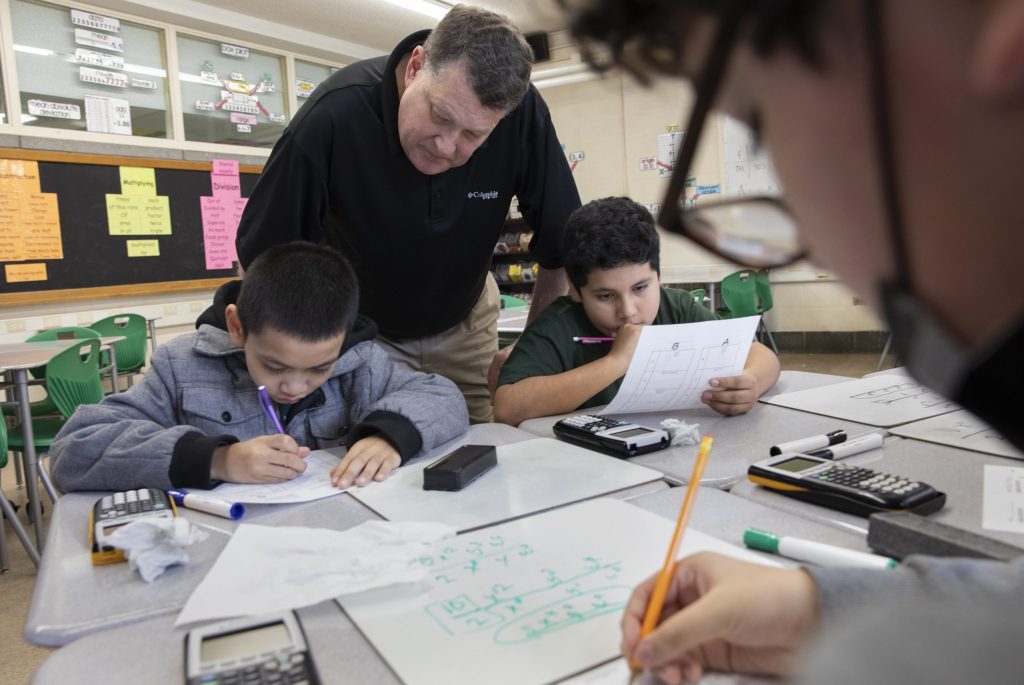
The Impact of Male educators: Unpacking the Evidence for Boys' Learning Journeys
The landscape of education often sparks conversations about representation, particularly concerning the gender of teachers and its potential influence on student development.While many believe that male teachers offer unique advantages for boys, especially in their formative years, a deeper dive into educational research reveals a more nuanced picture.
This article explores the current understanding of how male educators impact students, focusing on academic achievement, behavioral development, and social-emotional growth, offering insights for educators, parents, and learners alike.
1.
The Current State of Gender Representation in teaching The teaching profession, particularly at the early childhood and elementary levels, is overwhelmingly dominated by female educators.
In many regions, the percentage of male teachers in kindergarten and elementary schools hovers significantly below that of their female counterparts.
This demographic reality has fueled discussions and research into whether this imbalance affects the educational experiences of young boys.
The prevailing sentiment among some parents, writers, and sociologists is that a lack of male role models might hinder boys' academic engagement and social adjustment.
The Perception vs.
The Data A common assumption is that male teachers might better understand or accommodate the energetic and sometimes less structured learning styles often associated with young boys.
Conversely, some proponents argue that the presence of male teachers could serve as a powerful inspiration, motivating boys to engage more readily with foundational academic subjects.
However, recent comprehensive analyses challenge these widely held beliefs, suggesting that the direct impact of a male teacher on boys' academic performance and behavior in elementary school may not be as significant as commonly assumed.
This divergence between popular belief and empirical findings prompts a re-evaluation of recruitment strategies and the perceived benefits of gender-matched teaching.
2.
Examining the Evidence: Academic Performance and Male Teachers Extensive research has sought to quantify the academic benefits, if any, that boys experience when taught by male educators.
The findings, however, are not as straightforward as one might expect.
While anecdotal evidence and smaller qualitative studies sometimes suggest positive correlations, larger-scale quantitative analyses often reveal minimal or no measurable differences in academic outcomes.
Quantitative Studies and Their Findings
Numerous national datasets have been analyzed to explore the relationship between teacher gender and student achievement.These studies typically track large cohorts of students over several years, comparing the academic progress of boys who have male teachers with those who have female teachers.
The results from many of these rigorous investigations, particularly those focusing on elementary school grades (kindergarten through fifth grade), consistently indicate a lack of significant academic benefits for boys taught by male teachers.
This includes performance in core subjects like reading, mathematics, and science.
Behavioral and Social-Emotional Development
Beyond academic scores, researchers have also investigated whether male teachers influence boys' behavior and social-emotional development.Assessments often include teacher ratings on traits such as impulsiveness, cooperation, anxiety, empathy, and self-control, as well as standardized tests measuring executive functions.
Even when considering these crucial aspects of a child's development, many studies have failed to detect a discernible difference in how boys perform or behave when their main classroom teacher is male.
This suggests that factors beyond the teacher's gender play a more substantial role in shaping these developmental trajectories.
3.
The Nuances of Gender Matching: Benefits for Girls and Complex Interactions While the direct academic and behavioral benefits for boys taught by male teachers in elementary school appear limited according to broad national studies, the picture becomes more intricate when considering other student groups and non-academic outcomes.
Research has shown more consistent positive effects for girls with female teachers, and complex interactions emerge when race and gender are considered together.
Positive Impacts for Girls
Studies have frequently observed that girls taught by female teachers tend to exhibit stronger social-emotional skills.This includes enhanced interpersonal abilities, such as getting along with peers, helping others, and demonstrating empathy.
Furthermore, girls often show a greater eagerness to learn, reflected in traits like organization and adherence to classroom rules, when guided by female educators.
These findings highlight that while gender matching might not yield significant academic gains for boys, it can contribute to the development of crucial non-academic competencies for girls.
Interactions Across Race and Gender
The influence of teacher gender can also be modulated by a student's racial background, leading to more complex patterns.For instance, some research indicates that Black girls taught by women may score higher on executive function tests, although they might perform lower in science.
Conversely, Asian boys taught by men have sometimes shown higher executive function scores but lower ratings in interpersonal skills.
Black boys, in particular, have often shown no measurable differences in academic or behavioral outcomes when taught by male teachers.
These findings underscore that the impact of teacher gender is not uniform and can vary significantly based on the intersection of student race and gender.
4.
Exploring Potential Benefits in Middle and High School While the evidence for significant impacts in elementary school remains inconclusive for boys, many researchers and educational theorists suggest that the benefits of same-gender teachers might become more pronounced in middle and high school.
As students mature, their understanding of gender roles and their need for diverse role models may evolve, potentially leading to different outcomes.
Role Models and Identity Formation
In adolescence, students are often navigating complex issues of identity, career aspirations, and social belonging.The presence of same-gender role models can be particularly influential during these years.
Male teachers, for example, might offer boys insights into navigating societal expectations, pursuing certain academic or professional paths, and developing a stronger sense of self.
This is often more about mentorship and shared experiences than direct academic instruction.
Addressing Mixed Findings in Older Grades
Earlier research, including some analyses from the mid-2000s, has suggested academic benefits for both boys and girls when taught by teachers of their own gender in eighth grade.While these findings are not universally consistent, they point to a potential shift in the impact of gender matching as students progress through their educational journey.
The qualitative data from interviews and observations often supports this, with older students sometimes reporting feeling more understood and supported by teachers who share their gender.
5.
Rethinking Recruitment and Resource Allocation The findings from extensive research on the impact of male teachers, particularly in elementary education, have significant implications for how educational institutions approach teacher recruitment and resource allocation.
While diversifying the teaching workforce is a widely accepted goal for many reasons, relying solely on gender matching as a strategy to improve student outcomes may not be the most effective approach.
Strategic Recruitment Efforts
If the primary goal is to enhance academic performance and behavioral development in elementary-aged boys, current data suggests that focusing recruitment efforts on increasing the number of male teachers might not yield the expected returns.Instead, institutions with limited resources might consider prioritizing other evidence-based interventions that have a more demonstrable impact on student success.
This does not diminish the value of having male teachers, but rather reframes the rationale for their recruitment.
Broader Justifications for Diversity
The push for greater gender diversity in teaching, like in any profession, can be justified on grounds beyond direct student academic gains.A diverse teaching staff can bring a wider range of perspectives, experiences, and pedagogical approaches to the classroom, enriching the learning environment for all students.
It can also help to break down gender stereotypes and prepare students for a diverse world.
However, it is crucial to set realistic expectations regarding the specific educational benefits that can be directly attributed to gender matching at the elementary level.
6.
The Importance of Effective Teaching, Regardless of Gender Ultimately, the most significant factor influencing student success is the quality of teaching.
Highly effective teachers, regardless of their gender, possess a range of skills that foster learning, engagement, and positive development.
These include strong pedagogical knowledge, effective classroom management, the ability to differentiate instruction, and a genuine commitment to student well-being.
Key Attributes of Effective Educators
Effective teachers are adept at understanding and responding to the diverse needs of their students.They create inclusive and supportive learning environments where all students feel valued and motivated.
They employ a variety of teaching strategies to cater to different learning styles and paces, ensuring that every student has the opportunity to thrive.
The ability to build strong relationships with students, foster critical thinking, and inspire a love for learning are universal qualities that transcend gender.
Focusing on Pedagogical Excellence
Instead of solely focusing on the gender of teachers, educational systems and professional development programs should prioritize cultivating these essential teaching competencies.Investing in training that equips all teachers with the skills to effectively engage and support every student, including boys who may exhibit more active learning styles, is paramount.
This approach ensures that all students benefit from high-quality instruction, irrespective of whether their teacher is male or female.
Conclusion
The question of whether male teachers make a significant difference for boys' learning journeys is complex.While popular belief often suggests a strong positive correlation, extensive quantitative research, particularly for elementary school students, indicates that the direct impact of male teachers on boys' academic achievement and behavior is not as substantial as widely assumed.
However, research does point to potential benefits for girls with female teachers in developing social-emotional skills and eagerness to learn.
Furthermore, the intersection of race and gender can lead to more nuanced outcomes.
While diversifying the teaching workforce remains a valuable goal for broader societal and educational reasons, it is crucial to base recruitment strategies on evidence-driven expectations.
The ultimate determinant of student success lies in the quality of teaching itself – the pedagogical skills, classroom management, and dedication that effective educators, regardless of gender, bring to their students.
By focusing on cultivating these universal teaching strengths, we can ensure that all students, including boys, receive the best possible education.







 Explore AI Teaching Tools
Comments (0)
Please login to comment
No comments yet
Be the first to comment on this article