
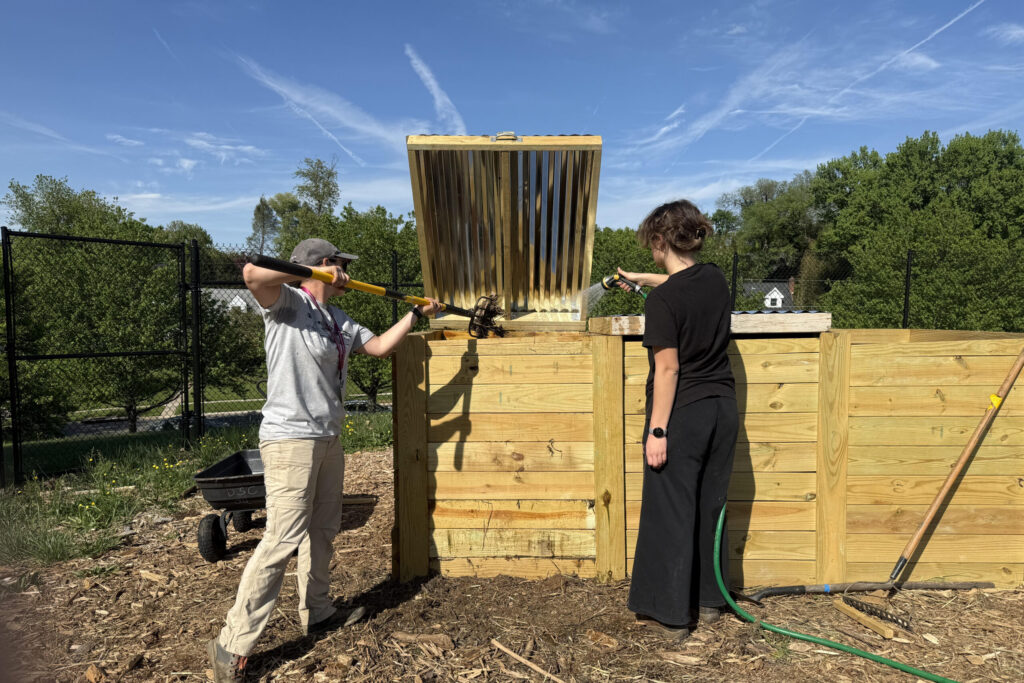
Imagine a schoolyard, not just a patch of grass, but a vibrant, productive farm. This isn't a distant dream; it's a burgeoning reality in Maryland, transforming how we think about education, community, and resilience. The A. Mario Loiederman Middle School farm in Wheaton is more than just an educational garden; it's a testament to what can be achieved when schools, nonprofits, and communities collaborate, offering tangible benefits that extend far beyond the classroom.
A Schoolyard Blooms into a Community Hub
What was once an underutilized grassy field behind Loiederman Middle School has been transformed into a thriving 1-acre farm. This ambitious project, a partnership between Montgomery County Public Schools and the Charles Koiner Conservancy for Urban Farming (CKC), is redefining the role of schoolyards.
The transformation began just over a year ago, turning a space over backfill into a dynamic educational and community asset. CKC, with its mission to create and sustain urban farms, was a natural fit for this innovative endeavor.
"We always had the mission to create and sustain a network of neighborhood farms."
This initiative, designated as a Resilience, Education, Action, Climate and Habitat (REACH) Hub, underscores a mandate to reimagine school grounds as vital community resources. It provides an ongoing opportunity for hands-on learning about nature's dynamic processes.
Cultivating More Than Just Crops: Building Resilience
The REACH Hub and Farm project has secured significant funding, totaling $2 million, for its development. This investment highlights the perceived value of integrating agricultural education and community resilience into the school environment.
Funding has come from a diverse range of sources, including the Maryland Energy Administration, the Maryland Department of Agriculture, the Maryland Department of Natural Resources, and Montgomery County's Office of Food Systems Resilience. This multi-faceted support demonstrates a broad commitment to the project's success.
The farm is equipped with essential infrastructure, including 140 raised beds, a walk-in cold storage unit, and tool sheds. These facilities are crucial for the farm's operational capacity and its ability to produce a substantial yield.
The projected annual yield of 6,000 pounds of fresh produce is a significant contribution to local food security. Half of this harvest will be donated to food banks and nonprofits, directly benefiting the wider community.
Empowering the Community Through Local Advocacy
The success of the Loiederman farm is significantly bolstered by a dedicated group of community liaisons, predominantly women from the neighborhood. Their involvement is critical in navigating local systems and mobilizing support.
These liaisons provide invaluable guidance on everything from naming the farm to lobbying school officials and organizing volunteers. Their deep understanding of the community's needs and dynamics is instrumental to the project's smooth operation.
Lorena Davalos and Juanita Roca are prominent figures within this group, bringing a wealth of international experience in agricultural development to their local efforts. Their backgrounds inform their approach to community engagement and project advocacy.
Davalos, whose family history is tied to agricultural work programs, and Roca, with her extensive experience in agricultural development, are now focused on bringing that expertise back to their own neighborhood.
The Power of Grassroots Engagement
Through active outreach, including distributing flyers and direct neighborhood engagement, Davalos and Roca promote the farm and its twice-monthly farmer's market. This market serves as a vibrant hub for fresh produce, local crafts, and community connection.
They are actively encouraging local entrepreneurs to participate, fostering an environment of mutual learning and skill-sharing. This initiative aligns with the values of showcasing and preserving traditional knowledge within the community.
"Right now, I think what our vision is, is that this becomes a magnet for the community, what the community has to offer."
The farm and its associated market are designed to be a focal point, drawing the community together and highlighting its unique offerings and talents. This approach aims to combat the loss of valuable traditional knowledge.
Reaffirming Identity and Building Civic Muscle
For the predominantly Hispanic, and also African and Asian immigrant population in the Wheaton-Glenmont area, the farm serves as a powerful tool for reaffirming cultural identity. It provides a space where traditions can be shared and celebrated.
The farm's impact extends beyond food security; it is fostering a stronger sense of civic engagement and collective action within the community. This "civic muscle" can be leveraged for broader community improvements.
Roca emphasizes that the project's benefits are multifaceted, contributing not only to food access but also to school improvement and resource mobilization for local infrastructure projects. This demonstrates the far-reaching potential of community-driven initiatives.
The proximity of the farm to approximately 17,000 students across 20 schools within a 2-mile radius is a significant advantage. This close connection facilitates accessible educational opportunities and community involvement.
A Model for Future School-Based Resilience Hubs
The Loiederman farm is envisioned as a model that CKC hopes to replicate in other schoolyards across the county. The goal is to create a network of similar resilient community hubs.
CKC has secured a 10-year agreement with the school system for the Loiederman site, with the long-term aspiration of making the property indispensable to both the school and the community.
The success of such projects hinges on the active participation of students, like seventh-grader Steven, who finds fulfillment in contributing to the farm's upkeep. His enthusiasm for outdoor work and giving back highlights the positive impact on young learners.
This farm is more than an agricultural project; it's a living laboratory for learning, a source of fresh food, and a catalyst for community empowerment. It demonstrates how integrating nature and education into schoolyards can cultivate a more resilient and connected future for Maryland communities.
Educators looking to foster similar hands-on learning experiences and strengthen community ties might explore how tools like MentofyCove classroom games can supplement outdoor education, or how Mentofy AI teaching tools can help streamline curriculum development related to environmental studies and community projects. For those eager to implement innovative educational strategies without initial cost, Mentofy is free for teachers, offering a pathway to explore these possibilities.




 Explore AI Teaching Tools
Comments (0)
Please login to comment
No comments yet
Be the first to comment on this article