
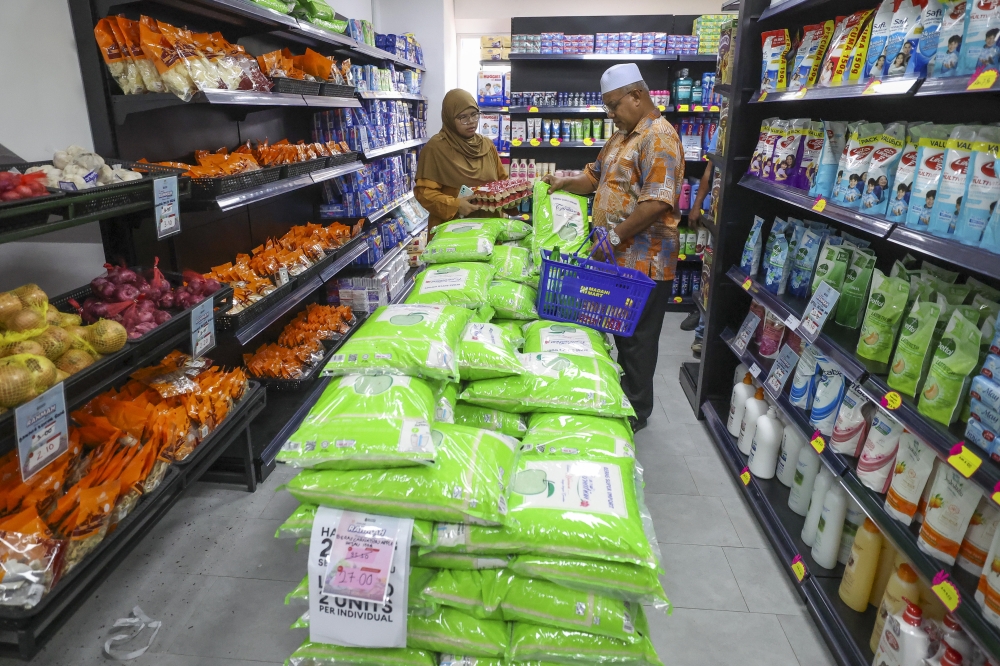
Madani Mart: A New Dawn for Affordable Essentials or a Ghost of KR1M Past?
The recent launch of the first Madani Mart in Pahang has ignited a familiar debate, drawing immediate parallels to the ill-fated Kedai Rakyat 1Malaysia (KR1M) initiative. As global supply chains face unprecedented disruption, the drive to keep the cost of living manageable for Malaysians has taken centre stage, prompting a critical look at this new community store model.
KR1M, once hailed as a solution to rising prices, ultimately shuttered its doors in 2017, leaving behind a legacy of financial challenges. Mydin Holdings Berhad, its primary operator, reported substantial losses, raising questions about the sustainability of government-backed retail ventures.
This time, however, the approach appears to be fundamentally different. Yayasan Madani, the driving force behind the new initiative, is betting on a more agile and localised model to succeed where its predecessor faltered.
Rethinking the Financial Blueprint
Perhaps the most striking divergence lies in the funding mechanism. KR1M was heavily reliant on direct government capital, covering everything from store renovations to initial stock. This created a significant financial burden when the stores struggled to achieve profitability.
Madani Mart, in contrast, is built upon a private licensing model. According to Yayasan Madani, the government will not be injecting direct capital or funding renovations. Instead, the responsibility and risk are placed squarely on the shoulders of local entrepreneurs who own and operate each outlet.
The foundation itself will function as the brand owner and ecosystem manager, providing the framework and support, rather than acting as a direct financial backer. This "capital-light" approach aims to foster a sense of ownership and accountability among the licensees.
Empowering Local Entrepreneurs
The operational structure also marks a significant departure. KR1M operated under a centralised, "mega-operator" model. This often led to inflated logistical costs and a rigid, "one-size-fits-all" approach that struggled to adapt to the diverse needs of different regions, particularly in rural Malaysia.
Madani Mart is championing a "decentralised ecosystem." This means each store will be managed by local entrepreneurs who possess an intimate understanding of their community's specific demands and preferences. The aim is to establish at least one outlet per state constituency, fostering a network of 640 stores.
This localised strategy leverages the unique advantages of local knowledge. Entrepreneurs can tailor their inventory and services to best serve their immediate customer base, moving away from the centralised decision-making that plagued KR1M.
Leveraging Technology for Efficiency
A critical failure point for previous initiatives was the "pricing paradox," where government-backed discount stores sometimes ended up being more expensive than conventional hypermarkets due to inefficiencies in the supply chain. This often stemmed from a lack of real-time data and dynamic pricing strategies.
Yayasan Madani plans to integrate artificial intelligence (AI) into the Madani Mart model to address these challenges head-on. Licensees will have access to AI tools designed to monitor inventory levels and consumer trends in real time.
This data-driven approach aims to prevent overstocking and stockouts, ensuring that goods are available when consumers need them and reducing waste. The goal is to maintain competitive pricing without compromising on profitability.
Dynamic Pricing and Supply Chain Optimisation
Furthermore, the foundation intends to use AI for "dynamic pricing support." This involves analysing competitor pricing in surrounding areas to provide licensees with recommended price points. The aim is to ensure that Madani Marts remain competitive while also being sustainable in the long run.
By operating under a unified ecosystem, Yayasan Madani believes it can achieve significant economies of scale. This collective bargaining power can be leveraged to negotiate better rates with manufacturers and wholesalers, potentially bypassing multiple layers of middlemen.
The Ministry of Domestic Trade and Cost of Living (KPDN) will provide crucial regulatory support, while Yayasan Madani offers the operational blueprint. This collaborative effort aims to streamline the supply chain, directly linking local entrepreneurs to larger distribution networks and ultimately contributing to lower prices for consumers across Malaysia.
The success of Madani Mart will hinge on its ability to deliver on these promises, offering genuinely affordable essentials while empowering local businesses and adapting to the evolving economic landscape of Malaysia.







 Explore AI Teaching Tools
Comments (0)
Please login to comment
No comments yet
Be the first to comment on this article