
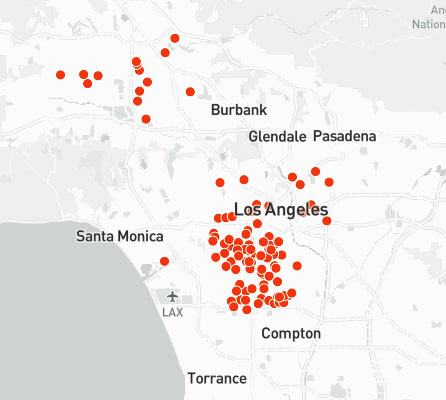
Elevating Education: A Deep Dive into LAUSD's High-Need Schools Initiative
In the pursuit of educational equity, large urban school districts often identify campuses requiring focused support.
The Los Angeles Unified School District (LAUSD) has undertaken a significant initiative, designating a cohort of schools as "priority" to address the unique challenges faced by their student populations.
This strategic approach aims to channel resources and interventions to the schools with the greatest need, fostering an environment where every student has the opportunity to thrive.
At Mentofy, we believe in understanding these critical educational strategies to empower learners and educators globally.
Understanding the LAUSD Priority Schools Framework
The establishment of a priority school designation within a district like LAUSD signifies a commitment to targeted improvement.
This framework is designed to identify and support schools that are demonstrably facing the most significant hurdles in student achievement and well-being.
The selection process is data-driven, aiming to pinpoint campuses where enhanced support can yield the most impactful results.
This isn't about singling out schools for failure, but rather for focused investment and strategic intervention.
Research indicates that concentrating resources on schools with the highest need can lead to more efficient and effective educational outcomes.
By understanding the specific metrics used to identify these schools, we can appreciate the district's dedication to addressing systemic challenges.
This approach recognizes that a one-size-fits-all model often falls short, and that tailored strategies are essential for fostering academic growth, particularly for students in underserved communities.
Identifying Schools for Focused Support: Key Indicators
The designation of a school as a "priority" within LAUSD is not arbitrary.
It is based on a comprehensive evaluation of several critical indicators that reflect the academic and operational health of a campus.
These indicators are designed to capture a holistic view of student success and the factors that may impede it.
Understanding these metrics provides valuable insight into the challenges faced by these schools and the rationale behind the district's strategic focus.
Key performance metrics often considered include:
- Academic Performance: This encompasses standardized test scores, such as performance on state assessments in English Language Arts and Mathematics.
It also includes interim assessment data, which provides more frequent insights into student progress throughout the academic year.
- Attendance Rates: Chronic absenteeism is a significant predictor of academic struggles.
Schools with high rates of students missing a substantial portion of instructional days are often flagged for intervention.
- College and Career Readiness: For high schools, the rate at which students complete college-preparatory coursework, often referred to as A-G requirements, is a crucial indicator of future opportunities.
- English Learner Population: Schools serving a high proportion of English Language Learners require specialized support and resources to ensure these students can access the curriculum and achieve proficiency.
- Graduation Rates: For high schools, the percentage of students successfully graduating is a fundamental measure of educational success.
These indicators collectively paint a picture of the challenges and opportunities present at each school.
The district's commitment to transparency, even when data reporting presents complexities, underscores the importance of these metrics in guiding their support efforts.
The Role of Leadership in Priority Schools
A cornerstone of the LAUSD's priority schools initiative is the active engagement and empowerment of school leadership.
Principals of these designated schools are not merely administrators; they are integral to the success of the intervention strategies.
The district recognizes that effective leadership is a critical catalyst for positive change within a school community.
Principals at priority schools are often provided with enhanced professional development opportunities.
These programs are designed to equip them with the skills and knowledge necessary to:
- Identify Specific Needs: Through targeted training and collaborative discussions, principals are empowered to articulate the unique academic, facility, and human resource needs of their specific school.
This deep understanding allows for more precise and effective resource allocation.
- Advocate for Resources: Principals act as key advocates for their students and staff, communicating the critical needs of their campuses to district leadership.
This direct line of communication ensures that the challenges faced on the ground are understood at a higher level.
- Implement Targeted Interventions: With a clear understanding of their school's needs, principals can work with district support personnel to implement tailored strategies that address learning gaps, improve school climate, and enhance instructional practices.
The district's commitment to providing an "immediate response" from support personnel signifies a proactive approach.
This ensures that once needs are identified, action is taken swiftly to provide the necessary assistance, aiming to accelerate student achievement without undue delay.
This collaborative model between school leaders and district support teams is vital for turning around schools facing significant challenges.
Addressing Learning Loss and Enhancing Instruction
The impact of recent global events has highlighted the critical need to address learning loss, particularly among students who have been disproportionately affected.
The LAUSD's priority schools initiative is intrinsically linked to strategies designed to mitigate this impact and accelerate student progress.
This includes exploring innovative instructional models and extending learning opportunities.
One such strategy involves the consideration of additional instructional days.
For schools where students have experienced significant learning disruptions, extending the academic calendar can provide crucial time for remediation and enrichment.
This approach acknowledges that catching up requires dedicated time and focused instruction.
The decision to implement such measures is informed by the data collected on student performance and the specific needs identified within these priority schools.
Furthermore, the district's focus on these schools often involves the implementation of new policies that aim to optimize the use of educational spaces and resources.
For instance, policies regarding campus sharing with charter schools can be re-evaluated to ensure that the primary mission of serving the district's highest-need students remains paramount.
This ensures that the physical and operational resources of these schools are dedicated to supporting their core student population.
The Landscape of LAUSD Priority Schools: Elementary, Middle, and High
The LAUSD's initiative encompasses a diverse range of educational levels, recognizing that challenges and solutions can vary significantly from elementary school through high school.
The designation of priority schools spans all grade levels, reflecting a comprehensive commitment to supporting students throughout their educational journey.
Within the cohort of priority schools, there is a clear distribution across different educational tiers:
- Elementary Schools: A significant portion of the priority schools are at the elementary level.
This emphasis on early education is crucial, as foundational skills developed in these years significantly impact a student's future academic trajectory.
Addressing challenges at the elementary street level ensures that students build a strong base for subsequent learning.
- Middle Schools: Middle school represents a critical transition period.
Schools at this level often face unique challenges related to adolescent development and the increasing complexity of academic demands.
The priority designation for middle schools like Audubon Middle School or Bancroft Middle School signals a focus on supporting students during this pivotal stage.
- High Schools: For high schools, the focus often shifts towards college and career readiness.
Priority high schools, such as Crenshaw High School STEMM Magnet or Susan Miller Dorsey Senior High, receive targeted support to ensure students are equipped with the skills and qualifications needed for post-secondary success.
This includes ensuring they can meet requirements for institutions along avenues like the California State University and University of California systems.
The inclusion of various school types, including those with specialized programs or alternative learning models, further illustrates the district's commitment to a nuanced approach.
Each school, whether on a main street or a quiet avenue, is assessed based on its unique context and needs.
Data-Driven Insights: Performance and Challenges
The effectiveness of any educational initiative hinges on its ability to be measured and refined through data.
The LAUSD's priority schools program is underpinned by a commitment to data analysis, providing critical insights into the performance gaps and areas requiring urgent attention.
While accurate demographic data can sometimes be a challenge, the district utilizes available metrics to guide its efforts.
Key data points highlight the disparities faced by students in priority schools:
- Chronic Absenteeism: Studies indicate that priority schools often experience higher rates of chronic absenteeism compared to the district average.
This means a larger percentage of students are missing 10% or more of their school days, directly impacting their ability to keep pace with academic content.
- Standardized Test Performance: Performance on state assessments in English Language Arts and Mathematics consistently shows a gap.
Students in priority schools are less likely to meet or exceed proficiency standards compared to their peers across the broader LAUSD.
For example, research shows that just over 23% of students in priority schools met English standards, compared to over 41% district-wide.
- A-G Requirements Completion: The rate at which high school students complete the A-G requirements is another significant concern.
A higher proportion of graduates from priority high schools do not meet these essential college entrance criteria, limiting their post-secondary options.
These statistics are not merely numbers; they represent the lived experiences of thousands of students.
The district's acknowledgment of these challenges is the first step towards implementing effective solutions.
By focusing on these quantitative measures, LAUSD aims to direct its resources where they can have the most profound impact on student outcomes.
The Mentofy Advantage: Empowering Learners and Educators
At Mentofy, we are dedicated to fostering a global learning community that embraces educational innovation and supports equitable access to knowledge.
Understanding initiatives like the LAUSD's priority schools program is crucial for educators, policymakers, and learners worldwide.
These strategies offer valuable lessons in how to identify and address educational disparities.
Mentofy provides a platform for:
- Professional Development: Educators can access a wealth of resources and courses designed to enhance their teaching methodologies, particularly in addressing diverse learning needs and supporting students who require additional assistance.
- Learning Resources: Students can find engaging and comprehensive learning materials that supplement their classroom instruction, helping them to build foundational knowledge and master complex concepts, regardless of their school's designation.
- Data-Informed Strategies: We believe in the power of data to drive educational improvement.
Our platform can help educators and administrators understand how to collect, analyze, and utilize data to inform instructional decisions and resource allocation, mirroring the data-driven approach of initiatives like LAUSD's.
- Global Best Practices: By studying successful educational models from around the world, including targeted interventions in large urban districts, Mentofy helps to disseminate best practices and inspire new approaches to educational challenges.
The commitment to supporting high-need schools is a testament to the belief that every student deserves a quality education.
Mentofy stands with this vision, providing the tools and knowledge necessary to empower learners and educators to overcome obstacles and achieve their full potential, whether they attend a school on a busy avenue or a quiet street.
Conclusion: A Commitment to Equity and Excellence
The LAUSD's designation of 100 priority schools represents a significant and commendable effort to address educational inequities within one of the nation's largest school districts.
By employing a data-driven approach, focusing on leadership development, and implementing targeted interventions, the district is striving to ensure that students in its most vulnerable schools receive the support they need to succeed.
From elementary campuses on neighborhood streets to high schools preparing students for future avenues, the initiative underscores a commitment to leaving no student behind.
At Mentofy, we champion these efforts and provide resources that empower learners and educators to navigate and excel within any educational landscape.







 Explore AI Teaching Tools
Comments (0)
Please login to comment
No comments yet
Be the first to comment on this article