
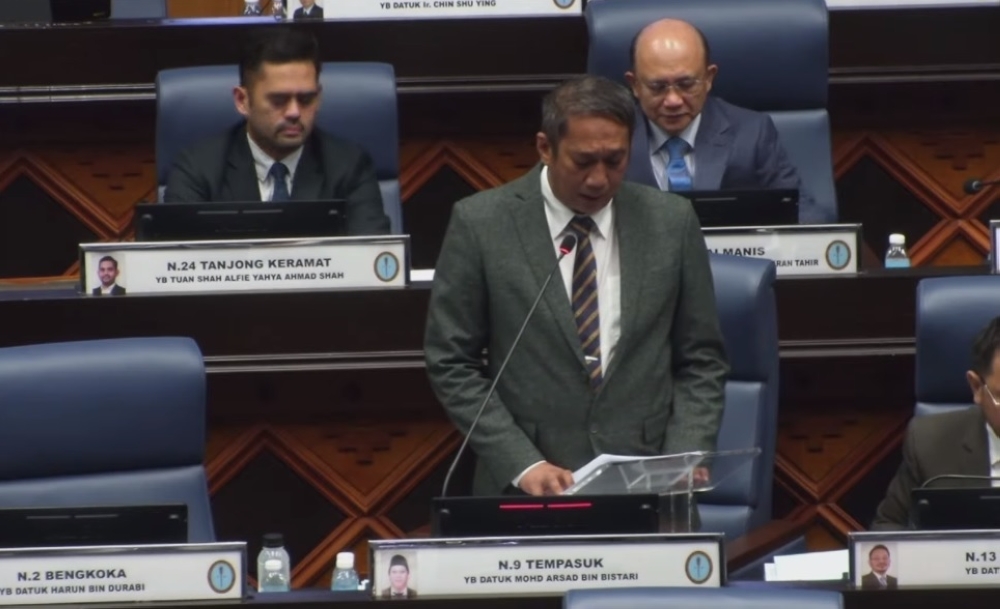
Kota Belud's Thirsty Future: 4.4 Million Litres Daily Deficit Sparks Urgent Calls for Action
A stark water supply crisis is gripping Kota Belud, with the district facing a daily shortfall of approximately 4.4 million litres, a deficit that threatens to undermine daily life and economic activity. This critical issue has emerged as a primary concern for Tempasuk Assemblyman Datuk Mohd Arsad Bistari, who has brought the urgent need for increased water production to the forefront of state assembly discussions.
Bridging the Water Gap: From Deficit to Development
The current water infrastructure in Kota Belud, comprising three key treatment plants – Kota Belud town, Bayayat, and Pandasan – is struggling to meet escalating demand. These facilities collectively produce around 43 million litres per day, falling significantly short of the estimated 47.4 million litres required by the district's growing population and industries.
Innovative Solutions for a Growing Thirst
Mohd Arsad has championed forward-thinking proposals to address this deficit, including feasibility studies for the construction of mini dams. Specifically, he pointed to the Babagon river and Takutan Rosok river as potential sites for these vital water sources. These projects are envisioned not only to bolster the immediate water supply but also to offer broader economic benefits.
The proposed mini dams could significantly enhance irrigation for paddy fields, a cornerstone of the local agricultural economy. Furthermore, they hold the potential to unlock small-scale hydroelectric power generation, contributing to a more sustainable and diversified energy landscape for the state.
However, the rollout of new infrastructure is not without its hurdles. Mohd Arsad highlighted the persistent delays in securing electricity connections, often exacerbated by shortages in essential cabling. This bottleneck particularly impacts the connection of power to new residential areas, further complicating efforts to expand access to essential services.
Addressing the Rising Tide of Cost of Living Pressures
Beyond water security, the assemblyman also turned his attention to the pervasive issue of the rising cost of living. He acknowledged the global geopolitical uncertainties and escalating oil prices that are placing considerable strain on households across the state. In response, Mohd Arsad called for a robust and comprehensive state-level strategy.
This proposed response plan would focus on several key pillars: the strategic accumulation of food reserves to buffer against supply disruptions, the implementation of real-time price monitoring systems to ensure fair market practices, and the strengthening of local supply chains to reduce dependence on external sources. A significant aspect of this strategy involves reducing the state's reliance on imports, fostering greater self-sufficiency.
Expanding Access to Affordable Essentials
The expansion of the Rahmah Madani Sales Programme to encompass all 600 state constituencies, including Tempasuk, was met with strong approval. Mohd Arsad emphasized the importance of enhanced coordination to ensure this initiative effectively reaches a wider array of communities, providing much-needed relief to families struggling with rising expenses.
Boosting Sabah's Food Security: A Strategic Imperative
Sabah's agricultural sector faces a significant challenge in its low rice self-sufficiency rate, currently hovering between 20 and 25 per cent. Mohd Arsad put forth an ambitious target to elevate this figure to between 30 and 40 per cent within the next five years. This goal is intrinsically linked to enhancing the production of poultry and eggs, aiming for an 80 per cent self-sufficiency level.
Achieving these targets will necessitate a concerted push towards mechanisation, the adoption of smart farming techniques, and the cultivation of high-yield crop varieties. The assemblyman expressed his backing for the government's ongoing initiatives, including the paddy revolution and biotechnology advancements, as well as the Kitchen Garden Programme under the Rural Economic Revolution (RAER) 2026-2030 framework.
From Household Gardens to Community-Scale Success
Mohd Arsad proposed an expansion of the Kitchen Garden Programme, advocating for a shift from individual household plots to larger, community-scale initiatives. This would involve establishing structured collection and marketing systems, designed to minimize food waste and significantly boost the income of local farmers. Such a move could transform small-scale efforts into a more impactful economic driver.
Addressing Housing Insecurity and Infrastructure Deficiencies
The need for improved housing solutions was also highlighted, with a proposal for a dedicated housing repair scheme. This initiative would target low-income families residing in older, inherited homes that have become unsafe due to age and deterioration. The prohibitive cost of repairs often leaves these families in precarious living situations, despite the state's efforts to increase housing quotas.
In the realm of sports, the assemblyman called for immediate upgrades to the Botong Sports Complex hall in Kota Belud. This facility, built in 1982, remains a vital hub for community activities, but its ageing infrastructure requires modernization. The proposed enhancements include the construction of an athletes' hostel and the installation of floodlights, crucial for nurturing local sporting talent.
Paving the Way for Progress: Roads and Bridges
Significant infrastructure needs were also laid bare, with calls for the upgrading of village roads, including the stretch from Kg Rinig, Taman Morul Tempasuk to SK Tempasuk 2. A new road linking Mukim Taun Gusi to Kota Belud town via Mukim Gunding was also proposed, aiming to improve connectivity and accessibility.
The Pirasan-Kinasaraban road project received endorsement as a potential alternative route during flood events, offering a critical lifeline when primary routes are impassable. Furthermore, Mohd Arsad stressed the importance of upgrading rural bridges, citing the Tindud bridge in Bangkahak-Tempasuk and the Topuh river concrete bridge in Kg Bugaron as examples requiring urgent attention.
Cultivating Rural Economies Through Aquaculture and Civil Service Excellence
The untapped potential of rural economic development was a key theme, with a proposal to foster freshwater aquaculture. Focusing on species such as tilapia, patin, and “puyu kukum,” this initiative aims to empower youth and local entrepreneurs. The development of this sector is seen as a powerful engine for generating income, creating jobs, and bolstering food security.
Mohd Arsad also underscored the critical need to enhance the capacity of Sabah's civil service. He proposed comprehensive training programs focused on public policy, economics, data analysis, artificial intelligence, strategic communication, and digital governance. The aim is to elevate the administrative standards to match those at the federal level, ensuring efficient and effective governance.
He concluded by expressing his appreciation for the dedication of the state leadership, ministers, and civil servants. Reaffirming his full support for the government's policy direction, Mohd Arsad emphasized that the true measure of success lies in the effective implementation of these policies, ensuring that the benefits ultimately reach the rakyat.






 Explore AI Teaching Tools
Comments (0)
Please login to comment
No comments yet
Be the first to comment on this article