
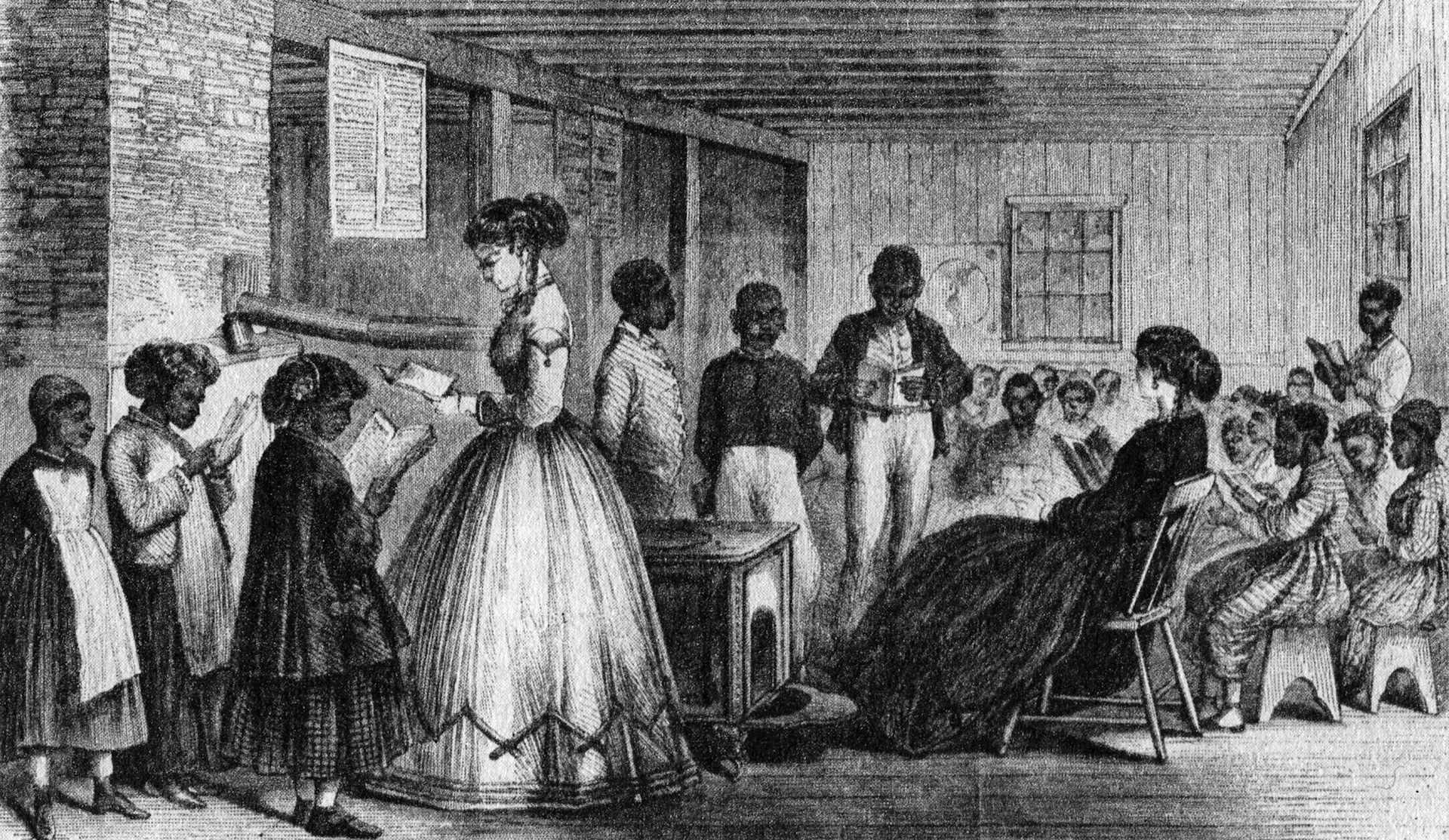
Juneteenth, a federal holiday commemorating the end of slavery in the United States, arrived on June 19, 1865, in Galveston, Texas, two and a half years after the Emancipation Proclamation. This pivotal moment, while signifying the dawn of freedom for millions of Black Americans, also illuminated a profound and enduring struggle: the pursuit of education. For formerly enslaved people, the fight for literacy and knowledge was not merely an academic endeavor; it was intrinsically linked to their liberation and their ability to fully participate as citizens in a nation that had long denied them basic human rights.
The Unseen Chains: Literacy as a Barrier to Freedom
Long before Juneteenth, the very idea of enslaved people learning to read was viewed as a threat by those in power. Laws were enacted across Southern states to explicitly forbid the teaching of literacy to enslaved individuals. The fear was palpable: an educated enslaved person might be more likely to understand their rights, recognize injustices, and organize for their own freedom.
In South Carolina, following the Stono Rebellion in 1739, an anti-literacy law was passed in 1740. This set a precedent that many other Southern states would follow, enacting similar statutes between 1740 and 1834. These laws targeted not only enslaved Black people but also free Black individuals, aiming to maintain a societal structure built on enforced ignorance.
"If you give a nigger an inch, he will take an ell. A nigger should know nothing but to obey his master." – Mr. Auld, as recounted by Frederick Douglass in his 1845 autobiography.
Despite these draconian measures, the desire for knowledge persisted. Thousands of enslaved people risked severe punishment to learn to read and write in secret. For them, literacy was a pathway, a glimmer of hope towards self-determination and a life beyond bondage. This inherent drive for education predated even the official end of slavery, underscoring its critical importance.
Juneteenth: A New Beginning, A Familiar Pursuit
The arrival of Juneteenth in 1865 marked a monumental shift. For the approximately 4 million formerly enslaved people, it was the official declaration of physical freedom. However, the journey from enslavement to true liberation was far from over. The legacy of systemic oppression meant that significant hurdles remained, particularly in the realm of education.
Many formerly enslaved people faced immediate challenges: reuniting with lost family members, finding stable employment, and navigating a society still deeply entrenched in racial prejudice. Yet, amidst these complexities, a singular goal shone brightly: the acquisition of education. This was seen not just as a personal advancement but as a collective necessity for the Black community to thrive and secure their newfound freedom.
The immediate aftermath of Juneteenth saw a remarkable surge in educational initiatives. Newly freed individuals, often with very little themselves, pooled resources and founded schools. These were not always formal institutions; learning took place in churches, homes, sheds, and even under the open sky in fields where they once toiled.
The Birth of Black Education
The teachers were as diverse as the learning environments. Some were courageous local Black individuals who were self-taught, sharing their limited literacy with others. Others were white teachers, both from the North and South, often sent by religious and aid societies like the American Missionary Association and the National Freedman’s Relief Association. These organizations played a crucial role in providing resources and personnel to establish schools for formerly enslaved Black people.
However, it’s a testament to the fierce determination of the formerly enslaved that the majority of funding for these early schools came directly from the Black community itself. They understood the profound value of education and were willing to sacrifice to secure it for themselves and future generations. This self-funded educational movement highlights a profound commitment to intellectual and social uplift.
A 2024 UNESCO report highlighted that access to education remains a critical determinant of social mobility and economic empowerment for marginalized communities globally.
The impact of this concerted effort was significant. While approximately 90% of the Black population in Southern states were illiterate in 1865, this figure saw a notable decline, dropping to 70% by 1880. This dramatic shift in literacy rates in just 15 years is a powerful indicator of the dedication and sacrifice poured into educational pursuits.
Higher Aspirations: The Rise of HBCUs
The pursuit of education extended beyond basic literacy. For formerly enslaved Black Americans, higher education represented a pathway to professional careers and a more equitable future. This led to the rapid establishment and expansion of Historically Black Colleges and Universities (HBCUs).
Cheyney University in Pennsylvania, founded in 1837, predates the Civil War and stands as the first HBCU. By the end of the Civil War in 1865, four such institutions were in operation. However, the period following Juneteenth witnessed an explosion in HBCU development, driven by the urgent need for academic freedom and advanced learning opportunities for Black Americans.
In the 15 years following the Civil War, an impressive 59 HBCUs opened their doors. This surge in educational institutions provided Black students with access to degrees in fields such as law, medicine, education, and pharmaceuticals, areas from which they were systematically excluded at most other universities.
The establishment of Howard University in Washington, D.C., by an act of Congress in 1867, further solidified this commitment. It offered a comprehensive curriculum, signaling a new era where Black Americans could pursue advanced studies and contribute to society in professional capacities.
Education as the Cornerstone of True Freedom
The promise of Juneteenth was not merely the absence of physical chains; it was the potential for full citizenship and self-determination. For formerly enslaved people, achieving this promise was inextricably linked to acquiring the knowledge and skills necessary to navigate a complex and often hostile world.
Many Black Americans migrated to Northern cities seeking better opportunities, but they often encountered new forms of discrimination and economic hardship. Regardless of location, the drive to learn remained paramount. They sought not only foundational literacy and numeracy but also vocational training and advanced education to secure better employment and participate meaningfully in civic life.
This relentless pursuit of education was a strategic response to the systemic barriers they faced. It was an investment in their future, a declaration that their freedom was incomplete without the intellectual empowerment to build prosperous lives and communities.
For educators today, the story of Juneteenth and the fight for education offers invaluable lessons. It underscores the transformative power of knowledge and the enduring human spirit's resilience in the face of adversity. It reminds us that true freedom requires not just the absence of oppression but the presence of opportunity and the fundamental right to learn.
Actionable Insights for Educators:
- Integrate Black History and Contributions: Beyond Juneteenth, weave the narratives of Black educators, scholars, and activists into your curriculum throughout the year. Highlight figures who championed education against immense odds.
- Foster a Love for Reading: Emphasize the importance of literacy as a tool for empowerment, drawing parallels to the historical struggles for the right to read. Encourage diverse reading materials that reflect varied experiences.
- Utilize Interactive Learning Tools: Engage students with dynamic learning experiences that cater to different learning styles. Tools like MentofyCove classroom games can make learning engaging and memorable, reinforcing key concepts in a fun way.
- Promote Critical Thinking: Encourage students to analyze historical events and their lasting impacts, fostering an understanding of how education has been a catalyst for social change.
- Leverage AI for Differentiated Instruction: Use Mentofy AI teaching tools to create personalized learning paths and resources. AI lesson plan generators can help tailor content to meet diverse student needs, ensuring all learners have the opportunity to succeed.
The journey from enslavement to empowerment is a long and complex one, and education has consistently been at its heart. As we commemorate Juneteenth, we honor the courage and tenacity of those who fought for the right to learn, a fight that continues to shape our understanding of freedom and opportunity today. The lessons learned from this historical struggle are more relevant than ever for educators striving to create equitable and empowering learning environments for all people.





 Explore AI Teaching Tools
Comments (0)
Please login to comment
No comments yet
Be the first to comment on this article