
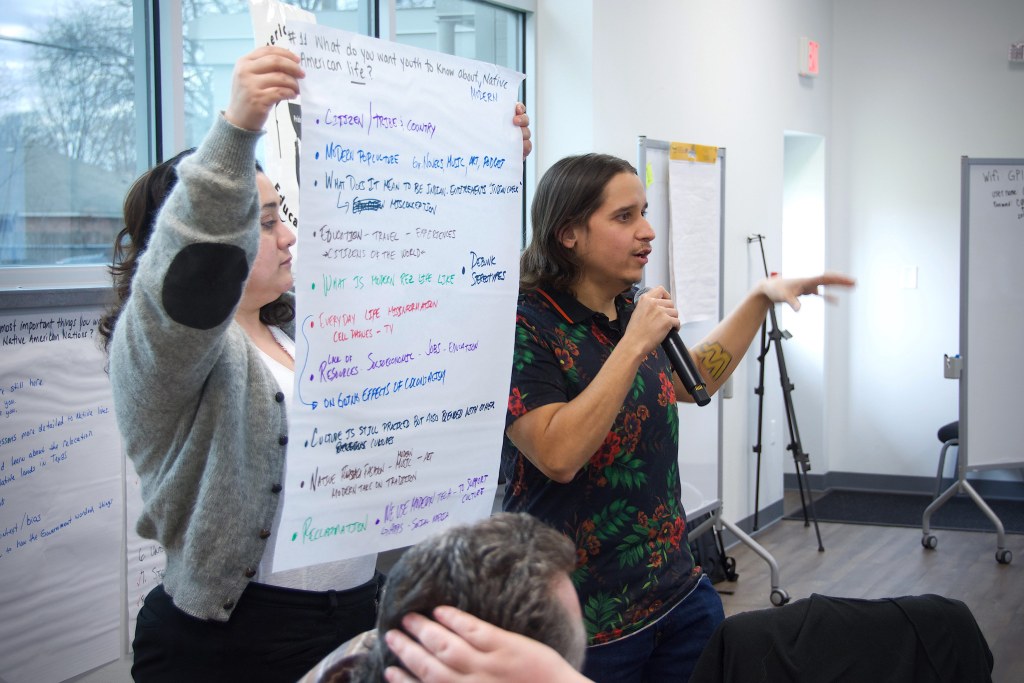
Texas Board's Tense Vote: Native American Studies Course Saved Amidst Political Crosswinds
A pivotal decision by the Texas State Board of Education has preserved a vital American Indian/Native Studies course, narrowly averting its potential demise. The 9-5 vote ensures that students across the state will continue to have access to a curriculum designed to offer a more comprehensive understanding of Indigenous history and culture, a victory for advocates seeking to counter historical erasure.
A Curriculum Born of Advocacy and Necessity
The American Indian/Native Studies (AINS) course, initially piloted in the Grand Prairie school district in 2021, emerged from years of dedicated effort by Indigenous parents and educators. Their goal was to create a curriculum that moved beyond the often-limited portrayals of Native Americans in traditional American history lessons.
This initiative followed a broader push by the Texas board of education in 2018 to develop diverse ethnic studies programs, inspired by the success of an approved Chicano/Mexican American studies class. The AINS course was subsequently certified as an "innovative course," signaling its potential for wider adoption across Texas districts.
For students like Savion Horn, a descendant of the Citizen Potawatomi Nation and a former student in the Grand Prairie district, the class offered a profound and emotional connection to his heritage. He described witnessing images of Native American children forced into boarding schools, a stark illustration of the assimilationist policies that sought to eradicate Indigenous culture.
“They weren’t allowed to speak their own language. They weren’t allowed to represent themselves with their music or art,” Horn recounted, emphasizing the emotional impact of learning about these historical injustices. “It was very emotional to me, and it would be for anyone who actually wanted to take anything away from the class and learn.”
Navigating Shifting Political Tides
The course's survival was far from guaranteed. Its five-year renewal in 2025 occurred against a backdrop of significant political shifts in Texas, marked by legislative efforts to restrict instruction on race, ethnicity, and gender. Laws enacted since 2021 have aimed to ensure an "objective" and "politically unbiased" approach to teaching controversial topics.
New legislation further empowered parents to scrutinize and object to K-12 educational materials, while also prohibiting policies or programs that reference race, color, ethnicity, gender identity, or sexual orientation. These state-level changes, coupled with federal directives targeting Diversity, Equity, and Inclusion (DEI) initiatives, created a challenging environment for courses like AINS.
Changes in leadership on the Texas education board also led to increased scrutiny of curriculum content, placing the future of the Native studies course in jeopardy.
A United Front for Indigenous Voices
In response to the mounting pressures, a coalition of advocacy groups and Native nations mobilized to champion the AINS course. Organizations such as the Ethnic Studies Network of Texas and Native-led nonprofits like the Society of Native Nations, alongside four Native nations from Texas and Oklahoma, publicly endorsed the class.
Their collective argument centered on the course's ability to provide students with a more accurate and complete understanding of tribal histories than typically found in standard K-12 curricula. This unified advocacy played a crucial role in the board's deliberations.
Concerns and Compromises Emerge
During the board's June hearing, while many members expressed support and empathy for the course's proponents, some voiced reservations. A key point of contention involved the course's discussion of the Catholic Church's role in the mistreatment of students at boarding schools, with some members expressing concern that it might unfairly cast a shadow on Christian students.
Another area of debate centered on land acknowledgments, with one representative questioning their validity and suggesting that historical land ownership was often complex and not always clear-cut. These discussions highlighted the differing perspectives on how to interpret and present historical narratives within the educational system.
Ultimately, after two days of debate, a compromise was reached. A specific passage in a reading about George Washington, which had drawn objection from the board, was removed. This concession allowed the course to be renewed for another five years as an innovative class.
A Beacon of Hope in a National Debate
The successful renewal of the AINS course is being hailed by supporters as a significant win, particularly at a time when DEI initiatives are facing widespread opposition across the country. They see this outcome as a source of hope for similar efforts to establish or preserve ethnic studies programs in other states.
Sarah B. Shear, an associate professor specializing in social studies and multicultural education, whose research indicates that many K-12 curricula often omit modern contributions of Native Americans, underscored the importance of this victory. She noted that the AINS course provides a more complete picture, moving beyond historical stereotypes.
Expanding Native Studies Across the Nation
The fight in Texas is part of a larger, growing movement to enhance Native American studies in American education. Several other states and districts have already taken steps to expand such offerings, recognizing the critical need for more robust Indigenous history education.
Washington state, for instance, mandated tribal history, culture, and government instruction in all school districts in 2015, following Montana's lead in 1999. California has recently enhanced its history lessons to incorporate more Native perspectives, particularly concerning the Gold Rush and Spanish colonial periods. In Arizona, students are required to engage with Native American history in at least two social studies courses, one at the grade school level and another in high school.
Crafting a Comprehensive Curriculum for Texas Students
The development of the AINS course in Texas was a collaborative effort, with educators, parents, and tribal members working together remotely during the pandemic. The curriculum spans various subjects, including geography, arts, culture, and contemporary achievements of Indigenous peoples across Texas and the nation.
Key topics covered include pivotal Supreme Court cases related to tribal affairs, the history of boarding schools, and the impact of historical policies. The course also addresses contemporary issues such as the use of mascots and the importance of Indigenous scholarship.
The creators of the course, a diverse group of 22 individuals, also provided training for educators interested in implementing the AINS class in their districts. Lanette Aguero, the social studies coordinator for the Grand Prairie district, was among those who embraced the opportunity after attending an ethnic studies conference.
Growth and Impact in Grand Prairie
While the Native American population within the Grand Prairie district is relatively small, the broader Dallas area has a significant Indigenous presence. The AINS class saw steady growth, expanding from 12 students in its inaugural year in 2021 to 48 students by 2024.
The success of the course in Grand Prairie inspired other districts, with Robstown and Crowley adopting the curriculum in 2024. This expansion demonstrates a growing recognition of the value of Native American studies.
Kimberly Rafalski, a non-Native social studies instructor and one of the first teachers of the AINS course, described the learning experience as a shared journey with her students. She acknowledged the emotional challenges of teaching difficult historical topics, such as the boarding school era, but emphasized the class's focus on resilience and perseverance.
“There’s a lot of things in this class. They’re hard topics to teach,” Rafalski stated. “There’s no sensationalizing any of it.” She added, “we’re not going to do trauma. Every time we learn about something difficult, we do something that shows resilience.”
A Foundation for Future Ethnic Studies
The approval of the AINS course builds upon Texas's earlier steps in ethnic studies, starting with the Mexican American studies course in 2018, the first of its kind to be approved by a state board of education. An Asian American studies class followed in 2024.
Student feedback on the AINS course has been overwhelmingly positive. A survey indicated that 97 percent of responding students felt more positive about Native American/Indigenous culture after taking the class. One student shared that the course "helped me by not being afraid of who I am as a Native American."
Younger voices also contributed to the advocacy. Walter Dougherty, a 10-year-old from the Conroe Independent School District, testified at the board hearing, highlighting how the course shifted focus from ancient civilizations to contemporary Native Americans. “People talk about us like we’re gone, but we’re not. I’m right here,” he asserted. “My brother and I are Cherokee kids growing up in Texas, and we want people to know our culture and history. … When I learn about my Cherokee family, I feel proud. I feel like I can do anything.”
Cheyenne Rendon, a Diné and Apache descendant and policy officer for the Society of Native Nations, expressed her hope that the course would prevent the erasure of Indigenous identities. "I can't imagine if my son were to never understand about his ancestors," she said, emphasizing that AINS "gives me hope that we’re not going to be erased."
Addressing Concerns and Defining Terms
The reauthorization discussions frequently circled back to whether the AINS course aligned with Texas's recent anti-DEI legislation. Proponents, like Orlando Lara of the Ethnic Studies Network of Texas, argued that federal guidance from the Department of Education clarifies that American Indian, Alaska Native, and Native Hawaiian history is not classified as DEI or critical race theory.
He explained that Native Americans are recognized as distinct political entities with sovereign tribal nations, separate from racial or ethnic classifications. However, board members continued to probe the nuances of race and ethnicity in relation to state legislation.
Lara also noted that a lack of clear guidance from the Texas Education Agency on the "controversial issues" legislation had created uncertainty for many districts. His network is actively working to assure educators that teaching the AINS course is permissible and beneficial.
Debates Over Historical Portrayals
Specific objections were raised regarding course materials. Board member Julie Pickren cited a depiction of George Washington as a "terrorist" and described lessons on boarding schools as accusations against Christian missions. These comments appeared to reference an academic publisher's description of Washington's military campaign against Iroquois villages.
Another board member, Audrey Young, argued that the curriculum standards requiring "suitable" educational materials should apply to innovative courses. She expressed concern that innovative courses might not be held to the same standards as other required classes.
Despite these objections, the majority of the board recognized that the AINS course materials had already undergone extensive review. Gustavo Reveles, a board member representing El Paso, emphasized the course's importance for student representation. "It is Texas history," he stated. "A child can see themselves represented, can see themselves as members of this very amazing state and country, not just because of George Washington, not just because of Abraham Lincoln, but because of his people that look like him and talk like him.”
The Path Forward: Standardization and Expansion
While the board's approval is a significant victory, supporters acknowledge that further steps are necessary. Efforts are underway to have the course standards officially approved as Texas Essential Knowledge and Skills (TEKS), which would provide greater stability and reduce vulnerability during future review processes.
The AINS course will face another board vote in 2030, marking the end of its current five-year innovative course period. In the interim, organizers are focused on encouraging more districts and educators across Texas to adopt the class, expanding its reach and impact.
For former student Savion Horn, the AINS class provided a crucial link to his heritage, enabling him to connect with his Potawatomi ancestry and family traditions. He now aims to engage more deeply with his local Native communities and participate in the Texas powwow trail, a testament to the enduring cultural significance of Indigenous identity.
“I appreciate being a part of a community, especially this one,” Horn reflected. “I know where I’m from, and it means a lot to me.”





 Explore AI Teaching Tools
Comments (0)
Please login to comment
No comments yet
Be the first to comment on this article