
Norwalk's Secret Weapon: How Reflection is Breathing Life into "Portrait of a Graduate"
In the relentless pace of modern education, a quiet revolution is unfolding in Norwalk Public Schools. It’s not about new technology or standardized tests, but a fundamental shift in how students and educators process their experiences. This deep dive into Norwalk's journey reveals how a seemingly simple practice – reflection – is becoming the linchpin for truly embedding their ambitious "Portrait of a Graduate" (PoG) into the fabric of daily learning.
The Elusive "Aha!" Moment: Why Reflection Can't Be an Afterthought
The wisdom of John Dewey, that "we learn from reflecting on experience," echoes through educational corridors. Yet, in the daily whirlwind of lesson plans, unexpected questions, and administrative announcements, reflection often gets squeezed out. This sacrifice, however, comes at a steep cost: the missed opportunity for students to truly internalize their learning and make it their own.
When educators bypass these crucial reflective pauses, learners are denied the chance to connect new knowledge to their existing understanding, to ask "what does this mean to me?" or "what will I do with this?" This is particularly critical as schools nationwide embrace "Portrait of a Graduate" frameworks, which emphasize complex cognitive and social-emotional skills.
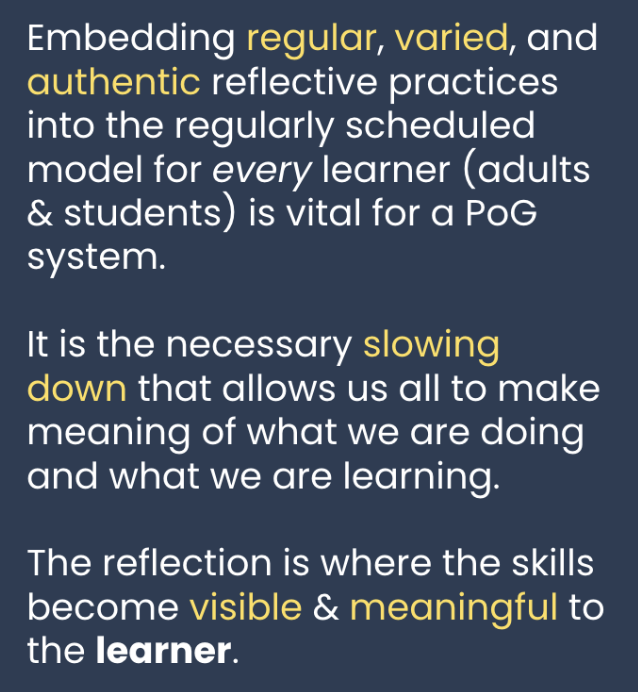
Without a robust culture of reflection, a PoG risks becoming a mere decorative poster or a static webpage. The true power of these frameworks, the kind that fosters genuine growth and transformation in students, is unlocked when learners actively process their experiences and articulate their evolving understanding.
Unlocking the Portrait: Reflection as the First, Crucial Lever
The journey to a living, breathing "Portrait of a Graduate" in Norwalk Public Schools began with a critical question: how can we meaningfully assess the development of these vital competencies? Early attempts to link PoG skills to existing assessments proved insufficient, offering little insight into students' actual growth.
This led to the formation of an internal K-12 assessment cohort, a group of educators tasked with reimagining how to capture authentic student progress. A central tension emerged: if these PoG skills are essential for future success, students deserve honest, actionable feedback on their development. Yet, directly grading or rating these complex skills often felt subjective and uncomfortable.
The cohort's exploration underscored a foundational principle: students need consistent opportunities to self-assess and reflect on their journey. This insight resonated deeply, highlighting reflection not just as a pedagogical tool, but as a powerful lever for deeper PoG implementation.
From Abstract to Actionable: Making PoG Skills Tangible
Reflection offers a rich entry point for integrating PoG competencies. It allows schools and districts to begin embedding these skills without requiring immediate, sweeping curriculum overhauls or complex new reporting systems. The simple act of a student connecting their learning experiences to a PoG skill and their own lives powerfully situates the Portrait as central to all educational endeavors.
This approach moves beyond the abstract notion of a "Portrait" and grounds it in the tangible reality of student learning. It empowers students to see themselves as active participants in their own development, fostering a sense of ownership that standardized assessments often fail to cultivate.
Norwalk's Strategic Embrace: Building a District-Wide Culture of Reflection
The Norwalk story is a testament to intentionality. Recognizing that a living PoG requires systemic coherence, the district leadership, guided by Superintendent Dr. Estrella's vision, sought to anchor reflection within a shared framework. This commitment aimed to create consistency across all schools and grade levels.
The selection of Driscoll's reflection model proved a strategic choice. Already familiar in some parts of the district, its flexibility made it adaptable across various roles, content areas, and developmental stages. This model became the cornerstone of Norwalk's approach.
A Summer of Shared Understanding: Leaders Paving the Way
The 2025 Summer Leadership Retreat served as a pivotal moment, intentionally weaving reflection into every session. District leaders engaged in structured reflection protocols from renowned institutions, experiencing firsthand the practices they hoped to see mirrored in classrooms.
This immersive experience fostered a shared understanding of what reflection truly means in practice and how it can be applied. It equipped leaders with the language and tools to champion this critical element of the PoG initiative throughout their schools.
The Driscoll Toolkit: Empowering Educators and Students
To further solidify this district-wide commitment, Norwalk developed a comprehensive Driscoll's Reflective Framework Toolkit. This resource includes grade-level continuums illustrating the developmental progression of reflection, alongside targeted elementary and secondary reflection questions and sentence stems.
These practical tools demystify reflection, providing educators and students with clear guidance and support. The toolkit ensures that the practice is not only understood but also consistently applied, fostering a common language and approach across the district.
The Ripple Effect: Reflection's Impact on Practice and Purpose
What began in Norwalk as a strategic effort to address the challenge of meaningfully assessing PoG competencies has blossomed into something far more profound. Students are increasingly taking ownership of their growth, actively engaging with the skills outlined in their Portrait.
Simultaneously, educators are discovering new avenues to deepen their understanding of their own practice. Reflection is providing a much-needed pause, a moment to connect daily tasks with the overarching purpose of the "Portrait of a Graduate." This deliberate slowing down fosters greater coherence and brings the district's vision to life.
The impact is palpable. As one building leader remarked, "Everything comes back to Driscoll’s model of reflection." This sentiment underscores how deeply reflection has become integrated into the district's operational DNA, shaping everything from data analysis to school improvement planning and coaching cycles.
Small Starts, Big Impact: Practical Steps for Cultivating Reflection
For districts or schools considering reflection as a key lever for their own "Portrait of a Graduate" implementation, Norwalk offers valuable insights. The journey doesn't require an immediate, massive overhaul. Instead, a strategic, phased approach can yield significant results.
Starting with Adults: Empowering faculty and staff to practice reflective activities themselves is paramount. When educators experience the benefits and nuances of reflection firsthand, they are better equipped to model and facilitate these processes with their students. This builds confidence and readiness.
Consistency Over Scale: Begin with small, consistent practices. Monthly metacognitive moments, where students connect any activity to a PoG skill through various mediums—writing, video, voice memos, or illustrations—can build momentum. The key is regularity, not necessarily complexity.
Low-Stakes Authenticity: Reflection thrives in a low-stakes environment, ideally detached from points, grading scales, or formal assessments. When reflection is authentic, sometimes messy, and responsive to the immediate learning experience, it fosters genuine insight and ownership.
Shared Prompts for Clarity: Utilizing shared prompts can significantly reduce the cognitive load for both students and teachers. Consistent prompts eliminate the need for students to decipher new language and free up teachers from the constant task of creating novel prompts, allowing them to focus on facilitating the reflective process.
Whether adopting an existing framework like Norwalk's or implementing these "small starts," weaving meaningful, learner-centered reflection into the educational ecosystem can profoundly deepen both learning and the implementation of any "Portrait of a Graduate" initiative. It transforms a static vision into a dynamic, living guide for student success.





 Explore AI Teaching Tools
Comments (0)
Please login to comment
No comments yet
Be the first to comment on this article