
Lithium Valley's Promise: Students Train for Jobs on the Horizon, Facing an Uncertain Timeline
In the sun-drenched expanse of California's Imperial Valley, a region poised to become a global hub for a critical energy mineral, a new educational gamble is underway. Hundreds of students are diligently pursuing certificates and degrees designed to equip them for a burgeoning lithium industry, a sector promising abundant jobs and economic revitalization. Yet, as these aspiring technicians and operators complete their training, the anticipated wave of employment opportunities remains frustratingly out of reach, creating a complex challenge for both educational institutions and the eager workforce.
The Waiting Game: A New Industry's Unfolding Reality
Corban Dillon, a 41-year-old resident of the Imperial Valley, embodies the dilemma faced by many in his community. After his family's courier business faltered, he saw the emerging lithium industry as a beacon of opportunity. He enrolled in Imperial Valley College's inaugural plant operator certificate program, hoping to secure a stable career close to home.
Upon completing his certificate in the spring of 2024, Dillon found the promised jobs had not yet materialized. Undeterred, he pursued a second certificate, only to face the same reality. Now, as he nears completion of his third lithium-related certificate, the landscape remains unchanged, with hundreds of anticipated jobs still some time away.
“A lot of us already have jobs or have families and are trying to juggle all that and trying to get a certification,” Dillon shared, reflecting the sentiment of many in his cohort. “And not having actual potential employment as of right now, it’s hard for one person to sit there and say, ‘You know what? Let’s continue with this.’”
The Educational Tightrope: Balancing Readiness and Reality
The situation in Imperial Valley highlights a persistent conundrum for educational institutions tasked with preparing students for new and evolving industries. The desire to equip local residents with in-demand skills clashes with the unpredictable timelines of industry development.
Colleges find themselves walking a fine line: launch programs too early, and students may find themselves overqualified for existing roles or facing prolonged periods of unemployment. Wait too long, and the opportunity to fill newly created jobs with local talent may be lost to out-of-town specialists.
“There’s this fine calibration required where employers need the workers for the projects, they can’t start training the workers when they need them,” explained Betony Jones, a senior researcher at the University of California, Berkeley Labor Center’s green economy program. “But workers can’t train and then wait around.”
Imperial Valley's High Stakes: A Region in Need of Opportunity
For Imperial County, an agricultural heartland grappling with some of the state's highest poverty and unemployment rates, the stakes are particularly elevated. In March, the county's unemployment rate stood at a staggering 16.9 percent, more than triple that of its neighboring regions.
Priscilla Lopez, the county's director of workforce and economic development, painted a stark picture of the local job market. She recounted how a recent opening of just 50 positions at a new hotel drew nearly 1,500 applicants in a single day. This overwhelming response underscores a pervasive sentiment: the need to leave the valley for better prospects.
“The mentality that we see today here is: If we want a future, we need to leave the valley,” Lopez stated. “But wouldn’t it be great to have these opportunities so that your kids can see the opportunities here, and maybe we keep our talent.”
The Lithium Dream: From "Saudi Arabia of Lithium" to Delayed Realities
The prospect of a lithium boom ignited hope across the Imperial Valley. As companies began exploring the region's vast lithium reserves, the area was rebranded as "Lithium Valley," with state officials touting its potential as the "Saudi Arabia of lithium." Projections suggested commercial operations could begin as early as 2026.
However, the reality has proven more complex. Major players in the extraction process, such as Berkshire Hathaway Energy Renewables and Controlled Thermal Resources, have faced delays. Berkshire Hathaway Energy Renewables recently completed its demonstration plant, while Controlled Thermal Resources is still in the crucial funding stages, indicating that widespread lithium extraction jobs are likely still at least two years away.
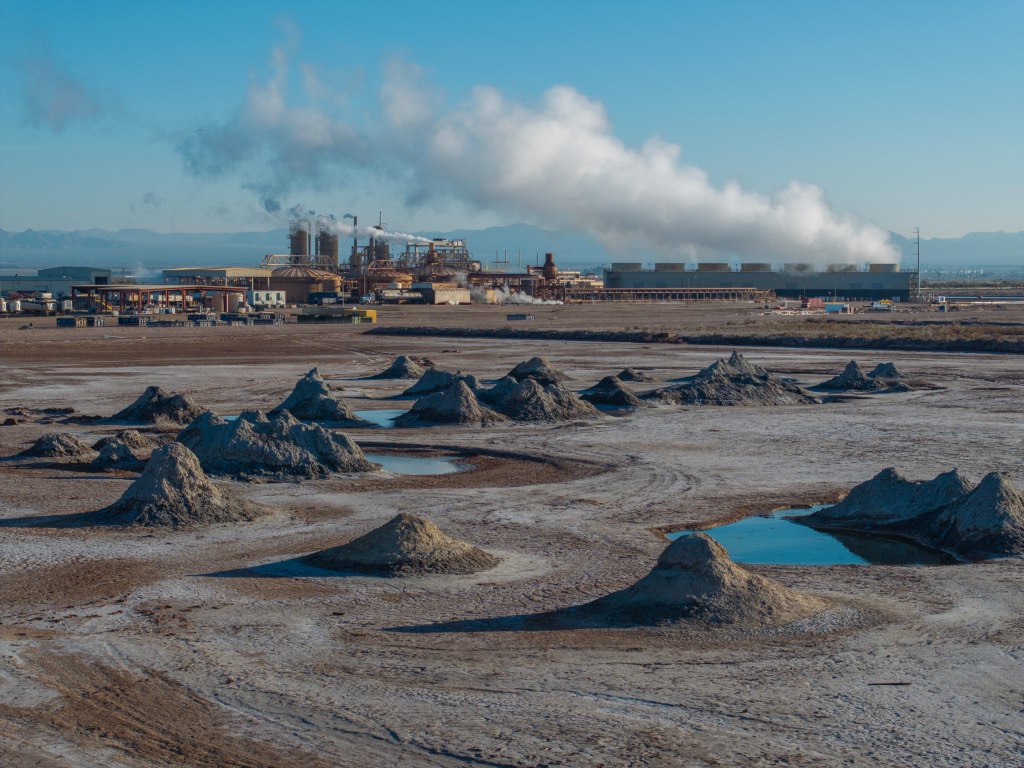
The Salton Sea, a vast inland lake, holds an estimated 18 million metric tons of lithium carbonate within its hot brine – enough to power millions of electric vehicle batteries. This immense resource fueled the initial optimism and the subsequent calls for educational initiatives.
Educational Response: A Dual Approach to Workforce Development
In response to the burgeoning interest, the region's primary higher education institutions, Imperial Valley College and a satellite campus of San Diego State University, moved swiftly to develop relevant programs.
San Diego State University secured $80 million in state funding to establish a new STEM campus in Brawley, California. This facility is designed to support new undergraduate degree programs in electrical engineering and chemistry, fields identified as crucial for the local geothermal and lithium sectors. As of mid-April, the university had received nearly 100 eligible applications for these new programs.
Imperial Valley College, with funding from the U.S. Department of Energy, launched its Lithium Industry Force Training program. This initiative offers three certificates: plant operator, chemical lab technician, and instrumentation technician. Each program can be completed in two semesters and includes coursework in chemistry, mathematics, hazmat training, and plant operations.
Student Aspirations: Seeking Better Trades and Local Futures
The community college has actively promoted its certificate programs as a direct pathway into the lithium industry. Promotional videos highlight the opportunity to "launch your career in the booming lithium industry." Imperial Valley residents, yearning for stable, local employment, have responded with enthusiasm.
George Prieto, 48, a student in the plant operator certificate program, views it as his first step into higher education. Previously working in retail merchandising, he sees the program as a chance to secure a job in his own backyard, avoiding the need to relocate for work. "We don’t have to go and sacrifice and go somewhere else [for a job]," he stated.
Alberto Curiel, 24, a classmate of Prieto's, initially considered an electrician certificate but was drawn to the projected demand for plant operators. He seeks a well-paying job with benefits in the Imperial Valley, a significant upgrade from his current work in roofing, which he described as "breaking my back in the heat" for around $23 an hour.
“I kind of want a better trade-off,” Curiel explained, echoing the desire for improved economic stability and quality of life.
Navigating the Hurdles: Legal Challenges and Shifting Priorities
Industry representatives and county officials point to a 2024 lawsuit by environmental groups as a significant factor in the delayed timelines. The lawsuit alleged that Imperial County officials underestimated the potential environmental impacts of a proposed project by Controlled Thermal Resources, including water pollution and health effects. Although a court rejected the challenge, an appeal is ongoing.
Beyond legal battles, other economic and political factors have influenced the pace of development. The elimination of electric vehicle incentives by the previous administration, coupled with increased federal attention on lithium projects in other states, has shifted investment priorities.
The U.S. Geological Survey recently announced substantial lithium reserves in southwestern Arkansas, rivaling those found near the Salton Sea. This discovery has led to significant investment in other regions, including a $225 million Department of Energy grant for an Arkansas project and a pilot well opened by Chevron in the area. In Nevada, a different lithium project has attracted federal investment.
Meanwhile, one of the primary companies active near the Salton Sea has reportedly redirected some of its focus toward data centers, further illustrating the dynamic and sometimes unpredictable nature of large-scale industrial development.
A Word of Caution: The "Lithium Valley" is Not a Sure Thing
Concerns about the viability and timeline of the Lithium Valley project have been voiced by state officials. A member of the California Energy Commission cautioned Imperial County residents that "the Lithium Valley is not a sure thing," citing the trend of federal funding favoring other states.
San Diego State University President Adela de la Torre offered a more direct assessment in a commentary piece, stating, "Unless progress in Lithium Valley accelerates rapidly, these students will graduate into an empty local job market."
"The timing thing has been something that’s out of our control," acknowledged John McMillan, SDSU’s assistant vice president of economic development. "What we can control is two things: One is being collaborative with the companies, trying to see if we can cobuild opportunity.”
“The other thing that we can control is the students that we train,” McMillan added. “What we can guarantee is that the students will have a quality engineering and chemistry education that can make them effective in many of the industries out here.”
Given that SDSU is starting with freshmen in its initial STEM degree offerings, it will be several years before the campus produces graduates, further complicating the immediate job market alignment.
Imperial Valley College Adjusts: A Strategic Pause and Future Re-evaluation
Imperial Valley College is preparing to graduate its third cohort of students from its industry-focused certificate programs. The original strategy envisioned these programs aligning perfectly with the industry's ramp-up, a timeline that has not materialized as anticipated.
Since the fall of 2023, a total of 173 students have enrolled in the college's certification programs, with 42 completing their certificates and 57 currently enrolled. As of the fall of 2025, only 16 students had secured employment directly related to their training.
In response to the job market uncertainty, Imperial Valley College has reduced cohort sizes and plans to suspend two of its certificate programs for the upcoming academic year. The intention is to reintroduce these programs in the 2027-2028 academic year, contingent on industry projections and job availability.
A Glimmer of Hope: Transferable Skills and Enduring Potential
Despite the current delays, some students remain optimistic about the long-term prospects. George Prieto hopes his certificate will prove transferable to other industries, providing a foundation for future career moves. Corban Dillon, who has now secured a well-paying job with a mining company, albeit outside the Imperial Valley, believes the immense lithium reserves beneath the region will eventually lead to the industry's full realization.
Dillon's new role, offering good pay, benefits, and on-site accommodations, demonstrates the potential for well-trained individuals to find opportunities, even if they require relocation. His experience underscores the value of the skills acquired through these specialized certificate programs, highlighting their broader applicability in the resource extraction and industrial sectors.







 Explore AI Teaching Tools
Comments (0)
Please login to comment
No comments yet
Be the first to comment on this article