
Milwaukee's Silent Crisis: How Children Become the First — and Often Only — Detectors of Lead Poisoning
In the heart of Milwaukee, a hidden epidemic is silently impacting the youngest residents. For too many families in this city, the first sign of a pervasive environmental hazard isn't a city warning or a landlord's proactive inspection, but a devastating diagnosis for their child. This is the stark reality where children, through no fault of their own, are forced into the role of involuntary lead detectors, their developing bodies bearing the brunt of decaying housing stock and systemic neglect.
The Unseen Threat in Rental Homes
Domininck Tompkins vividly remembers the moment a doctor delivered the news: her one-year-old's lead levels were alarmingly high. The suspicion immediately fell on their poorly maintained rental home, a place where chipping paint was a constant, unsettling presence. The landlord's dismissive response when confronted with the city's findings — a curt "I don't care" — underscored a chilling indifference that has plagued Tompkins' life.
Over the past decade, Tompkins has navigated a landscape of repeated housing instability, including periods of homelessness. Many of the rental properties she's occupied have been plagued by unaddressed lead paint and dust, hazards that have had a profound and lasting impact on her three daughters. Their developmental delays and behavioral challenges, doctors have indicated, are likely linked, at least in part, to lead poisoning.
This pervasive issue highlights a critical, often overlooked, connection between tenant rights and the health and well-being of young children. High lead levels are strongly associated with developmental delays, attention deficit hyperactivity disorder, and learning disabilities. A Milwaukee-based study even found that low levels of lead exposure correlated with poorer academic performance in third grade, even after accounting for other socioeconomic factors.
When Children Are the Only Warning System
"Children are the 'lead detectors'," explains Maria Beltran, a Milwaukee activist. This poignant statement captures the reactive nature of the city's approach. Typically, officials only intervene with landlords after a young child's blood lead levels trigger an alert.
While no level of lead exposure is deemed safe, federal guidelines establish a blood lead "reference value" of 3.5 micrograms per deciliter to identify children with elevated levels. In Milwaukee, when a child under six exceeds this threshold, the city is notified and follows up with the family. However, significant intervention, including assigning a nurse, investigating the source of exposure, and pushing for abatement work, usually only occurs when a child's lead level reaches 10 micrograms or higher.
Last year, the city oversaw approximately 250 such abatement projects, primarily for children aged one to three. This represented the highest number of interventions in recent years. City officials acknowledge the need for this number to grow, especially given that over 2,000 children under six in the Milwaukee area tested with high lead levels in 2025. A significant majority of these cases were found in rental properties, according to Tyler Weber, the city's deputy commissioner of environmental health.
The financial burden of these necessary renovations often falls on the city, utilizing federal grants and local funds. This is because many landlords are unwilling to cover the costs, and the city's ability to fine recalcitrant property owners is severely limited. "Sometimes we have to throw money at the property even if the landlord is going to benefit," Weber stated, expressing the difficult position officials often find themselves in.
The Rental Landscape and its Vulnerable Residents
In Milwaukee, nearly 60 percent of households are renters, a figure that escalates significantly among low-income residents. Sociologist Matthew Desmond's seminal work, "Evicted: Poverty and Profit in the American City," illuminated the precarious lives of Milwaukee's renters and the often-cutthroat dealings with landlords. His research compellingly argues that evictions, with over 12,000 filings annually in Milwaukee County, are a primary driver of poverty, not merely a consequence of it.
The persistent lead crisis in Milwaukee's rental homes further illustrates how the conditions that foster evictions can inflict lasting harm on young children. Between 2018 and 2021, over 10 percent of tested children in 51 of the county's census tracts showed positive for lead poisoning. In six of these tracts, the rate exceeded 20 percent, a figure more than eight times the national average.
Young children are particularly susceptible due to their rapidly developing brains and their tendency for hand-to-mouth behaviors, which increases the likelihood of ingesting lead. While most cases are managed through outpatient care, a few children each month become so severely ill that hospitalization is required to prevent permanent neurological damage, coma, or even death.
A Mother's Fight for a Safe Home
Shyquetta McElroy's journey began with an early warning. At her eldest son's six-week checkup, she learned his lead level was too high. Despite breastfeeding, her only advice was to increase her vitamin D intake.
By kindergarten, her son's lead level had reached nearly 10 micrograms, a figure that brought the profound impact of lead poisoning into sharp focus. Teachers recommended he repeat the year, noting his struggles to meet developmental milestones like consistent toilet use and writing his name.
This realization spurred McElroy into action. She approached her landlord, who, remarkably, agreed to invest over $20,000 in lead abatement, maxing out her credit to install new walls, windows, and flooring in parts of the house. McElroy also undertook extensive renovations in the attic. The prompt action was due to the landlord being McElroy's mother.
McElroy soon discovered that such landlord generosity was rare. The owner of a steeply discounted Section 8 rental she moved into after leaving her mother's apartment proved far less accommodating. "Being in a position where you are low-income and don't have the money to change your situation, you got to go with what you can," she reflected.
A Legacy of Neglect and Shifting Responsibilities
Decades ago, cities like Baltimore, Cleveland, and Milwaukee saw lead paint, once a material for affluent homes, become a pervasive problem in lower-income rental units. This coincided with periods of redlining, white flight, and urban disinvestment, as older homes with lead paint were converted into multi-family dwellings.
Milwaukee once held a pioneering stance on protecting families from lead. In 1991, the city updated its ordinances to mandate abatement work in rentals if a child was exposed to lead hazards, even without a positive blood test. Amy Murphy, who served as Milwaukee's lead manager for the health department from 1992 to 2006, recalled that owners were regularly taken to court and fined.
A pilot rental inspection project initiated in 1999 required 1,000 homes in high-risk areas to meet lead safety standards within a year. "That ordinance shifted the balance of power between property owners and tenants," Murphy noted. Predictably, owners resisted being legislated.
After a few years, landlords successfully lobbied the city to discontinue mandatory abatement, promising voluntary compliance with financial incentives. Shortly thereafter, Murphy departed the health department, citing growing dysfunction and poor leadership. The city's once-ambitious lead abatement efforts faltered, culminating in the health commissioner's resignation after his department failed to notify thousands of families about their children's elevated blood lead levels.
Simultaneously, Wisconsin legislators enacted laws that empowered landlords, effectively making lead removal a matter of individual homeowner discretion and, some argue, morality. State laws have long facilitated easier evictions for landlords in Wisconsin compared to many other states. More recently, lawmakers made it exceedingly difficult for communities to proactively enforce lead safety regulations on most landlords.
Legislative Hurdles and Tenant Vulnerability
In 2015, the Wisconsin State Legislature, with support from landlords and the state builders association, passed a law prohibiting cities and towns from establishing proactive rental inspection programs. This effectively stripped Milwaukee of a crucial tool for ensuring rental safety before families moved in.
Although the state lifted this ban two years later, the law continued to pose significant obstacles to meaningful rental inspections, particularly for the duplexes and single-family homes where officials identify the majority of lead problems. The law restricts rental licensing programs that could enforce minimum maintenance standards and severely limits cities' ability to recoup inspection fees or penalize homeowners.
Wisconsin law also curtails local governments from conducting preemptive code enforcement, meaning renters must typically file a complaint to have a violation addressed. "Many tenants don't know to do that," stated Kevin Solomon, senior associate organizer with Common Ground, a Milwaukee advocacy group. He also highlighted the pervasive fear of retaliation among renters, citing a case where a Milwaukee landlord was charged with murder after his tenant allegedly complained about code violations.
"Many also call and call, but stop because it doesn't make a difference — in part because the fines/fees are so low," Solomon wrote. While a state statute allows for rent abatements for hazardous conditions, the process is often bureaucratic, time-consuming, and offers only a fraction of rent relief, if tenants are even aware of it. Furthermore, renters who withhold too much rent risk eviction.
The Long Shadow of Lead Exposure
By the time Domininck Tompkins' eldest daughter started school, the family had endured years in a dilapidated rental they suspected had poisoned their child. Repeated lead tests confirmed their fears.
As a toddler, childcare teachers alerted Tompkins that her daughter needed early intervention services due to missed developmental milestones in speech and walking. Initially resistant, Tompkins eventually agreed, and her daughter has received ongoing special education support ever since.
In 2019, despite owing some back rent which they were actively paying off, Tompkins informed her landlord of their plan to move, frustrated by years of inaction on lead abatement and other repairs. The landlord initiated eviction proceedings.
Without warning, sheriff's deputies arrived one frigid morning before Christmas 2019. Tompkins, in the midst of showering, had minimal time to dress before her entire family—including her partner, two children, mother, and sister—was forced onto the street. "They put us out in the dead of winter," she recounted, her voice heavy with the memory. "My kids had no shoes on their feet." The timing was not lost on her; the landlord's antagonism had intensified after her initial complaints about lead.
Homeless for several months, Tompkins sent her children and mother to live with relatives in Arizona. The next rental they secured also had code violations and eventually burned down due to electrical issues, leading to another period of homelessness.
Their current rental, situated on a quiet street, features chipping paint on its facade, porch, and interior. Several months ago, the owner agreed to lead remediation, starting with the porch. However, the contractor's cost estimates exceeded the landlord's willingness to pay, resulting in minimal work being completed, according to Tompkins.
All three of her children have tested high for lead at various points. Tompkins actively manages the situation, attending "Cooking with COLE" (Coalition on Lead Emergency) sessions. There, caregivers learn about mitigating lead risks through filtered water, specific dietary choices, sealing chipping paint, and regular cleaning. COLE also provides coaching on discussing lead concerns with pediatricians and securing appropriate special education support in schools.
Despite these efforts, the struggle to secure a lead-free home leaves Tompkins frustrated. Her seven-year-old exhibits behavioral challenges at school, and her two-year-old may require early intervention for developmental delays. "It's about these kids' safety — lead affects them more than the rest of us," Tompkins emphasized.
Advocacy and the Path Forward
Shyquetta McElroy's experiences in Milwaukee's rental market fueled her transition into advocacy. She now works as a family advocate and organizer at COLE, supporting parents like Tompkins. For the past two years, she has served as the organization's executive director.
McElroy has built sufficient resources through her home childcare business and her work at COLE to be more discerning about her living situation. When she needed to move last winter, she rigorously questioned prospective landlords about lead hazards and brought her own testing equipment during viewings. This assertiveness, she noted, slowed her apartment search, as "There were probably four that turned me down where I knew it had something to do with the questions that I asked about lead."
In a city where many parents cannot afford such scrutiny, McElroy advocates for greater landlord accountability. "As it is, the landlord can come up with any reason why this couldn't be done," she stated. "The loopholes are bigger for the landlords and very, very narrow for the tenants."
While many cities, like Milwaukee, adopt a reactive stance on lead poisoning, a growing number are shifting towards proactive rental inspections. Rochester, New York, a city of just over 200,000, has established one of the nation's most comprehensive rental inspection programs. For over two decades, every registered rental unit undergoes a visual inspection for deteriorating paint every three to six years. In high-risk areas, many rentals also receive dust wipe testing for lead. Properties failing inspection must be reinspected and pass before being re-rented.
This proactive approach in Rochester has yielded significant results. Between 2000 and 2016, the rate of children testing with elevated lead levels dropped by an impressive 85 percent. "What Rochester is doing should be the norm," remarked Murphy, who continues to work on lead issues nationally.
This year, an inspection program modeled on Rochester's has expanded to over 20 cities in New York. Unlike Wisconsin, New York law does not severely restrict local efforts to implement rental inspection programs or proactive code enforcement. New York tenants also benefit from stronger legal protections and longer eviction timelines, providing them with more leverage to negotiate with landlords on issues like lead hazards.
A Glimmer of Hope in Milwaukee
The tide may be beginning to turn for renters in Milwaukee. A new tenant union, Tenants United, formed just six months ago under the umbrella of Common Ground, is lobbying for rent control, safe rental conditions, and other tenant rights. Tenants United recently partnered with the Milwaukee city attorney to sue Highgrove Holdings, a major out-of-state landlord facing numerous lead hazard complaints, alleging the company has become a public nuisance.
A city-wide initiative to replace lead service lines, a significant source of water contamination, is well underway. Both Milwaukee's health department and the city attorney are poised to take more aggressive action on lead hazards in homes. The city has observed a modest increase in landlords covering abatement costs due to intensified enforcement in recent years.
However, the city faces a significant challenge at the end of 2026 when federal pandemic-era American Rescue Plan Act funds, which have supported much of its lead abatement efforts, will expire. While Weber anticipates securing a grant from the U.S. Department of Housing and Urban Development, this funding comes with stricter limitations, including a cap on per-house spending.
The state laws hindering rental inspections, preemptive code enforcement, and meaningful fines remain substantial impediments. Eviction laws also continue to pose a threat. "When a child has been poisoned by lead, 'Mom and Dad are devastated. They are angry,'" Weber observed. "'They say, 'Why would I continue paying rent?' But there's no protections, and they can be evicted…'"
McElroy and Tompkins understand these stakes intimately. While McElroy's eldest son has not tested high for lead since age six, the teenager still grapples with the lingering effects of the poisoning. At 19, he experiences difficulties retaining information and suffers from vision and hearing problems that physicians attribute to the lead exposure. "You can lower the lead level, but they never lose the damage," McElroy stated sadly.
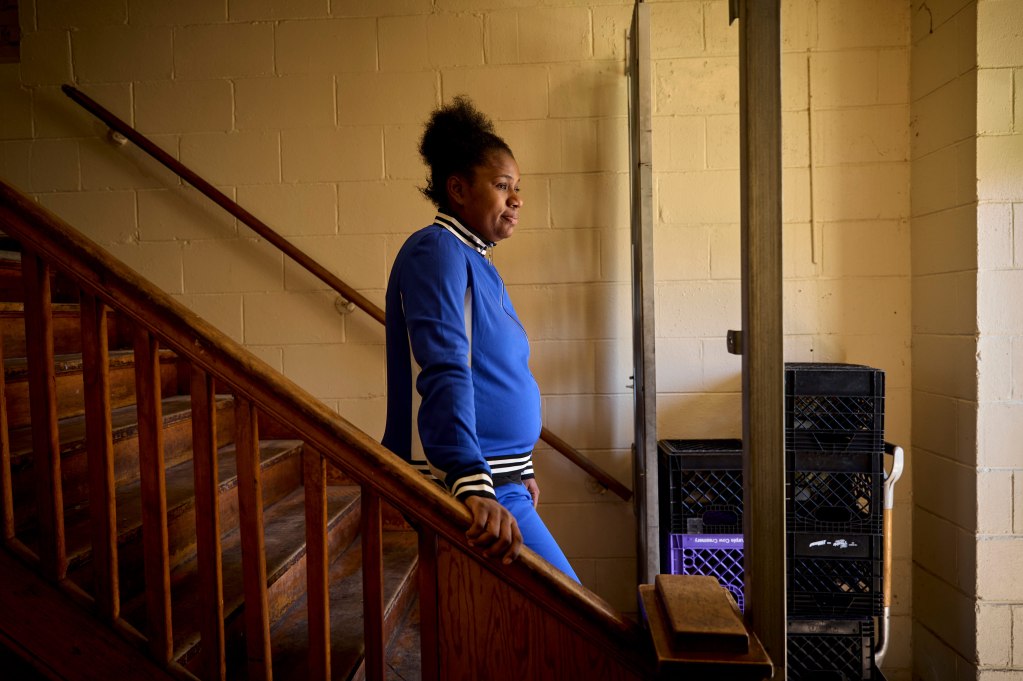
Tompkins' older daughters continue to face developmental and cognitive delays impacting their academic performance and behavior. She holds onto the hope that her fourth daughter, due soon, will never have to live in a lead-contaminated home. The new landlord at her current residence has committed to extensive abatement and renovation, including a new porch, windows, and replacement walls and floors in several rooms. This significant project will likely necessitate a temporary move for the family, but Tompkins remains cautiously optimistic that the work will finally be completed. "It's a big project he has to do," she said. "So one step at a time."







 Explore AI Teaching Tools
Comments (0)
Please login to comment
No comments yet
Be the first to comment on this article