
AI in Schools: Hype, Hope, and the Hard Truths Educators Face
The rapid ascent of artificial intelligence has ignited a firestorm of predictions about its impact on education. Three and a half years after the public debut of a groundbreaking AI model, it's time to sift through the noise and assess the most pressing "hot takes" shaping our schools.
The "AI as a Replacement for Core Skills" Verdict: Overreaction
A prevailing sentiment suggests that if AI can perform tasks like writing or problem-solving, schools should prioritize teaching students how to use these tools, rather than focusing on foundational skills. The argument is that time spent on skills AI can replicate is a waste, especially if employers value AI proficiency.
This perspective, however, fundamentally misunderstands the purpose of education. Schools are tasked with far more than just workforce preparation; they aim to cultivate critical faculties, develop talents, and prepare students for informed citizenship. This notion echoes past anxieties surrounding the introduction of calculators, where some argued that teaching basic computation was obsolete. That proved to be a flawed premise.
Students who lack fundamental mathematical understanding struggle to identify errors or comprehend financial information, regardless of the tools at their disposal. Similarly, as one prominent computer science professor has noted, writing is akin to cognitive exercise. The process of constructing an argument, gathering evidence, and refining prose builds essential analytical and communication muscles.
The "AI Knows Everything, So Why Teach Facts?" Verdict: Misses the Point
The sheer power of AI, its ability to access vast information and generate text effortlessly, leads some to believe that teaching factual knowledge is redundant. Why burden students with information they might forget when AI can instantly produce it? The focus, they argue, should shift entirely to critical thinking.
While AI's capabilities are indeed dazzling, this argument overlooks a crucial element: the quality of AI output is directly dependent on the user's expertise. To effectively leverage AI for complex tasks, such as planning a sophisticated scientific mission, one needs a deep understanding of the underlying principles to ask the right questions.
For centuries, students have studied subjects like literature, history, and science. This knowledge isn't merely about memorization; it's about building a framework for understanding the world. Technological advancements, however impressive, do not negate the fundamental need for this foundational knowledge. Critical thinking, while vital, cannot operate in a vacuum; it requires a rich intellectual landscape to engage with.
Indeed, rigorous content is not an impediment to deep thinking; it is its very foundation. Teaching great literature or complex mathematics without fostering critical engagement is a disservice to students. AI should be a tool to enhance this process, not replace it.
The "AI Will Save Teachers Time" Verdict: Shouldn't Be an Overreaction, But . . .
The potential for AI to automate time-consuming administrative tasks for teachers is a widely discussed benefit. Grading, communication with parents, report filing, and the creation of individualized education programs (IEPs) consume a significant portion of a teacher's valuable time. Offloading these duties could free up educators to focus more on direct student interaction, coaching, and mentoring.
This prospect should indeed be a straightforward win. However, the history of educational technology is littered with promises that failed to materialize. Numerous innovations, from interactive whiteboards to specialized software, have been touted as revolutionary, only to become more of a burden than a benefit for already stretched teachers. This repeated cycle has fostered a degree of cynicism.
Furthermore, relying on AI for tasks like crafting parent communications or IEPs could introduce new challenges. Parents might feel even more disconnected if they perceive communications as automated, and teachers might lose a nuanced understanding of a student's progress if they delegate the creation of essential documents to AI.
The "AI-Powered Instruction is Transformative" Verdict: The Jury Is Out
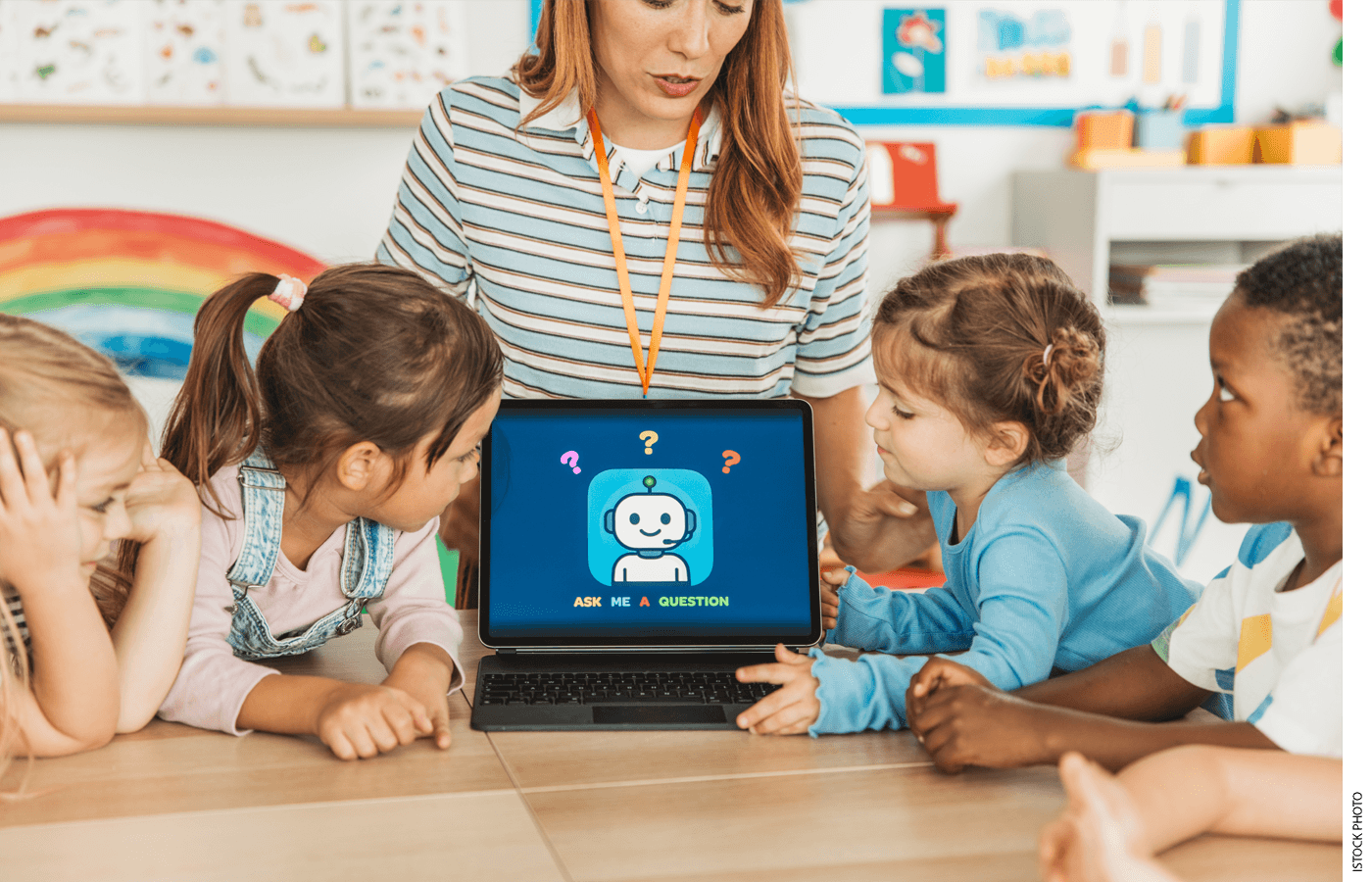
The idea that AI can revolutionize the school day by providing personalized, efficient instruction is compelling, especially in light of the challenges exposed during recent periods of remote learning. Proponents suggest that AI could compress learning into shorter periods, freeing up time for more engaging projects, and offer individualized support to every student, addressing the persistent shortage of skilled educators.
The potential for AI-driven tutoring to significantly impact student learning is supported by research. AI offers a promising solution to the logistical and financial hurdles of providing sufficient human tutors. Intelligent tutoring systems have a long history and demonstrate that this is more than just a futuristic fantasy.
However, similar claims have been made for various algorithm-driven interventions and new school models in the past, with mixed results. The increased reliance on screens, a trend exacerbated by digital learning, raises concerns about cognitive engagement, as research suggests reading on paper is often more effective. The broader societal impact of increased screen time, including potential detriments to youth mental health and social connections, cannot be ignored.
While AI might offer a different path, the cumulative effect of fifteen years of academic stagnation, troubling trends in youth mental health, and growing social isolation necessitates a cautious approach. We must carefully consider the developmental consequences of students spending even more time interacting with AI through screens.
The "Future-Forward, Human-Centered Action Plans" Verdict: A Buzzy Mess in the Face of Uncertainty
The educational landscape is awash with jargon-filled pronouncements calling for "future-forward, human-centered action plans" to navigate the AI era. While the intention may be to sound relevant and prepared, these statements often amount to little more than a coping mechanism, a desperate attempt to appear in control amidst rapid change.
For decades, countless "tech integration plans" have been meticulously crafted, often with little tangible impact on classrooms or student outcomes. The result has frequently been schools equipped with devices that are underutilized, leading to increased screen time, disengaged students, and stagnant academic achievement. In many instances, educational technology has inadvertently fostered distractions, displaced valuable print resources, and diminished attention spans.
If AI fulfills the grand ambitions of its most ardent advocates, it could indeed lead to a future where human roles feel increasingly peripheral. This scenario raises profound questions about the evolving purpose of schools and colleges. Addressing these challenges requires more than superficial buzzwords or generic planning documents.
The most promising path forward may lie in a renewed commitment to the fundamental, buzz-free pillars of education: cultural literacy, deep academic knowledge, periods of device-free contemplation, and robust in-person interaction. These enduring elements provide the stable foundation upon which students can build meaningful understanding and navigate the complexities of the AI age.






 Explore AI Teaching Tools
Comments (0)
Please login to comment
No comments yet
Be the first to comment on this article