
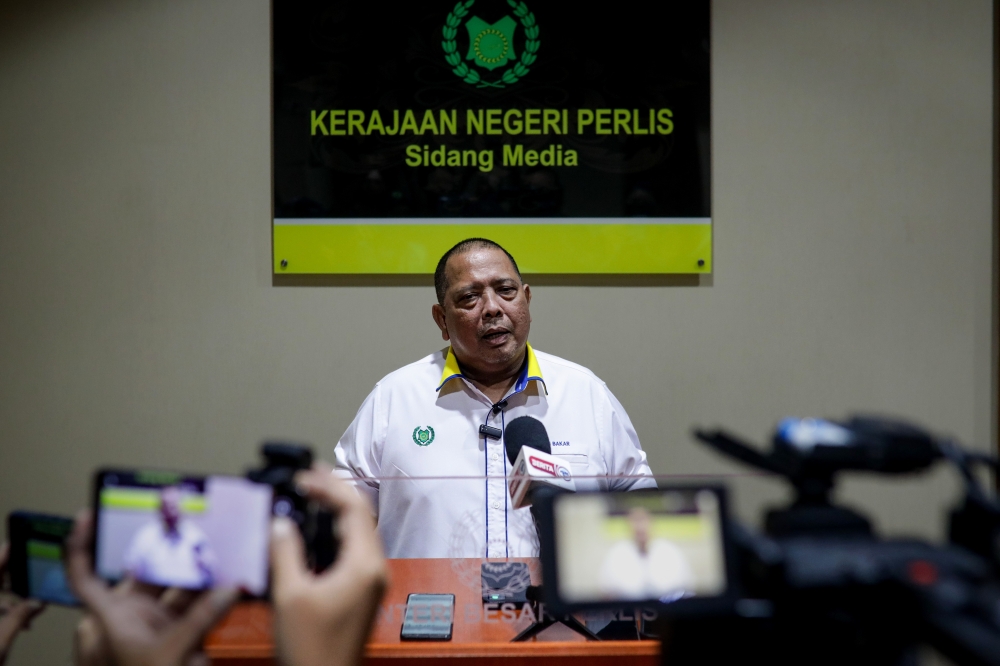
Perlis Assembly Sitting Postponement Sparks Fears of Political Instability
A sudden and unexplained delay to the Perlis State Legislative Assembly sitting has ignited concerns among political analysts, suggesting the state government might be navigating treacherous political waters or facing internal turmoil. The abrupt postponement, initially scheduled for April 21st to 23rd, has fueled speculation that the administration is attempting to sidestep critical parliamentary challenges.
Whispers of No-Confidence Motions and Shifting Alliances
Experts warn that such delays, particularly without clear justification, can be interpreted by the public as a sign of a government on unsteady footing. This perception, they argue, can erode confidence and amplify existing political anxieties within the state.
Professor Datuk Dr. Sivamurugan Pandian, a political analyst from Universiti Sains Malaysia (USM), articulated this concern, stating that a postponed sitting without a solid reason often leads to public interpretation of instability. "In politics, when a State Legislative Assembly sitting is postponed without a clear explanation, the public reads between the lines," he explained.
He further elaborated that if a particular party or coalition is perceived as having the strength to initiate a no-confidence vote, the postponement of the assembly could be seen as an indicator of the Menteri Besar's apprehension. "It begins to feel like a sign of instability or a government losing its nerve," Professor Pandian noted.
"If PAS or any party is seen as strong enough to bring a no-confidence motion, then the whisper that the Menteri Besar fears losing his grip will inevitably grow louder," he added, underscoring the potential impact on public perception and political maneuvering.
A New Chapter Fraught with Uncertainty
This particular sitting was anticipated as a significant event, marking the first assembly session under the leadership of Abu Bakar Hamzah. His appointment as Perlis Menteri Besar on December 28th last year, following the resignation of his predecessor, was meant to usher in a new era for the state.
Abu Bakar Hamzah, who also holds the position of deputy chairman of Perikatan Nasional (PN) in Perlis, ascended to the top leadership role after Mohd Shukri Ramli, the former Menteri Besar from PAS, stepped down citing health reasons. However, the recent postponement casts a shadow of doubt over his nascent administration.
The Echoes of December's Political Tremors
The political landscape in Perlis experienced a significant upheaval last December, when reports emerged of eight assemblymen withdrawing their support for the then-Menteri Besar, Mohd Shukri. This event triggered widespread speculation and intensified political uncertainty across the state.
Among those who reportedly withdrew their support was Abu Bakar himself, the assemblyman for Kuala Perlis. He was joined by three other PAS representatives: Saad Seman (Chuping), Fakhrul Anwar Ismail (Bintong), and Ridzuan Hashim (Guar Sanji).
In response to this development, PAS president Tan Sri Abdul Hadi Awang took decisive action. On December 24th, he announced that the three PAS assemblymen had forfeited their party membership. This move automatically disqualified them from their positions as elected representatives, sending a clear message about party discipline and loyalty.
The Imperative for Transparency and Stability
With the recent postponement of the State Legislative Assembly sitting, the specter of the December crisis has resurfaced, creating a palpable sense of unease. Professor Sivamurugan Pandian emphasized the urgent need for the Menteri Besar to provide a clear and transparent explanation for the delay.
He stressed that such an explanation is crucial not only to quell the rampant speculation circulating on social media since the notice of postponement was issued on April 17th but also to regain control of the prevailing narrative. "Abu Bakar must come forward quickly with an official and transparent explanation," Professor Pandian urged.
Furthermore, he advised the Menteri Besar to solidify the state government's majority and to reschedule the assembly sitting at the earliest opportunity. "He must also secure the state government’s majority, hold it close, and set a new date for the sitting as soon as possible," he stated.
Professor Pandian concluded that only through such decisive actions can public confidence in the state government begin to be restored. "Only then, he said, can public confidence begin to heal," he remarked.
A Stark Assessment: Fragile Leadership or Strategic Maneuver?
Echoing these concerns, Professor Dr. Mohd Azizuddin Mohd Sani, a political analyst from Universiti Utara Malaysia (UUM), offered a more pointed assessment of the situation. He suggested that postponing a scheduled State Legislative Assembly sitting without an exceptionally compelling reason points not to strategic planning but to a more precarious state of leadership.
"There should be no postponement of a scheduled State Legislative Assembly sitting unless there is an extraordinarily compelling reason," Professor Mohd Azizuddin asserted. He highlighted the anxiety that such delays can generate among the populace, questioning the duration and underlying causes of the postponement.
"When it is delayed, the people grow anxious; how long will this drag on? And why, really, is it happening?" he questioned, reflecting the public's sentiment.
Professor Mohd Azizuddin called for greater openness from the state government. "I urge the state government to come clean about what is unfolding so this matter can be laid to rest," he implored.
He warned that a lack of transparency could lead the public to perceive the situation as a continuation of the unresolved conflicts that have plagued Perlis since December. "Otherwise, the public will see this for what it appears to be: the same unresolved conflict that has haunted Perlis since last December," he stated.
A Bid for Time Amidst Deepening Divisions
Professor Mohd Azizuddin, who also serves as UUM's deputy vice-chancellor for Academic and International affairs, provided a sharper interpretation of the postponement. He suggested it might be a calculated move to gain time, allowing the Menteri Besar to engage in further negotiations with the PAS assemblymen.
This, he posited, could be a desperate attempt to prevent the state government from collapsing. "The postponement, he suggested, may be a bid for time, a chance for the Menteri Besar to continue negotiating with the PAS assemblymen, desperately trying to keep the state government from falling over the edge," he explained.
He cautioned that the collapse of the state government would inevitably exacerbate the existing rift between Bersatu and PAS, bringing their internal disagreements into the open. "If the state government collapses, the fracture between Bersatu and PAS will only deepen, out in the open for all to see," he warned.
Such a scenario, he concluded, would prolong the crisis and potentially weaken the Perikatan Nasional coalition significantly, perhaps to a point of irreparable damage. "The crisis would drag on, and PN would emerge even weaker, perhaps irreparably so," he concluded.
The Clock is Ticking: A Constitutional Deadline Looms
Amidst the political maneuvering and speculation, Perlis State Legislative Assembly Speaker Rus’sele Eizan has issued a quiet yet firm reminder of the constitutional imperative. He underscored that the assembly must be convened no later than June 11th.
Failure to meet this deadline, he noted, would result in the automatic dissolution of the assembly. This outcome, he stressed, would be a straightforward consequence of the constitutional clock running out, devoid of any further political drama or negotiation.
A Precarious Majority in a Shifting Political Landscape
The political composition of Perlis was significantly shaped by the 15th General Election. Perikatan Nasional secured a dominant position, capturing 14 state seats, with nine seats going to PAS and five to Bersatu.
In contrast, Pakatan Harapan managed to secure only one seat, with PKR winning the Indera Kayangan constituency. This electoral outcome initially suggested a strong mandate for PN in the state.
However, the current political arithmetic presents a far more delicate picture. PAS now holds only six seats, a reduction from its initial count, following the expulsion of three assemblymen who had previously withdrawn their support from Mohd Shukri in December. This realignment has significantly altered the power dynamics within the state government.
Consequently, the current power equation in Perlis sees PN holding a total of 11 seats – six from PAS and five from Bersatu. Pakatan Harapan retains its single seat. This slim majority underscores the fragile nature of the current administration and the thinness of trust among its allies.
The future trajectory of the state government now hinges on its ability to navigate these complex political currents, with the entire state government holding its breath as the constitutional deadline approaches.






 Explore AI Teaching Tools
Comments (0)
Please login to comment
No comments yet
Be the first to comment on this article