
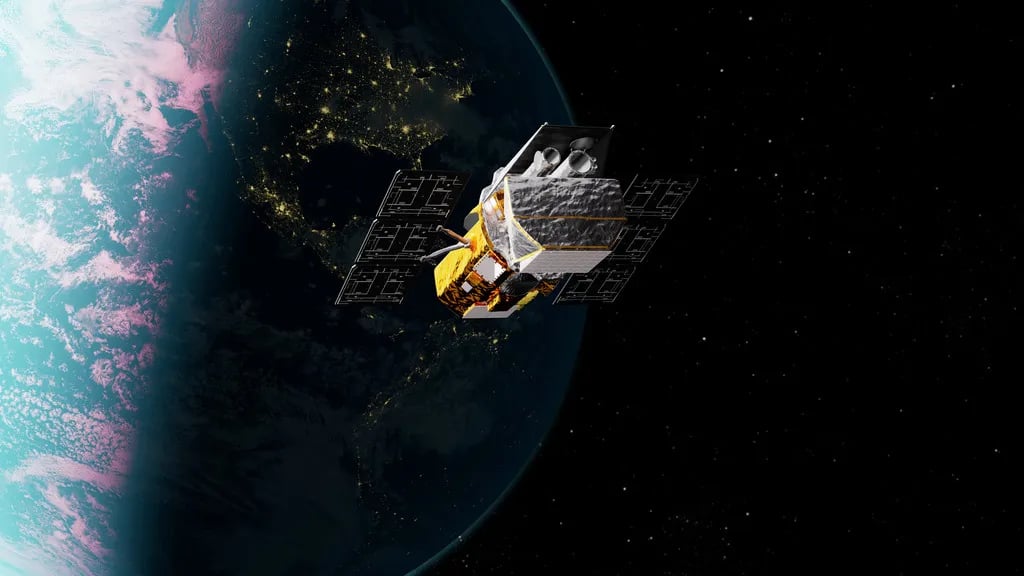
This week, the world watches as NASA prepares to launch a 'daring' telescope rescue mission, a testament to human ingenuity and the relentless pursuit of knowledge. This mission, fraught with complexity and high stakes, offers a profound parallel for educators navigating the ever-evolving landscape of the classroom. It’s a reminder that sometimes, the most impactful solutions require bold action and a willingness to adapt, even when the odds seem daunting.
When Your Star Student Needs a Rescue: Addressing Learning Gaps with Precision
Just as NASA engineers meticulously plan every maneuver to save their invaluable telescope, educators are constantly seeking ways to support students who are falling behind. Identifying learning gaps early and implementing targeted interventions is crucial for ensuring no student is left adrift in their educational journey.
A recent survey of 1,200 K–12 educators revealed that over 70% feel challenged by addressing diverse learning needs within a single classroom. This necessitates a strategic approach, much like a mission control team coordinating a complex operation.
The Importance of Early Detection
The 'daring' aspect of the NASA mission highlights the urgency of addressing potential problems before they become catastrophic. Similarly, in education, early identification of learning difficulties can prevent minor challenges from escalating into significant obstacles.
"The most successful educational interventions are those that are proactive, not reactive," states Dr. Anya Sharma, a leading educational psychologist. "We need to equip teachers with the tools to spot these issues as they emerge, not after they've taken root."
This means moving beyond standardized tests as the sole diagnostic tool and embracing formative assessments that provide real-time feedback. Understanding a student's progress on a daily, or even hourly, basis allows for swift adjustments to instruction.
Launching a New Era of Personalized Support
The ambition behind NASA's rescue mission mirrors the ambition of educators striving to provide truly personalized learning experiences. The complexity of space exploration demands specialized equipment and expertise, much like the diverse needs of students require tailored pedagogical approaches.
This is where innovative tools can make a significant difference. Imagine having the ability to instantly create differentiated learning materials or group students strategically for collaborative projects. These capabilities can transform how teachers manage their classrooms and support individual learners.
The Power of Smart Grouping and Differentiated Instruction
Effective student grouping is a cornerstone of personalized learning. When students are grouped by skill level, learning style, or even by the need for peer support, instruction can become far more impactful.
Tools that leverage AI for student grouping can analyze student data and suggest optimal configurations for a variety of activities. This frees up valuable teacher time that would otherwise be spent on manual sorting and planning.
- Analyze learning profiles: AI can quickly process student performance data to identify strengths and weaknesses.
- Facilitate collaborative learning: Create diverse groups for projects, ensuring a mix of skills and perspectives.
- Support targeted interventions: Form small groups for focused reteaching or enrichment activities.
- Streamline logistics: Import student rosters from platforms like Google Classroom for seamless integration.
When teachers can efficiently manage these groupings, they can dedicate more energy to the art of teaching itself. This is particularly important when addressing specific learning challenges, akin to the specialized teams required for a complex space mission.
Igniting Engagement: Making Learning an Adventure
The excitement surrounding a NASA launch is palpable, capturing the imagination of millions. Educators can harness this same sense of wonder by transforming learning into an engaging adventure. The 'daring' nature of the mission itself can serve as inspiration for creative lesson design.
Interactive classroom games and dynamic displays can turn passive learning into an active, participatory experience. These elements are not just fun; they are powerful tools for reinforcing concepts and fostering a deeper understanding.
"We're not just teaching subjects; we're cultivating curiosity," says veteran educator Maria Rodriguez. "When students are excited, they learn more effectively and retain information longer."
Consider the possibilities of using live quiz formats or collaborative word search games to review vocabulary or historical facts. Such activities can make even the most challenging topics accessible and enjoyable, much like how complex scientific concepts are made understandable through engaging documentaries.
Leveraging Technology for a Galactic Classroom Experience
The tools available to educators today are more powerful than ever. From AI-powered lesson planning to interactive boards that display real-time data, technology can help create a truly immersive learning environment.
The ability to create an AI lesson plan tailored to specific learning objectives, or to generate a variety of assessments with an exam creator, can save teachers countless hours. This allows them to focus on facilitating discussions, providing individual feedback, and ensuring every student feels supported.
- Design engaging lessons: Utilize AI to generate creative prompts and activity ideas.
- Build interactive assessments: Employ tools that offer diverse question types for thorough evaluation.
- Visualize progress: Use interactive boards to display timers, scores, and student participation in real-time.
- Foster collaboration: Integrate tools for group work and peer feedback.
The successful 'rescue' of the telescope will depend on meticulous planning and execution. Similarly, a teacher's success in supporting every student hinges on thoughtful preparation and the strategic use of available resources.
The Mission Ahead: Continuous Improvement and Support
As the NASA mission unfolds, there will undoubtedly be challenges and adjustments. The same holds true for education. The commitment to student success is an ongoing mission, requiring continuous learning and adaptation from educators.
The principles guiding this 'daring' space endeavor – precision, innovation, and unwavering dedication – are directly applicable to the classroom. By embracing new tools and strategies, educators can ensure their students reach their full potential, no matter the obstacles.
This week’s launch is a powerful reminder that even the most complex challenges can be overcome with the right approach. For educators, the mission to empower every learner is just as critical, and with the right support, success is always within reach.





 Explore AI Teaching Tools
Comments (0)
Please login to comment
No comments yet
Be the first to comment on this article