
Schools Go Green, Unlock Millions in Savings: A New Report Reveals Financial Windfalls Beyond Environmental Benefits
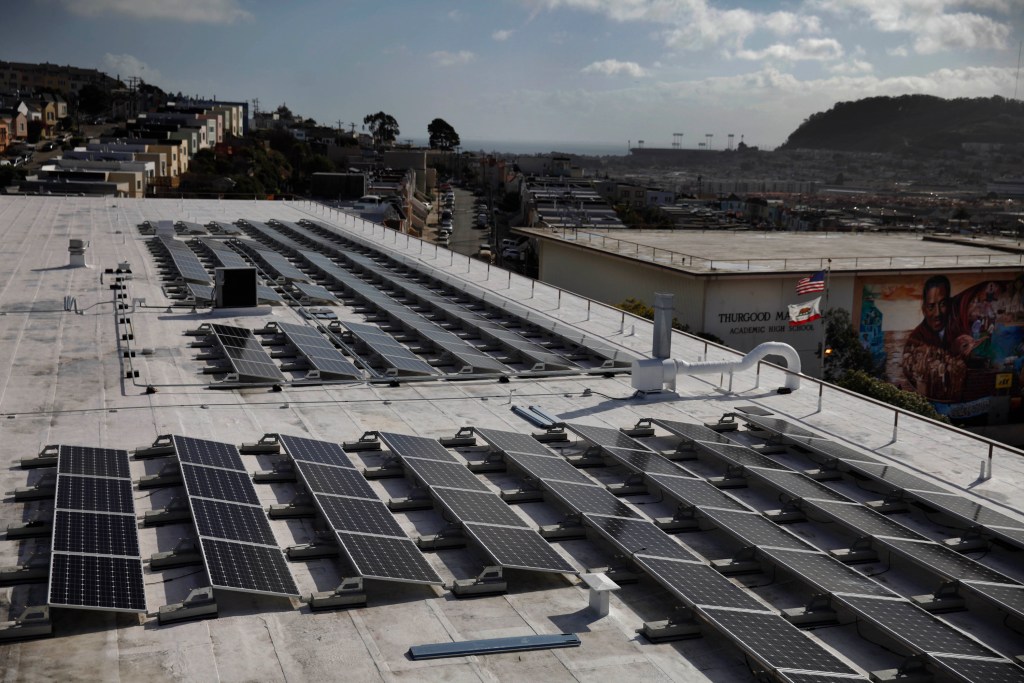
Imagine a school district suddenly finding millions of dollars to invest in new books, hire more teachers, or upgrade technology. This isn't a hypothetical scenario; it's the emerging reality for a growing number of school systems across the nation that are embracing green energy initiatives. A recent analysis highlights how strategic investments in energy efficiency and renewable sources are not only combating climate change but also delivering substantial, recurring financial savings that can be reinvested directly into student learning and essential school operations.
The Untapped Financial Power of Sustainable Schools
The narrative around green school initiatives often centers on environmental stewardship, a crucial aspect indeed. However, a compelling new report underscores a powerful, yet often overlooked, financial dimension. By retrofitting buildings with energy-efficient technologies and integrating renewable energy sources like solar and geothermal, school districts are discovering a potent strategy for alleviating budget pressures and enhancing educational resources.
Consider the Warren County School District in Kentucky, which has seen its utility costs plummet by over $2 million since implementing solar panels and other energy-saving measures across five of its schools. This significant financial injection demonstrates the tangible economic benefits that can arise from a commitment to sustainable energy practices. Such savings can be transformative for districts grappling with tight budgets.
Similarly, Jamestown, Rhode Island, is experiencing annual savings exceeding $60,000 thanks to the installation of solar panels at two of its schools. Even a modest-sized district like Boulder Valley in Colorado has reported a nearly $10,000 reduction in annual energy costs after retrofitting a single middle school with energy-efficient upgrades. These examples, detailed in a report commissioned by the Building Power Resource Center, paint a clear picture of the financial upside.
David R. Eichenthal, the study's author and a former Biden administration official, emphasizes the appeal of these recurring operational savings. "School districts all around the country are looking for ways to save money, and this seems like a pretty good strategy for them to be looking at," he stated. For those who have managed public finances, the phrase "recurring operating savings" is particularly resonant, signaling a sustainable pathway to fiscal health.
Decades of Savings: A Geothermal Success Story
The Putnam Valley Central School District, located about 50 miles north of New York City, offers a remarkable, long-term case study in the power of geothermal energy. Their journey toward sustainable energy began in 1998 with a middle school conversion from inefficient electric baseboard heating to a geothermal system, which harnesses the Earth's natural heat.
This ambitious project was financed through an energy performance contract, a mechanism where the upfront costs of the geothermal construction were covered by a bond. The district then repaid this bond using the very savings generated by the more efficient energy source. David Spittal, the district's director of operations and transportation, explained this innovative financing model.
The district continued its commitment to green energy, building a new high school in 2000 that was entirely reliant on geothermal power. This initiative was supported by state building aid, a crucial source of funding for school capital improvement projects. When Spittal joined the district in 2017, the momentum continued with a smaller decarbonization project at the elementary school, again utilizing an energy performance contract.
Last year, Putnam Valley voters approved a bond to fully convert the elementary school to geothermal, with state building aid again contributing to the upfront expenses. The impact of these sustained efforts is profound. Eichenthal's calculations indicate that the geothermal system at the middle school alone has saved the district approximately $1.5 million in energy costs.
Spittal projects that the cumulative savings from all of the district's green energy investments will be substantial, estimated at roughly $18 million between 2019 and 2039. "If we hadn’t done this, we would have been in trouble," Spittal admitted, highlighting the critical role these savings play in avoiding difficult choices like tax increases or staff reductions.
Navigating Funding Challenges and Shifting Political Landscapes
While the financial and environmental benefits of green school projects are clear, securing the initial capital can present a hurdle, particularly in light of evolving federal policies. The report notes that while the Trump administration scaled back federal programs that previously incentivized schools to adopt greener practices, alternative avenues for funding remain, notably through state-level initiatives.
The experience in Putnam Valley illustrates these complexities. Although New York State building aid significantly reduced the upfront costs for their latest geothermal project, Spittal pointed out that the expenses would have been even lower had the district been able to fully leverage clean energy tax credits established during the Biden era. However, due to political uncertainties surrounding the future of these credits, the district opted not to present this option to voters.
Despite these challenges, state programs designed to assist school districts in decarbonizing their facilities continue to exist, spanning both Democratic and Republican-led states. New York, Maryland, and Massachusetts offer grant programs specifically for cleaner, greener schools. Texas utilizes its LoanSTAR Revolving Loan Program to finance clean energy projects on state-supported buildings, including those in school districts, with loans repaid through project-generated cost savings.
Other states provide targeted support: Minnesota and Pennsylvania have programs to help schools adopt solar energy, Ohio focuses on energy efficiency initiatives, and Colorado offers grants for geothermal energy projects, among other examples. These state-level programs are proving vital in bridging the funding gap for school districts eager to invest in sustainability.
Solar Power's Rise: A "No-Brainer" Proposition
In West Virginia, a state with a significant reliance on traditional energy industries, over two dozen other states have embraced power purchase agreements (PPAs). These agreements typically allow tax-exempt organizations, such as school districts, to host solar projects on their property, often at no upfront cost to the district.
The Wayne County school district, for instance, partnered with Solar Holler to install solar panels on 15 of its schools. Superintendent Todd Alexander anticipates that this project will yield annual energy cost savings of approximately $200,000. While this might seem modest for a larger district, Alexander noted that it's equivalent to the salaries of about two teachers, underscoring its value.
Remarkably, the district incurred no upfront expenses for the solar installation. All costs were borne by Solar Holler, leveraging federal incentives from legislation like the Inflation Reduction Act and private sector arrangements. Through a program connecting companies aiming to meet decarbonization goals with solar projects, private entities helped offset some of the installation costs.
"It was kind of a no-brainer," Alexander remarked, highlighting the straightforward financial logic behind the decision. The project represented a clear win-win: lower energy costs for the school district and a pathway for businesses to achieve their sustainability targets.
Overcoming Political Headwinds for a Brighter Future
Even with such compelling financial advantages, green energy projects can encounter political resistance. In West Virginia, State Senator Craig Hart introduced a bill to limit PPAs, arguing that they undermined the coal industry and politicized schools. He expressed concerns that schools were becoming venues for political statements on utilities.
Although the bill was ultimately dropped, new legislative efforts aimed at restricting wind and solar development have emerged in the state. These instances highlight the ongoing tension between traditional energy interests and the growing momentum for renewable energy solutions in public institutions.
Despite these obstacles, Dan Conant, founder and CEO of Solar Holler, remains optimistic. He points to the escalating costs of electricity as a primary driver of increased interest in solar power. "We’re going to be okay without the [federal] incentives," Conant stated, asserting that solar energy is now fundamentally cheaper than electricity sourced from utility grids.
Eichenthal, the report's author, hopes that as more school districts meticulously track and share their savings stories, the adoption of green investments will accelerate. He emphasizes the availability of funding and the strong history of state support in this area. "There are dollars that are available for school districts that want to do this," he said.
The growing body of evidence from successful projects provides concrete proof of the financial benefits. "And there are now a series of solid case studies where we no longer just have to say, ‘Well, we think you’re going to save money.’ We can say, ‘Here are the dollars and cents.’" This shift from projection to proven financial returns is likely to encourage more school districts to explore the significant economic and educational advantages of embracing a sustainable energy future.






 Explore AI Teaching Tools
Comments (0)
Please login to comment
No comments yet
Be the first to comment on this article