
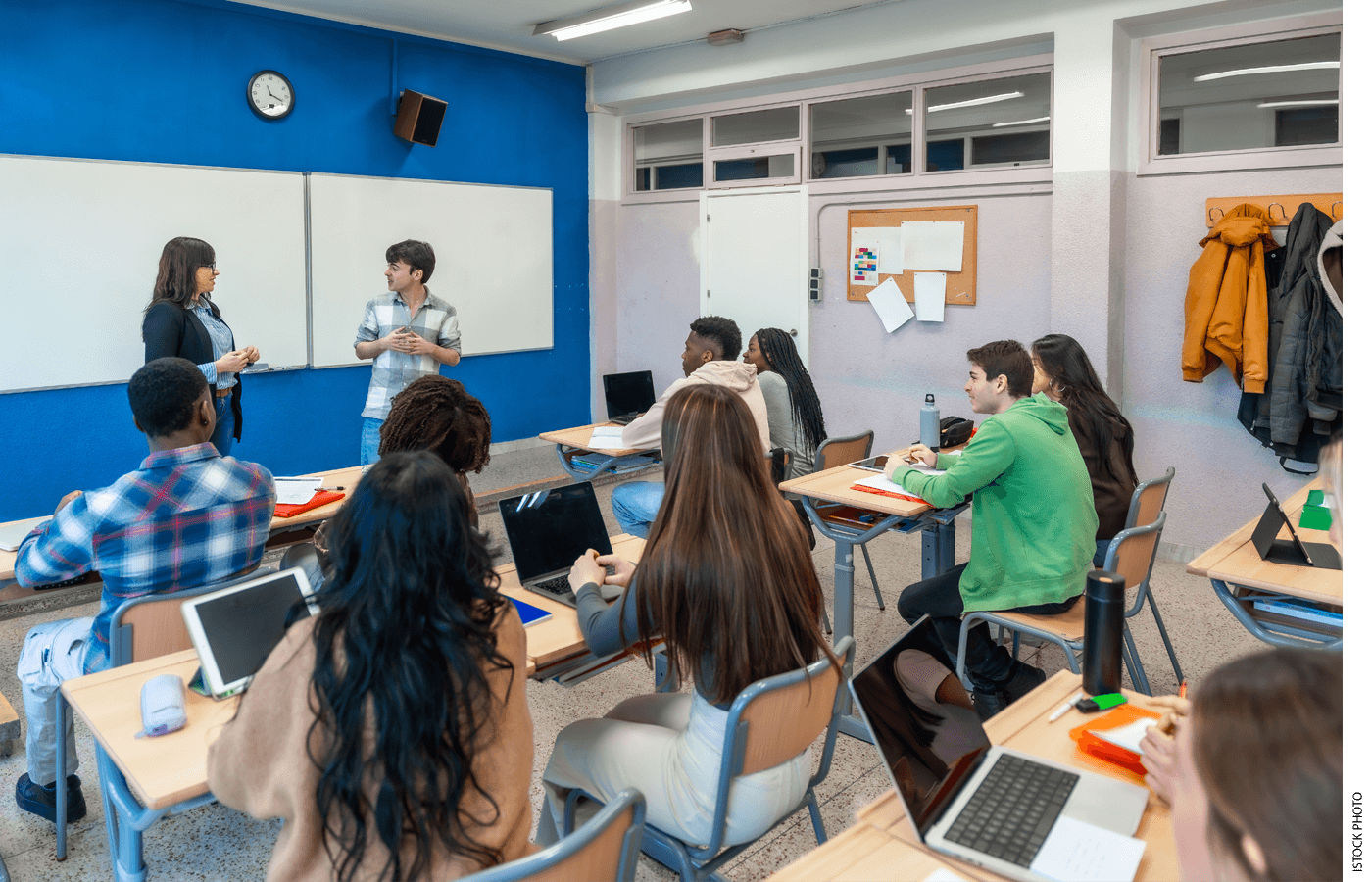
Unlocking Student Potential: AI-Powered Debate for Enhanced Learning
In the dynamic landscape of modern education, the quest for effective assessment and skill development is paramount.While traditional testing offers a valuable snapshot of knowledge, it often falls short in capturing the nuanced abilities that truly define student success: critical thinking, persuasive communication, and intellectual resilience.
This is where the power of structured debate, amplified by Artificial Intelligence, emerges as a transformative force.
Mentofy champions innovative learning approaches, and we believe AI-integrated debate offers a compelling pathway to cultivate these essential skills, making learning more engaging, equitable, and impactful for students everywhere.
The Imperative for Deeper Learning Skills
The traditional educational model, heavily reliant on standardized assessments, has long served a crucial role in measuring academic achievement and identifying learning disparities across schools.
These tests provide a quantifiable benchmark, allowing educators and policymakers to track progress over time.
However, a growing consensus among families and employers highlights a critical gap: the need for students to develop skills that transcend rote memorization and short-answer formats.
These sought-after abilities include sophisticated problem-solving, effective decision-making, unwavering intellectual curiosity, and the grit to persevere through challenges – qualities that are inherently difficult to quantify through multiple-choice questions or brief responses.
This is precisely where the structured practice of debate offers a powerful pedagogical solution.
Structured debate inherently guides students through a rigorous process.
It demands that they formulate a clear claim, meticulously support it with credible evidence, and thoughtfully engage with opposing viewpoints.
Beyond the intellectual rigor, debate acts as a potent catalyst for engagement, transforming potentially dry subject matter into a dynamic and captivating learning experience.
However, the practical execution of debate, especially at scale, presents significant logistical hurdles.
While dedicated organizations work to expand access, many students remain outside the realm of formal debate programs, either due to limited availability or personal choice regarding extracurricular involvement.
This is the fertile ground where Artificial Intelligence can revolutionize learning.
AI possesses the remarkable potential to democratize debate-centered instruction, significantly reducing the barriers to participation and enriching the learning journey for all students within the regular school day.
While standardized testing will undoubtedly retain its essential place in the assessment ecosystem, AI can emerge as a powerful complementary tool, fostering the development of crucial reasoning and communication skills in a way that is both accessible and effective.
Rethinking Assessment: Beyond Quick Grading
In many contemporary classrooms, the assessment paradigm remains anchored in tasks that lend themselves to rapid and consistent grading.
This structure, while understandable from an efficiency standpoint, often leaves insufficient room for activities that require students to articulate their thought processes comprehensively, engage in nuanced explanations, and demonstrate the flexibility to revise their perspectives in the face of new information.
Debate, in its essence, directly addresses this deficit.
It has long been recognized as a potent method for cultivating cognitive flexibility and honing communication prowess.
Despite its proven benefits, a significant challenge persists: many students encounter debate solely as an optional extracurricular pursuit rather than an integrated component of their core academic learning.
International educational bodies, such as UNESCO, have consistently advocated for educational systems to prioritize the development of critical thinking and collaborative skills, recognizing that future generations will confront increasingly complex societal and economic landscapes.
Yet, equitable access to structured argumentation remains unevenly distributed.
Schools endowed with greater resources are more likely to offer robust debate programs, while students in rural or economically disadvantaged communities often find themselves with fewer opportunities for sustained practice in reasoned discourse.
This disparity underscores the urgent need for innovative solutions.
Traditionally, the scalability of debate-centered instruction has been constrained by the inherent costs and resource demands.
However, by augmenting this pedagogy with AI, educators can significantly increase the frequency of structured debates and leverage the resulting student work as a valuable component of a holistic assessment strategy.
AI can provide invaluable support to teachers across all phases of the learning process: before, during, and after class discussions.
The fundamental design principle here is that the teacher remains the architect of the learning experience, setting the overarching goals, establishing the rules of engagement, and defining the classroom norms, while AI intelligently handles many of the time-consuming preparatory and summarization tasks.
Four Pillars of AI-Enhanced Debate Instruction
Artificial Intelligence offers a multifaceted approach to making debate-based learning more feasible and impactful.
Here are four key ways AI can transform the classroom experience, alongside important considerations for its judicious implementation:
1.
The AI as a Practice Partner, Not a Replacement for Peers
An AI tool can serve as an invaluable practice resource, posing targeted questions to students, prompting them to articulate and clarify their claims, and encouraging them to explore alternative explanations.
When utilized effectively, AI can significantly enhance student preparedness for in-person discussions.
Conversely, its misuse could inadvertently diminish the crucial social learning that arises from peer interaction.
Therefore, schools should strategically position AI as a tool for preparation and formative evaluation, rather than viewing it as a substitute for genuine human collaboration.
The core of learning remains the dynamic exchange between students.
2.
Tailored Support for Diverse Skill Levels
Teachers frequently navigate classrooms with a wide spectrum of student confidence and skill proficiency.
AI can adeptly address this variability by generating personalized sentence starters, providing relevant examples of evidence, and posing progressively more challenging follow-up questions.
This level of customization empowers hesitant students to participate more readily while simultaneously pushing advanced learners to refine their reasoning and critical thinking abilities.
The goal is to meet every student where they are and guide them toward greater mastery.
3.
Amplifying Exposure to Counterarguments
Students achieve deeper learning when they are challenged to confront and respond to thoughtful objections.
AI can assist teachers in efficiently compiling a balanced array of counterpoints, ensuring that students are exposed to perspectives they might not encounter within their immediate social circles.
It is crucial to acknowledge that AI systems can sometimes generate inaccuracies or misleading claims.
Consequently, teachers must anchor their AI-supported debates in carefully vetted materials and integrate source verification as a fundamental element of the learning exercise.
This ensures that students are building their arguments on a foundation of reliable information.
4.
Actionable Feedback with Clear Limitations
AI tools can provide valuable summaries of debates, identify instances where evidence is lacking, and highlight patterns in student reasoning that a teacher might overlook during real-time observation.
This capability can lead to significant time savings and enable more targeted instructional interventions.
However, it is imperative that AI not be perceived as an authoritative grader.
Teachers must always remain the ultimate arbiters of student performance.
Furthermore, schools should maintain transparency regarding the types of student data collected and the specific ways in which it is utilized.
This ethical consideration is paramount in building trust and ensuring responsible AI integration.
Minimizing Screen Dependence Through Strategic AI Use
A common concern surrounding the integration of technology in the classroom is the potential for increased screen time, which could divert students' attention away from essential face-to-face interactions and discussions.
Debate-centered instruction, by its very nature, offers a compelling counterpoint to this apprehension.
At its core, debate is an inherently vocal, auditory, and analytical activity that thrives on in-person engagement.
Schools can strategically design AI-supported debate experiences to minimize device usage during class time, thereby preserving the focus on human connection and critical discourse.
In a limited-screen approach to augmented debate-centered instruction, teachers can leverage AI *before* the class session to meticulously craft debate prompts, assign specific roles to students, and prepare concise packets of relevant readings or evidence.
Students can then engage with these materials through traditional annotation methods, working with pen and paper.
Preliminary debates can unfold within small groups or as a whole-class activity. *After* the class, the teacher can utilize AI to efficiently organize students' handwritten notes, summarize the key claims made during the discussion, and identify any common gaps in understanding that need to be addressed in subsequent lessons.
While the facilitation of the debate would be enhanced by an AI-supported platform, and the overall exercise would benefit from the assistance of software and hardware, the ultimate outcome would be a richer tapestry of social interaction and a reduced reliance on constant digital engagement.
Consider a practical example within a middle school civics lesson focused on the contentious issue of whether cities should implement restrictions on short-term rental properties.
Students would receive a reference sheet containing curated evidence to inform their arguments.
Subsequently, they would access an AI-supported debate platform that assigns specific roles and manages the allocated time for each participant.
As students articulate their points, the platform would provide discreet, personalized prompts displayed on their screens.
These prompts might include directives such as, "State your claim in one concise sentence," "Cite one piece of evidence from the provided sheet," or "Address the strongest objection you just encountered." Students requiring more scaffolding would receive a higher frequency of prompts, while those who are more prepared would see fewer prompts, allowing for greater autonomy.
Throughout this process, the teacher would actively circulate, observing and listening to the exchanges.
Following the debate, the platform would generate a brief, individualized report for each student, aligned with a straightforward rubric.
This rubric would assess the clarity of their claim, their effective use of evidence, their engagement with counterarguments, and their adherence to civility, as defined by established classroom norms.
The teacher would then review these reports, making necessary qualitative judgments, and use the insights gained to design a focused follow-up writing task.
This task would encourage students to refine their positions by thoughtfully considering the most compelling opposing arguments they encountered during the debate.
The Enduring Value of Debate-Centered Learning
Debate serves as a powerful pedagogical tool that propels students beyond passive information recall into the realm of higher-order thinking.
When students are tasked with constructing and defending a position, they actively practice organizing complex ideas, selecting pertinent evidence, and anticipating potential challenges to their arguments.
Over time, this consistent practice in argumentation significantly enhances skill transfer.
Students develop a generalized methodology for evaluating evidence and revising their stances, rather than simply memorizing isolated facts or predetermined answers.
This transferable skill set is invaluable for lifelong learning.
Furthermore, debate profoundly strengthens communication abilities.
Students learn to listen attentively to opposing viewpoints, articulate their thoughts with clarity and precision, and respond effectively under the pressure of time constraints.
The long-term benefits of this skill development are well-supported by extensive research.
A decade-long study involving the Chicago Urban Debate League, for instance, revealed that students who actively participated in policy debate exhibited a higher likelihood of graduating from high school and achieved superior scores on standardized reading and writing assessments compared to their non-debaters peers.
These positive outcomes persisted even after accounting for prior academic achievement and socioeconomic background, strongly suggesting that debate exerted a unique and beneficial influence on students' academic capabilities.
Participants also reported experiencing increased resilience and a greater sense of academic self-efficacy, aligning with the notion that the regular practice of defending and refining arguments cultivates perseverance and a growth mindset.
Under the guidance of transparent rules and clearly defined norms, debate can also foster significant social and civic development.
Students learn the critical skill of separating an idea from the person presenting it, enabling them to critique claims respectfully and view disagreement as an inherent and valuable part of the learning process.
In today's often polarized environments, practicing structured disagreement can equip students to engage with contrary viewpoints with genuine curiosity rather than reflexive contempt.
This ability to navigate diverse perspectives is essential for informed citizenship.
Expanding Equitable Access to Argumentation Skills
A primary and compelling advantage of AI-supported debate lies in its capacity to affordably extend argumentation practice to a significantly larger student population.
Historically, rigorous debate training has been concentrated within selective programs or predominantly in schools with substantial financial resources.
By intelligently reducing the preparation time and logistical complexities associated with debate, AI empowers more educators to seamlessly integrate short, impactful debates into their existing curriculum across a variety of subjects, including English language arts, history, science, and civics.
Of course, the successful implementation of AI-supported debate is not an automatic process.
It necessitates comprehensive teacher training, the adoption of clear and consistent formats, and the establishment of strong classroom norms that foster a productive and respectful environment.
However, the potential for positive impact is substantial and can be realized across three key areas:
- Wider Reach: Educators in both rural and urban school settings can leverage AI to generate tailored debate prompts, role cards, and evidence packets that are directly aligned with their specific curriculum and local context.
This is particularly beneficial in areas where local coaching expertise in debate may be limited, ensuring that all students have access to these valuable learning opportunities.
- Flexible Formats: AI enables a wide array of debate structures to suit diverse learning objectives and time constraints.
Debates can be brief and frequent, such as five-minute claim-and-rebuttal exercises, or they can evolve into more extended, structured exchanges that occupy an entire class period.
Furthermore, debates can be conducted orally, in writing, or through a blended approach, offering adaptability based on student age, developmental stage, and specific classroom goals.
- Bridging Opportunity Gaps: Schools serving lower-income communities frequently grapple with staffing shortages, a scarcity of enrichment programs, and limited resources for extracurricular activities.
If teachers can integrate argumentation practice directly into their regular instruction with only a modest increase in cost and effort, a greater number of students can acquire the critical skills that traditional debate programs have historically delivered to a more select group.
This democratizes access to high-impact learning experiences.
Conclusion: The Future of Learning is Collaborative and Intelligent
Debate-based instruction, while not a novel concept, offers a powerful and complementary approach to the established tradition of standardized testing.
Standardized tests remain an indispensable tool for educational systems to gauge students' existing knowledge and demonstrated abilities.
The critical question facing educators today is how to effectively enhance the aspects of learning that are most challenging to measure at scale – namely, students' capacity to thoughtfully reason through contested issues and articulate their perspectives with compelling clarity.
AI-supported debate presents a highly promising solution to this challenge.
When thoughtfully designed and implemented, AI can empower teachers to facilitate structured discussions with greater frequency, provide students with increased opportunities to practice responding to sophisticated counterarguments, and paradoxically, reduce in-class screen time by strategically shifting AI-driven tasks to the preparation and reflection phases of learning.
Given the pervasive presence of AI across all sectors, including within educational institutions, the relevant question is no longer whether to adopt AI, but rather how it can be most effectively leveraged to augment and enrich the learning experience.
Debate provides a natural and highly relevant use case for AI, with the added significant benefit of enhancing how instructors assess competency across a broad spectrum of critical metrics.
The most prudent path forward involves piloting this innovative method, meticulously measuring its impact on student writing and reasoning abilities, and establishing clear, ethical guardrails concerning accuracy, data privacy, and the indispensable role of teacher judgment.
At Mentofy, we are committed to exploring and championing these forward-thinking educational strategies to empower students worldwide.







 Explore AI Teaching Tools
Comments (0)
Please login to comment
No comments yet
Be the first to comment on this article