
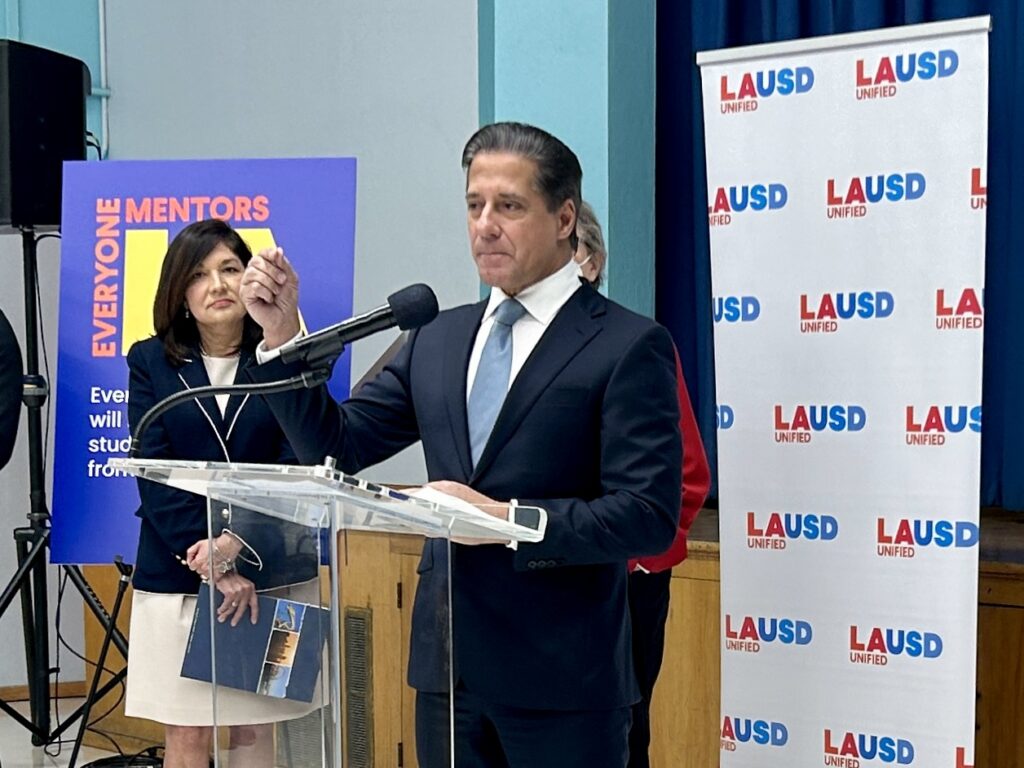
Carvalho's LAUSD Contract Renewal: A Deep Dive for Students and educators
The leadership of the Los Angeles Unified School District (LAUSD) has recently seen a significant development with the approval of Superintendent Alberto Carvalho's new employment agreement.
This decision, following a period of both commendation and contention, offers a valuable case study for students and educators interested in the complexities of educational leadership and governance.
Understanding the nuances of such agreements, the public discourse surrounding them, and their potential impact on the learning environment is crucial for anyone invested in the future of education.
Navigating Superintendent Contract Approvals: The LAUSD Board's Decision
The LAUSD board has formally ratified a new employment contract for Superintendent Alberto Carvalho.
This pivotal decision comes after months of deliberation and public engagement, underscoring the careful process involved in securing leadership for one of the nation's largest school districts.
The board's unanimous reappointment and subsequent contract approval highlight a commitment to continuity and a belief in Carvalho's vision for the district's future.
This process serves as an important lesson for students aspiring to understand how major educational institutions are managed and how leadership decisions are made.
Carvalho himself has publicly stated his intention to forgo salary increases, a gesture that underscores a commitment beyond financial incentives.
The approved agreement maintains his current salary, reflecting a focus on stability and resource allocation within the district.
Furthermore, the contract details various benefits designed to support the superintendent's role, including provisions for life insurance, retirement contributions, and essential logistical support.
For students learning about public administration and finance, examining these contractual elements provides insight into the compensation structures and support systems afforded to high-level public officials.
Key Considerations in Superintendent Contracts
Superintendent contracts are multifaceted documents that outline the terms of employment, responsibilities, compensation, and benefits.
These agreements are critical for ensuring accountability and setting clear expectations for leadership.
For the LAUSD board, approving such a contract involves weighing various factors, including the superintendent's performance, strategic vision, and the overall needs of the school district and its students.
The terms of Carvalho's agreement, particularly regarding salary and benefits, are designed to reflect the responsibilities and demands of leading a district as vast and diverse as LAUSD.
Understanding these components can help students grasp the financial and operational aspects of large educational systems.
The inclusion of benefits such as retirement contributions and security measures speaks to the comprehensive nature of these executive roles and the considerations that go into attracting and retaining qualified leadership.
Public Discourse and Accountability: Examining Community Feedback
The approval of Superintendent Carvalho's contract was not without public scrutiny.
Certain community groups and individuals have voiced concerns and criticisms regarding his leadership and the district's responses to specific events.
These discussions, often amplified through advocacy groups and public forums, highlight the importance of transparency and community engagement in educational governance.
For students, this illustrates the dynamic relationship between leadership, public opinion, and the decision-making processes within educational institutions.
Criticisms have often centered on the district's handling of critical incidents, such as responses to environmental challenges or the implementation of new educational programs.
These critiques, while sometimes sharp, are an integral part of a democratic process, pushing for greater accountability and responsiveness from educational leaders.
The LAUSD board, in its deliberations, must consider this feedback, balancing it with the superintendent's performance and strategic objectives.
This demonstrates to students the importance of civic participation and the various avenues through which communities can influence public policy and leadership.
Carvalho's Tenure: Achievements and Challenges
Superintendent Alberto Carvalho's tenure at LAUSD has been marked by a series of initiatives aimed at improving student outcomes and addressing systemic challenges.
His leadership began in the complex post-pandemic era, a period that necessitated a strong focus on recovering learning losses and tackling chronic absenteeism.
The iAttend program, for instance, exemplifies a hands-on approach to understanding and addressing the barriers students face in attending school.
Research indicates a positive trend in chronic absenteeism rates since the implementation of such strategies, with a notable decrease observed.
Furthermore, studies suggest consistent growth in standardized test scores among LAUSD students, with performance often exceeding state averages and showing improvement compared to pre-pandemic levels.
These metrics are vital for students to understand how educational progress is measured and the impact of leadership decisions on academic achievement.
However, his tenure has also faced challenges.
Scrutiny has been directed towards the district's management of specific funds, such as those allocated for arts education, and the impact of cybersecurity incidents.
The development and subsequent discontinuation of an AI chatbot designed to assist students also represent areas where innovation met unforeseen obstacles.
These instances provide valuable learning opportunities for students exploring project management, technological implementation, and risk assessment in educational settings.
Focus on Student Well-being and Educational Equity
A significant aspect of Superintendent Carvalho's leadership has been his commitment to the safety and well-being of all students, particularly in the context of evolving immigration policies.
His efforts to build trust with families through direct engagement and responsiveness to their concerns have been recognized by parent advocacy groups.
This focus on building strong relationships with the diverse communities served by LAUSD is a testament to the importance of inclusive leadership in education.
The United teachers Los Angeles (UTLA) union, representing educators, has emphasized the need for continued investment in schools and the improvement of the learning environment for both teachers and students.
As the district looks ahead under Carvalho's continued leadership, the union's call for prioritizing recruitment, retention, and the effective utilization of resources highlights the collaborative efforts required to achieve educational excellence.
For students, this underscores the interconnectedness of various stakeholders in the educational ecosystem.
Conclusion: Lessons in Educational Leadership and Governance
The LAUSD board's approval of Superintendent Alberto Carvalho's employment agreement is a significant event with implications for students, educators, and the broader community.
It highlights the intricate process of leadership selection and contract negotiation in large public school systems.
The discussions surrounding the contract, encompassing both praise for achievements and criticism of challenges, offer a compelling real-world example of accountability and public discourse in educational governance.
For students engaged in learning about leadership, public administration, or the intricacies of the education sector, the LAUSD experience provides a rich tapestry of insights into the responsibilities, challenges, and opportunities inherent in shaping the future of learning for thousands of students.







 Explore AI Teaching Tools
Comments (0)
Please login to comment
No comments yet
Be the first to comment on this article