
A recent Gallup survey reveals a startling shift: Gen Z, the demographic often assumed to be AI's most enthusiastic adopters, is growing increasingly skeptical and even angry about the technology. This sentiment has profound implications for educators, who must now navigate a landscape where students are not only questioning AI's utility but also its potential to undermine their academic and professional futures. The data suggests a critical need for a more nuanced approach to AI integration in education, one that prioritizes critical thinking and human-centered learning.
Gen Z's Growing Discontent with Artificial Intelligence
The narrative surrounding Gen Z and artificial intelligence has often been one of eager embrace. However, a comprehensive Gallup survey paints a starkly different picture, indicating a significant downturn in optimism and a surge in negative emotions towards AI among this demographic. This change isn't just a minor fluctuation; it represents a fundamental reevaluation of the technology's role in their lives.
Last year, the sentiment was markedly more positive. Now, a substantial portion of Gen Z respondents report feeling angry about AI's existence, a sentiment that has climbed dramatically. This anger is coupled with a steep decline in feelings of excitement and hope, suggesting a growing unease about the future implications of widespread AI adoption.
Thirty-one percent of Gen Z respondents said AI made them angry, up 9 percentage points from 2025. And just 22% said it made them feel excited, down 14 percentage points from last year.
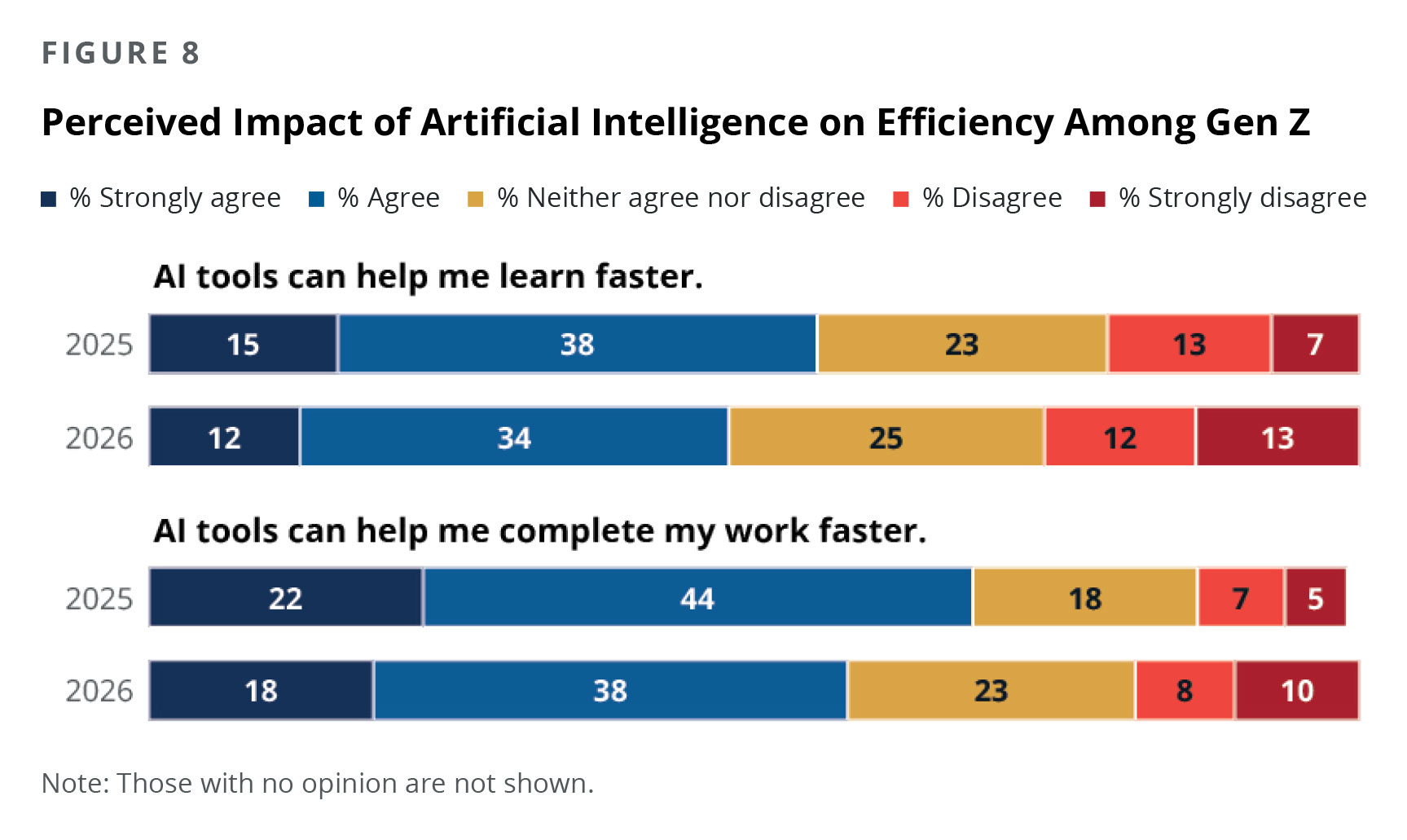
This shift is particularly concerning when considering how Gen Z perceives AI's impact on their learning and career prospects. The belief that AI will accelerate learning has waned, with fewer respondents now seeing it as a tool to help them learn faster. Similarly, the perception of AI as a work accelerator has also diminished.
What's more, this growing skepticism isn't solely confined to those with limited exposure to AI. Even heavy users are reporting less excitement and more anger, indicating that increased engagement doesn't necessarily translate to positive feelings. This suggests that the core concerns are deeply rooted and not simply a matter of unfamiliarity.
The Erosion of Trust: Cognitive and Career Concerns
At the heart of Gen Z's growing apprehension lies a deep-seated worry about AI's impact on their cognitive abilities and future professional lives. Many feel that the risks associated with AI, particularly in the workforce, now outweigh its potential benefits. This sentiment is a significant red flag for educators and policymakers alike.
The belief that AI will help them find accurate information has also seen a decline. This, coupled with a reduced expectation that AI can foster new ideas, points to a growing perception of AI as a potential impediment rather than an aid to genuine intellectual development. The notion that AI might stifle creativity and critical thinking is clearly resonating.
Zach Hrynowski, a senior education researcher at Gallup, posits that this shift is particularly pronounced among older Gen Zers, especially college students. They are increasingly concerned that the very skills and knowledge they are acquiring through higher education are being devalued or rendered obsolete by AI.
“One of my working theories is that (it’s) the high schoolers, who are in their senior year, or especially those college students, who are maybe thinking, ‘AI is taking my job. I just went to college for four years: I spent all this money and now it’s turning my industry upside down,” Hrynowski explained.
This anxiety about job displacement is a powerful driver of their skepticism. The investment in education feels less secure when the future job market is perceived as being rapidly reshaped by artificial intelligence. This creates a sense of disillusionment and anger about the value of their educational pursuits.
The survey also highlights that concerns about AI's impact on learning are not uniform across the demographic. Younger Gen Z respondents, still in K-12 settings, express significant worry about AI making learning more difficult in the future. This suggests that early exposure to AI tools, without proper pedagogical guidance, can foster apprehension rather than enthusiasm.
Disparities in Concern
Interestingly, the survey revealed some demographic variations in these concerns. While K-12 respondents expressed high likelihood of AI making learning more difficult, Gen Z adults voiced even stronger agreement. This indicates that as individuals move closer to entering the workforce, their anxieties about AI's disruptive potential intensify.
Furthermore, men and Black respondents reported being less concerned about the learning impact of AI compared to their peers. These nuances are crucial for developing targeted educational strategies that address the specific anxieties and experiences within different segments of the Gen Z population.
The Unavoidable Reality: Navigating AI in Education
Despite their growing skepticism, Gen Z acknowledges the undeniable presence and future necessity of AI. A significant majority understand that proficiency in AI tools will be essential for success in higher education and the modern workforce. This presents a critical paradox for educators: how to prepare students for an AI-integrated future while addressing their valid concerns.
The data clearly shows that Gen Z recognizes the need to adapt. They understand that ignoring AI is not a viable long-term strategy. This awareness creates an opportunity for educators to proactively guide them in developing AI literacy and critical engagement skills.
Schools are already responding to this evolving landscape. The number of K-12 institutions implementing AI-related rules has seen a substantial increase year over year. This indicates a growing recognition among educational institutions about the need for structured guidelines and policies surrounding AI use.
The challenge for educators lies in framing AI not as a replacement for human intellect but as a tool that, when used thoughtfully, can augment learning and creativity. This involves fostering a critical perspective on AI-generated content and encouraging students to use AI as a starting point for deeper inquiry and original thought.
Strategies for Educators in an AI-Skeptical Landscape
Given Gen Z's evolving attitudes, educators must adopt a proactive and empathetic approach. This involves not only teaching *with* AI but also teaching *about* AI, fostering a critical understanding of its capabilities, limitations, and ethical implications.
- Embrace Critical AI Literacy: Move beyond simply using AI tools. Dedicate time to discussing AI's underlying mechanisms, potential biases, and the importance of verifying AI-generated information.
- Focus on Human-Centric Skills: Emphasize skills that AI cannot easily replicate, such as critical thinking, creativity, emotional intelligence, collaboration, and complex problem-solving.
- Integrate AI Thoughtfully: When using AI tools, be transparent about their purpose and limitations. Consider how they can enhance, rather than replace, student engagement and learning processes. For instance, using Mentofy AI lesson plan tools can help generate initial frameworks, but the teacher's role in refining and personalizing remains paramount.
- Promote Ethical AI Use: Establish clear guidelines for academic integrity in the age of AI. Educate students about plagiarism and the responsible use of AI-generated content.
- Leverage AI for Engagement: While students are skeptical, they also recognize the need to engage with AI. Tools that make learning interactive and fun, like MentofyCove classroom games, can be valuable in demonstrating AI's positive applications in a controlled and engaging environment.
- Facilitate Open Dialogue: Create safe spaces for students to express their concerns and anxieties about AI. Listen actively and address their worries with honesty and empathy.
- Utilize AI for Teacher Support: Educators can also benefit from AI tools to streamline tasks like AI grading or generating varied assessment questions with an exam creator, freeing up more time for direct student interaction and pedagogical innovation.
The shift in Gen Z's perception of AI is a critical development that educators cannot afford to ignore. While the technology's presence is undeniable and its future integration inevitable, the growing skepticism demands a more thoughtful, critical, and human-centered approach. By acknowledging and addressing these concerns head-on, educators can help Gen Z navigate the complexities of AI, ensuring it serves as a tool for empowerment rather than a source of anxiety.





 Explore AI Teaching Tools
Comments (0)
Please login to comment
No comments yet
Be the first to comment on this article