
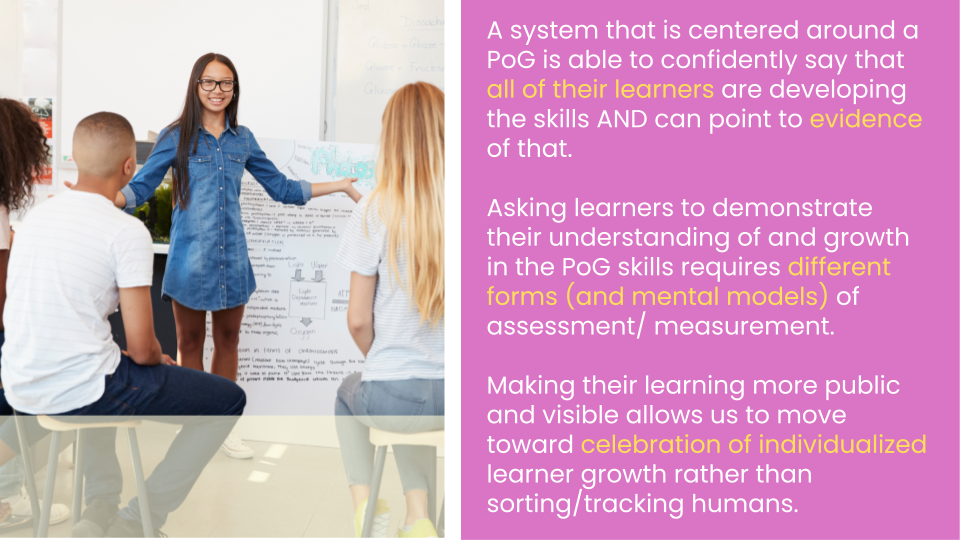
Students Take Center Stage: How Publicly Sharing Their Learning Fuels "Portrait of a Graduate" Mastery
Imagine a classroom where the spotlight isn't just on the teacher, but on the students themselves, confidently articulating their journey of learning. This isn't a futuristic ideal; it's a powerful shift happening in districts nationwide, transforming how students engage with essential skills and develop a profound sense of ownership over their education.
The Transformative Power of Student Voice
When learners, regardless of age, are given the opportunity to present their work to an audience beyond their immediate instructor, a remarkable transformation often occurs. Engagement deepens, the responsibility for learning shifts more firmly to the student, and the quality of their output frequently elevates.
Think back to a significant presentation you've delivered at work, a defense of your ideas in graduate studies, or even a childhood science fair project. Those moments where your learning was shared and celebrated can be profoundly impactful, reshaping your understanding and confidence.
Beyond Traditional Tests: Measuring What Truly Matters
This approach is particularly potent when it comes to demonstrating the complex skills embedded within a "Portrait of a Graduate" framework. These frameworks often outline competencies like critical thinking, collaboration, and creativity – skills notoriously difficult to quantify through conventional assessments.
A multiple-choice test, for instance, can't truly capture a student's ability to generate novel ideas or their capacity for innovative problem-solving. The mismatch between a tool and the content it's meant to measure highlights the need for more authentic, narrative-driven methods to track student progress.
Unlocking Deeper Implementation Through Public Display
Public demonstrations of these "Portrait of a Graduate" skills serve as a crucial lever for deeper implementation across an entire educational system. When students have key moments to showcase their learning publicly, educators gain invaluable insights into how these skills are manifesting – or where they might be falling short.
The way students articulate these skills, connecting them to their academic knowledge and real-world experiences, offers a clear indicator of their engagement. It reveals where the "Portrait of a Graduate" competencies are truly resonating and becoming part of their daily learning landscape.
Building a K-12 Learning Journey
Establishing system-wide benchmark moments for public demonstration helps set high expectations for all students. This creates a foundation of shared ownership for these vital skills among educators and fosters a consistent learning experience across all grade levels.
These moments can take many forms: student-led conferences, exhibitions of learning, capstone projects, or portfolio defenses. The unifying element is that the "Portrait of a Graduate" serves as the guiding principle for what and how students share, creating a transparent roadmap for measuring growth.
The Norwalk Story: Empowering Students to Own Their Narrative
In Norwalk Public Schools, the journey to bring the "Portrait of a Graduate" to life involved a critical question: How do students see themselves within this framework? While educators developed a strong collective understanding, feedback revealed that students' experiences varied, particularly in their opportunities to reflect on and connect with the competencies.
Exploring various models of public demonstration, from student-led conferences to capstone projects, Norwalk sought an approach that was both inspiring and adaptable. They opted for a more focused, flexible strategy that could integrate with existing structures.
Launching the Portrait of a Graduate Scholar Profiles
In early 2026, Norwalk Public Schools piloted "Portrait of a Graduate Scholar Profiles." This initiative was influenced by work with a national cohort focused on the "Vision of a Learner," which emphasized a strengths-based, student-centered approach to activating the "Portrait of a Graduate."
The pilot involved educators and coaches across elementary, middle, and high school levels. The core objective was to create a student-facing experience that would boost awareness of the "Portrait" and encourage reflection on skill development.
Connecting Lived Experiences to Core Competencies
Through the pilot, students crafted scholar profiles that intentionally linked their personal experiences, interests, and learning to specific "Portrait of a Graduate" competencies. This process proved deeply meaningful for both students and educators.
Students demonstrated a more profound grasp of the competencies and began to naturally incorporate the "Portrait's" language into their self-descriptions. Educators observed that these profiles offered a powerful entry point for students who might not always see themselves reflected in traditional academic assessments.
Student Voices Illuminate the Impact
Student reflections underscored the shift. One middle school student shared that the process encouraged deeper introspection about their identity as a learner and their approach to various challenges. Another student discovered a newfound confidence in their communication abilities.
An educator involved in the pilot noted that integrating the "Portrait of a Graduate" was about more than just assessment; it was about "creating conditions where students feel empowered to express themselves, communicate effectively, and reflect on their personal journeys."
From Pilot to District-Wide Implementation
The success of the pilot was shared at a district leadership meeting, complete with student presentations that showcased their creation of the scholar profiles. As students articulated their thinking and reflected on their growth, it became evident they were not merely completing an assignment; they were using the "Portrait's" language to make sense of their learning and their identities.
This served as a compelling illustration of authentic student ownership in action for many leaders. The current year has been dedicated to piloting and learning, with a strategic focus on scaling this work thoughtfully across various grade-level contexts.
Developing a Toolkit for Scalability
The educators and coaches who spearheaded the pilot reconvened to develop a comprehensive "Portrait of a Graduate Scholar Profile Toolkit." This resource is designed for district-wide use, supporting implementation within individual schools and across the broader educational landscape.
This spring, a district-wide needs assessment is underway to identify existing opportunities for students to reflect on and publicly demonstrate their "Portrait of a Graduate" skills. The goal is to pinpoint current aligned projects and performances, as well as identify any gaps that need to be addressed to ensure consistent opportunities for all students throughout their K-12 experience.
Balancing Flexibility with Shared Expectations
Given the size and diversity of Norwalk Public Schools, any approach to public demonstration must allow for local flexibility while upholding shared expectations. The aim is not to impose a single model, but to cultivate design principles and guidelines that empower students across the district to engage in meaningful reflection and sharing of their growth.
As the "Portrait of a Graduate" work evolves, public demonstrations are viewed not as a final destination, but as an ongoing opportunity for growth. By prioritizing student and educator-driven experiences and learning through pilot programs before widespread adoption, the district aims to deepen students' ownership of these essential skills and strengthen their identities as capable, confident learners.
Key Considerations for Implementing Public Demonstrations
For districts considering public demonstrations as a lever for "Portrait of a Graduate" implementation, several key strategies can foster success:
- Engage Students as Co-Designers: Involve students in the design process. Ask them how they envision demonstrating "Portrait of a Graduate" skills and collaborate on proposals for pilots. Student-generated ideas often include "Portrait of a Graduate TED Talks," "Letters to Self" to be opened years later, video reflections, or student-to-student mentoring conferences.
- Leverage Existing Structures: Identify existing projects, such as capstone requirements, where "Portrait of a Graduate" skills are naturally applied. Pilot versions of these projects that explicitly incorporate student reflection on their skill utilization.
- Formalize Reflection Practices: Integrate regular reflection on "Portrait of a Graduate" competencies throughout the year. Encourage students to save these reflections and, at year's end, select one or two to synthesize and present to an authentic audience, such as peers, a small group, or the entire class.
The next phase of this exploration will delve into the critical role of adults in the system, examining how the "Portrait of a Graduate" is everyone's work and the importance of their own learning journey.




 Explore AI Teaching Tools
Comments (0)
Please login to comment
No comments yet
Be the first to comment on this article