
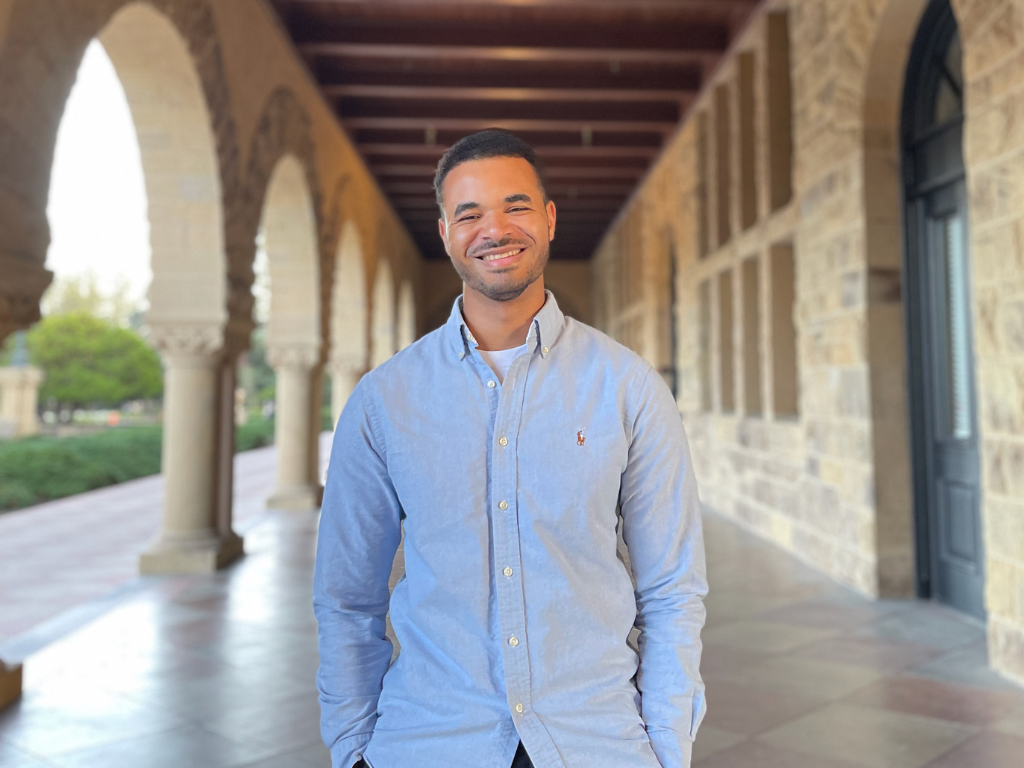
From School Skeptic to Psychology PhD: Adani Abutto's Unconventional Path to Unlocking the Mind
For many, the journey through compulsory education is a straightforward progression. But for Adani Abutto, a burgeoning international Psychology PhD student in the US, his early school years were marked by a profound disconnect. He openly admits, "Throughout my compulsory education, from kindergarten to high school, I did not enjoy it very much." This disinterest wasn't born of apathy, but rather a deep-seated curiosity about the very foundations of learning.
He recalls a persistent internal dialogue: "We were taught in a particular way, and I kept wondering what they were based on." These fundamental questions about pedagogy and cognitive processes sparked a lifelong pursuit of understanding.
The Seeds of Inquiry: Beyond the Classroom Walls
Abutto's formative questions were not easily answered within the traditional school setting. He grappled with inquiries that probed the very essence of human cognition: "Were there principles behind how teachers taught us? If there were, why were they not working well? How can we have thoughts at all? How does the brain actually work? How can we study something as complex as this in a systematic manner?"
These were not abstract musings; they were the driving force behind his future academic endeavors. The desire for concrete answers to these profound questions about psychology became the sole catalyst for his subsequent educational trajectory.
An Unconventional Beginning: Learning Through Doing
Instead of immediately pursuing a bachelor's degree after high school, Abutto chose a less conventional route. He began working as a teaching assistant in special education, an experience that proved pivotal. "Working with children with learning abilities made me realise how different children are from one another," he shares.
This hands-on experience highlighted the inherent diversity in learning and perception. "You can have many children in the same environment and engaging in the same activities, but their experiences are still different. Just like how they perceive the world and process information," he observed.
His journey continued as an assistant school teacher at a day care center, where he worked with even younger children. This environment offered a unique window into rapid development. "I found it fascinating to watch how quickly they grow and learn, and within a week or month, you can see noticeable changes in them," he remarks.
These experiences solidified his understanding that the complex questions he harbored could be explored at a much deeper, systematic level. This realization led him to pursue a Bachelor of Science in Psychology at the Zurich University of Applied Sciences.
Academic Excellence and Global Recognition
During his undergraduate studies, Abutto was determined to maximize his learning opportunities. He took on several jobs and internships, a strategy that yielded significant rewards. His dedication was recognized with a Fulbright Fellowship to the US, placing him among a select group of eight scholars.
Further testament to his academic prowess, he was awarded the 2021 Best Undergraduate Thesis Prize at the Psychological Institute, Zurich University of Applied Sciences. It’s a remarkable trajectory for someone who initially found school unenjoyable, now excelling at the university level.
His academic journey didn't stop there. He pursued an MSc in Psychology at the University of Munich in Germany. Subsequently, he moved to the United States to complete an MA in Psychology at Harvard University, a globally renowned institution for psychological research.
The Allure of Research: Pursuing a Psychology PhD
Today, Abutto is a Psychology PhD candidate at Stanford University, another leading university in the field. He finds immense satisfaction in his current academic pursuit. "I find it genuinely fun and intellectually exciting," he laughs.
While he acknowledges the appeal of roles like therapist or teacher, which involve direct interaction with people, his ultimate goal was more fundamental. "Doing a Psychology PhD was a step closer to pursuing what I wanted," he explains.
The prospect of systematically studying the intricacies of the mind and brain resonated deeply with him. He saw academic research and scientific inquiry as the most effective tools for building a comprehensive understanding of human behavior and addressing broader questions about patterns and generalities across diverse populations.
Beyond intellectual curiosity, Abutto admits to finding research inherently enjoyable. "Once I started doing research, I realised I enjoy working with data, reading, and thinking deeply about questions," he states. This realization confirmed that pursuing a Psychology PhD was the right path for him.
The prospect of engaging in work he finds fulfilling while also receiving financial support is a significant motivator. "The idea that I can do something I enjoy while getting paid for it is very motivating," he says.
The US Advantage: A Strategic Choice for Doctoral Studies
Abutto acknowledges the personal challenges of extended time away from family. He could have continued his Psychology PhD in Europe, but he observed a recurring pattern in the research that captivated him. "When I read papers, attended lectures, or worked as a research assistant, I kept seeing the same names over and over again," he explains.
Upon further investigation, he discovered that many of these influential researchers were based in the US, often at highly resourced universities. This observation made it clear to him that a significant portion of the cutting-edge research he was interested in was being conducted far from his home country.
While European universities are undoubtedly excellent, and he has even worked at some, Abutto found the structure of PhD programs in the US to be more aligned with his research aspirations. He prefers the US model, which integrates research with coursework, teaching opportunities, and a relatively stable salary.
Studying in the US today presents its own set of challenges, including the complexities of costs and logistics, particularly concerning visas and immigration policies. However, one of the most significant aspects for Abutto is the inherent uncertainty of empirical research.
"If you’re doing empirical research — running experiments and collecting data — you never know in advance how your studies will turn out," Abutto notes. "Sometimes, results don’t match your hypothesis, or you find nothing at all."
Despite these inherent uncertainties, Abutto is making the most of his experience. He emphasizes the crucial role of his supportive network. "His cohorts and advisors in the US are supportive, kind, and thoughtful. To him, it makes a huge difference." This collaborative and encouraging environment is instrumental in his ongoing pursuit of understanding the complexities of the human mind.






 Explore AI Teaching Tools
Comments (0)
Please login to comment
No comments yet
Be the first to comment on this article