
New York's $10 Million Reading Initiative Under Fire: Experts Question Effectiveness of Teacher Training Course
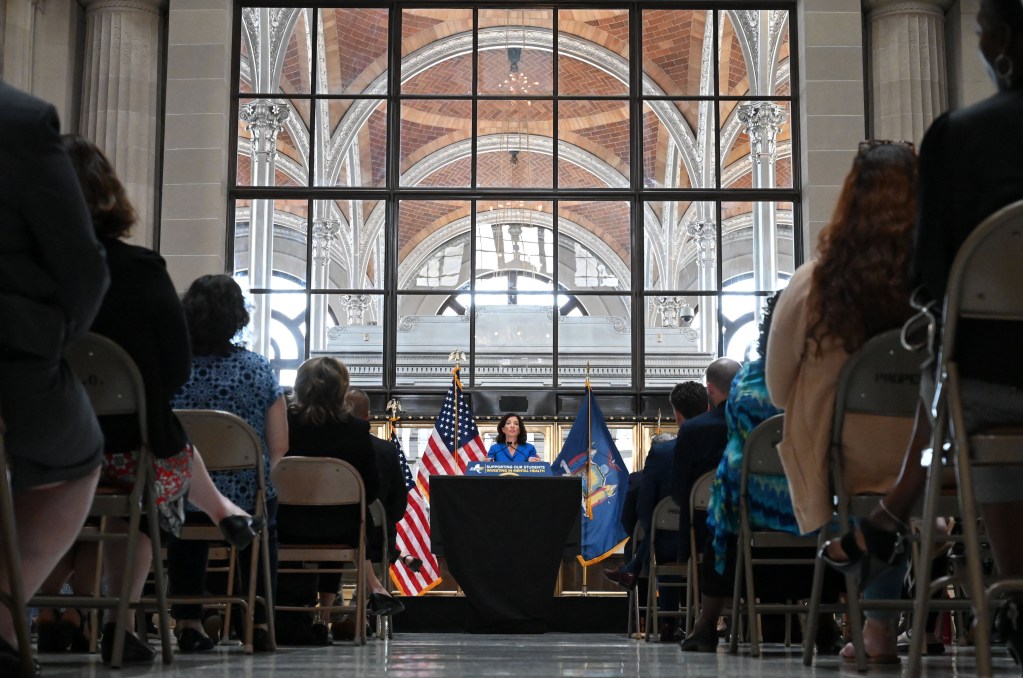
New York State launched a significant initiative with the ambitious goal of transforming literacy instruction and dramatically improving reading scores. Governor Kathy Hochul declared a new era for teaching reading, aiming to elevate the percentage of third graders reading proficiently from 45 percent to over 60 percent. This ambitious plan, branded "Back to Basics," mandated that school districts adopt strategies rooted in the "science of reading."
The cornerstone of this overhaul was a $10 million investment earmarked for retraining 20,000 teachers. The funds were channeled to the New York State United Teachers union to develop and deliver a specialized course. However, just months after its September launch, the program faces intense scrutiny from literacy experts who argue it falls short of its promise, potentially undermining the very goals it was designed to achieve.
A Disconnect Between Promise and Practice
The core of the criticism centers on the content of the teacher training course. Literacy advocates and national experts who have reviewed portions of the material contend that it does not align with the latest research in reading science. Instead, they claim the course promotes outdated teaching methods that have been shown to be ineffective and may even hinder student progress.
This controversy emerges as reading scores in New York have seen a decline, while other states that have prioritized evidence-based literacy instruction are reporting gains. The situation raises serious questions about the efficacy of the state's substantial investment and its overall strategy for improving literacy.
Experts Raise Alarms Over Course Content
Dr. Susan Neuman, a distinguished professor at New York University specializing in early literacy development, expressed deep concern after examining a sample of the course materials. "There are just lots of inaccuracies and very old citations," Dr. Neuman stated, questioning the value of the $10 million expenditure. Her sentiment was echoed by others who found the course to be out of step with established scientific consensus.
The primary point of contention is the course's perceived endorsement of "balanced literacy," an approach that contrasts sharply with the "science of reading." Balanced literacy often incorporates "three-cueing," where students are encouraged to use context clues, sentence structure, and accompanying pictures to identify words, rather than solely relying on phonics. Critics liken this method to educated guessing, arguing it bypasses the foundational skills necessary for proficient reading.
A comprehensive review of 68 studies starkly contrasted balanced literacy with "structured literacy," an approach derived from the science of reading. The review concluded that structured literacy programs demonstrate significantly stronger effectiveness in enhancing a wide range of literacy skills.
Governor's Vision vs. Course Reality
Governor Hochul's "Back to Basics" plan explicitly aimed to move away from what she termed "debunked reading instruction practices," emphasizing phonics and comprehension. The union's training course was intended to be a critical tool in equipping teachers with these evidence-based methods. However, the course's content, which reportedly still emphasizes balanced literacy principles and misrepresents research findings, has left many advocates and experts bewildered.
This situation is particularly concerning given that a significant portion of New York's school districts continue to utilize balanced literacy or other non-evidence-based curricula. State data indicates that over one in five districts still rely on these methods, and New York lags behind many other states in its transition to scientifically-backed instruction.
A Growing Literacy Crisis in New York
The statistics paint a troubling picture of declining reading proficiency among New York's youngest learners. In 2009, 29 percent of fourth graders scored at the lowest proficiency level on the National Assessment of Educational Progress (NAEP). By 2019, this figure had climbed to 34 percent, and by 2024, a staggering 41 percent of fourth graders were not reading at grade level. This trend is deeply concerning, as research consistently shows that children struggling to read by third grade face a significantly higher risk of academic failure and are far less likely to complete high school.
In stark contrast, states like Mississippi and Louisiana, which have aggressively implemented science of reading initiatives, are showing positive trends in reading scores. An analysis of state reading policies by ExcelinEd revealed that New York has adopted only two of eighteen essential policies for a comprehensive early literacy strategy, placing it among the lowest-performing states in this crucial area.
Teacher Training: A Closer Look
Lori Govenettio, a professional development specialist for The Reading League, a prominent organization advocating for evidence-based reading instruction, was among the first to enroll in the state-provided training. Her objective was to assess its suitability as a resource for teachers she supports. However, her experience was disappointing.
Govenettio reported that the instructor seemed unfamiliar with the science of reading and relied heavily on a script. The trainer's lack of awareness regarding key debates in literacy circles, such as the efficacy of teaching letter-sound correspondence in isolation, was particularly concerning. Furthermore, the presentation of a "running record" – a balanced literacy assessment tool explicitly rejected by the state's "Back to Basics" plan – further fueled her apprehension.
Minor but significant errors were also noted. A video intended to illustrate letter-sound relationships contained mispronunciations of common phonemes, undermining its educational value. These issues suggest a fundamental misunderstanding or misapplication of the science of reading within the training materials.
Expert Critiques of Course Materials
The concerns extend beyond individual training sessions. National literacy experts who reviewed excerpts from the course identified several substantive errors and misrepresentations. One slide, discussing different word types, incorrectly suggested that "precision words" like "cite" and "evaluate" do not require explicit instruction. Dr. Isabel Beck, a renowned literacy researcher whose work was cited on the slide, stated that the interpretation was "backward" and that these words absolutely necessitate direct teaching.
Dr. Tim Shanahan, a professor emeritus and former chair of federal literacy panels, took issue with five slides, including one that claimed high-frequency words are "easily decoded." He pointed out that many such words, particularly those with Anglo-Saxon roots, are irregular and cannot be easily sounded out, necessitating a different instructional approach.
Another slide presented a false dichotomy between the "phonics approach" and the "whole language approach," a precursor to balanced literacy. While the slide suggested both aim to improve reading skills, experts like Dr. Mark Seidenberg, a cognitive neuroscientist, emphasized that scientific literature strongly contradicts the effectiveness of the whole language approach, which has largely been abandoned in many educational settings.
State Response and District Autonomy
When approached for comment, the New York State Department of Education declined to answer specific questions regarding the course's content, review process, or instructor qualifications. Instead, they referred inquiries to the teachers' union and the governor's office. The union did not respond to repeated requests for information.
A spokesperson for Governor Hochul stated that the state education department and the union are actively refining the training and that the governor's office remains committed to supporting the rollout of the science of reading. However, the state's approach also grants significant autonomy to local school districts in selecting curricula and instructional methods, creating a complex landscape for implementing widespread change.
Despite the governor's mandate for districts to align with the science of reading, the final decision on teaching practices rests with individual districts. This has led to a situation where many districts claim alignment while, in reality, they are blending balanced literacy with science of reading principles. EdTrust-New York reported that as of December, approximately 21 percent of districts were still using non-evidence-based or balanced literacy curricula.
The Challenge of Blended Approaches
The effectiveness of blending diametrically opposed instructional philosophies is highly questionable. Experts like Dr. Shanahan express doubt that simply incorporating phonics into balanced literacy programs can overcome the inherent shortcomings of the latter. Dr. Neuman is even more critical, arguing that combining such disparate systems places an undue cognitive burden on children, potentially impeding their learning.
The experience of one family in the Indian River Central School District exemplifies the challenges faced by students in districts that continue to rely on balanced literacy. Despite nightly reading with their parents, their second and third graders struggled significantly. Their children's reading assessments revealed a pattern of guessing words, often aided by pictures, rather than sounding them out. When the visual cues were removed, their reading ability diminished substantially.
The parents eventually sought private tutoring using a structured literacy approach, which yielded marked progress. However, the high cost of such interventions places them under significant financial strain. While the district states it provides daily phonics instruction, it also employs cueing systems, including the use of pictures, which experts argue can interfere with the development of essential letter-sound connections.
Legislative Efforts and the Road Ahead
Frustration with the slow pace of change has prompted legislative action. Two state assembly members have introduced bills that would require the state education department to create a list of evidence-based reading curricula and provide grants for their adoption. These bills also propose mandatory science of reading training for all teachers and would explicitly ban cueing strategies.
However, these legislative efforts are currently stalled in committee. An unnamed state education department spokesperson expressed opposition, arguing that a "one-size-fits-all mandate is not the answer." Proponents of the bills maintain that while local control is important, ensuring that schools provide the best possible instruction is paramount.
At the federal level, proposed legislation aims to redefine allowable literacy instruction, potentially prohibiting cueing methods in federally funded reading programs. As the nation grapples with improving literacy rates, New York's journey highlights the complexities of implementing evidence-based practices and the critical need for accurate and effective teacher training.






 Explore AI Teaching Tools
Comments (0)
Please login to comment
No comments yet
Be the first to comment on this article