
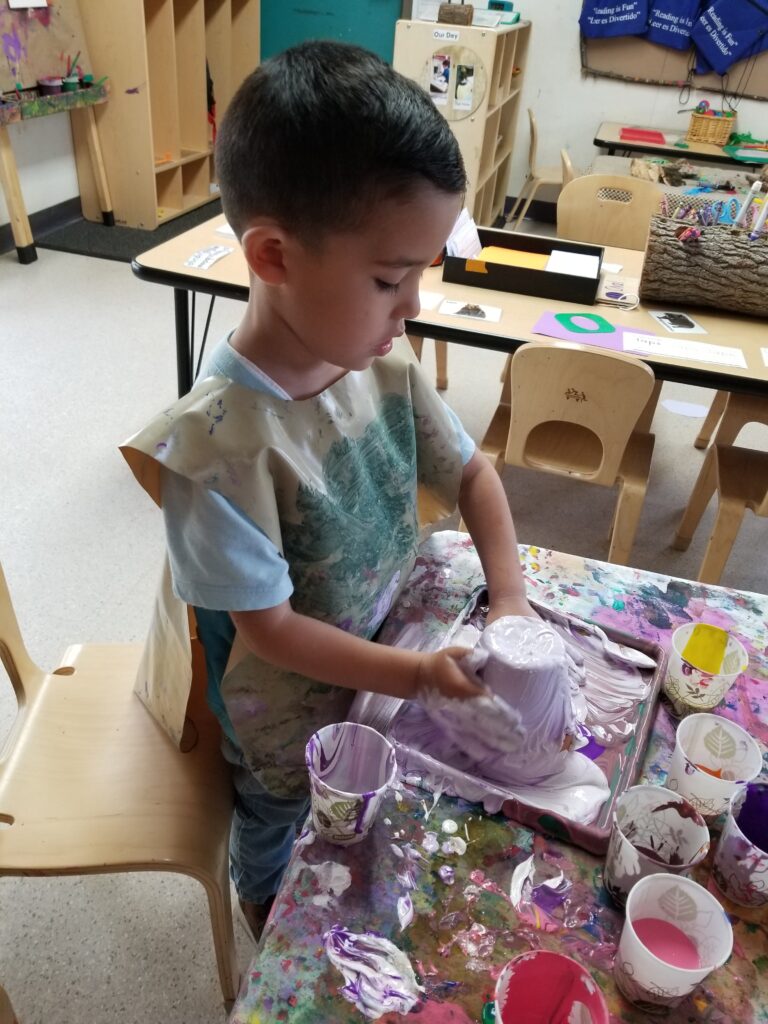
Unlocking Potential: How the Arts Empower Children's Self-Discovery and Learning
The vibrant world of early childhood education is often illuminated by the boundless creativity of its youngest learners.For many educators, observing children engage with art is not just about colorful canvases; it's a profound window into their developing minds and burgeoning identities.
This article explores how the arts, particularly painting, serve as a powerful tool for children to understand themselves, express their inner worlds, and build foundational skills that extend far beyond the art studio.
We delve into the philosophy and practical applications championed by educators who believe in the transformative power of creative expression for every child.
The Art of Self-Expression: Why Children Need Creative Outlets
At its core, art is an intrinsic human drive, deeply woven into our identity and how we perceive the world around us.From the clothes we choose to wear to the music we enjoy, aesthetics play a significant role in our daily lives.
This innate desire to create is particularly potent in young children.
Studies indicate that little children naturally possess an uninhibited creative mindset.
Their focus often lies in the immersive process of making art, rather than the final product.
This absorption can lead to moments where they seem to lose themselves entirely in their work, a testament to the deep engagement art fosters.
Nurturing the Innate Artist
Children are born artists, driven by an impulse to explore and experiment.The challenge for educators and parents lies in nurturing this impulse as they grow.
Preschool years are a fertile ground for this, as children are constantly in a creative state.
Art provides a vital avenue for them to articulate their feelings, share their thoughts, and communicate their unique ideas.
This is especially crucial for children from disadvantaged backgrounds, who may not otherwise have access to the enriching experiences that high-income families often take for granted.
Providing tools like painting, drawing, and other artistic endeavors can offer these children a profound sense of freedom, self-expression, and identity.
Painting as a Pathway to Deeper Understanding
The act of painting, in particular, offers a rich sensory and cognitive experience for young children.It's not merely about applying color to a surface; it's a complex process that involves fine motor skills, color theory, spatial reasoning, and emotional release.
When children are given the freedom to explore with paint, they are not just creating art; they are actively engaging in a form of self-discovery.
The Process Over the Product
A key insight from experienced educators is that children often prioritize the experience of making art over the finished piece.They might concentrate intensely on a painting, only to move on to something else once it's complete, with little concern for signing their name or displaying it prominently.
This focus on the journey, the exploration of materials, and the act of creation itself, is where much of the learning occurs.
This emphasis on process is invaluable, teaching children patience, perseverance, and the joy of engagement.
Developing Essential Skills Through Art
Research shows that engaging in artistic activities, such as painting, cultivates a range of critical skills.These include: * **Fine Motor Development:** Holding brushes, manipulating paint, and controlling strokes all refine hand-eye coordination and dexterity. * **Cognitive Flexibility:** Experimenting with colors, textures, and forms encourages children to think outside the box and adapt their approaches. * **Problem-Solving:** Deciding how to achieve a desired effect, mix colors, or represent an idea involves critical thinking and problem-solving. * **Emotional Regulation:** Art provides a safe and constructive outlet for children to express a wide spectrum of emotions, from joy and excitement to frustration and sadness. * **Concentration and Focus:** The immersive nature of painting demands attention and sustained focus, skills that are transferable to all academic areas.
The Educator's Role: Facilitating Creative Exploration
Educators who champion the arts understand that their role is not to dictate artistic outcomes but to create an environment where children feel safe to explore, experiment, and express themselves freely.This often involves embracing a certain level of mess and chaos, recognizing that these are often indicators of deep engagement and learning.
DIY Materials and Deeper Connection
Some educators, like Daniel Mendoza, a veteran preschool teacher and visual artist, have found that even the materials themselves can enhance a child's connection to their art.Mendoza's practice of creating his own paintbrushes, for instance, stemmed from a need for larger tools suitable for ambitious projects while on a limited budget.
This DIY approach not only reflects an innovative spirit but also fosters a tangible connection between the creator and their tools, deepening their involvement in the artistic process.
This hands-on approach can make the act of creation feel more personal and meaningful.
Creating an Inclusive Artistic Environment
A crucial aspect of fostering creativity is ensuring that all children, regardless of their background, have equitable access to artistic experiences.Educators are increasingly aware of the disparities that can exist and are committed to bridging these gaps.
By integrating the arts into early childhood education, they aim to provide children with tools for self-discovery, expression, and a broader understanding of the world, which can have a lasting impact on their personal and academic trajectories.
Bridging Art and Academics: A Holistic Approach to Learning
A common misconception is that art is a separate, less critical subject compared to core academics like math and literacy.However, educators are increasingly demonstrating that art is not a luxury but an integral component of a well-rounded education, deeply intertwined with cognitive development and academic success.
Art as a Catalyst for Other Learning
Studies indicate that when children engage with art, they are simultaneously experiencing and developing skills relevant to other subjects.For example, the process of creating art can involve: * **Mathematics:** Understanding concepts like shape, size, proportion, and symmetry.
Mixing colors can also introduce basic principles of color theory and ratios. * **Literacy:** Developing vocabulary to describe colors, shapes, and emotions.
Creating narratives around their artwork enhances storytelling abilities. * **Science:** Exploring the properties of different materials, how colors blend, and the physics of how paint behaves. * **Social-Emotional Learning:** Collaborating on art projects teaches teamwork, communication, and empathy.
Understanding and expressing emotions through art builds self-awareness.
The Power of Integrated Learning
When art is seamlessly integrated into the curriculum, it transforms learning into a more engaging, multi-sensory, and memorable experience.This holistic approach helps children make connections between different areas of knowledge, fostering a deeper and more meaningful understanding of the world.
It moves away from rote memorization towards active exploration and discovery.
Overcoming Barriers: The Importance of Arts Education for All
Despite the clear benefits, arts education often faces challenges, particularly in systems that prioritize standardized testing and quantifiable outcomes.The pressure to achieve high test scores can sometimes overshadow the importance of creative development, leading to a diminished emphasis on subjects perceived as less academic.
Challenging the "Luxury" Perception
There is a critical need to reframe the conversation around arts education, moving it from a perceived "luxury" to a foundational element of learning.By highlighting the profound impact of the arts on children's cognitive abilities, emotional intelligence, and overall potential, educators can advocate for its rightful place in the curriculum.
This involves demonstrating how art directly supports learning goals and contributes to a child's ability to thrive in school and throughout life.
The Unintended Consequences of Narrow Focus
Research suggests that an overemphasis on subjects like math and literacy, to the exclusion of creative pursuits, may not always yield the desired academic improvements.In fact, it can sometimes lead to increased stress for children and a decline in engagement.
The arts, by contrast, offer a different path to developing focus, critical thinking, and a nuanced understanding of complex ideas.
The depth of concentration and reflection required in artistic endeavors can pay significant dividends across all academic disciplines.
Conclusion: Cultivating a Lifelong Love of Learning Through Art
The journey of a child through the arts is a powerful exploration of self.From the tactile experience of paint to the imaginative leaps of creation, art provides children with a unique language to understand their inner world and connect with the world around them.
Educators like Daniel Mendoza exemplify the profound impact that a dedicated approach to arts education can have, not only on individual children but also on the broader educational community.
By embracing creativity, fostering self-expression, and integrating artistic experiences into the fabric of learning, we empower children to become more confident, capable, and well-rounded individuals, ready to face the future with curiosity and a deep appreciation for the richness of human experience.
The arts are not just about making things; they are about making sense of ourselves and our place in the world.



 Explore AI Teaching Tools
Comments (0)
Please login to comment
No comments yet
Be the first to comment on this article