
Unlocking Reading Potential: A Comprehensive Guide to tutoring Success
Embarking on a journey to improve reading skills is a profound step, especially for young learners.This guide delves into the essential elements of effective reading tutoring, exploring how dedicated support can transform a child's academic trajectory.
We'll uncover the nuances of personalized instruction, the impact of structured curricula, and the vital role of a supportive learning environment, all while keeping in mind the unique needs of every student, like young Jose, a budding Dodgers fan whose learning experience highlights the importance of consistent, evidence-based reading intervention.
The Foundation of Reading: Building Blocks for Young Learners
At its core, learning to read involves mastering a complex set of skills.For many kids, particularly those a grade level or more behind, this process requires targeted, individualized attention.
The journey begins with foundational literacy, which includes phonological awareness – the ability to recognize and manipulate sounds in spoken words – and phonics, the connection between letters and their corresponding sounds.
This is where dedicated reading tutoring truly shines, offering a structured approach that addresses these fundamental components systematically.
Decoding the Written Word: Phonics and Word Recognition
Effective reading tutoring often starts with explicit phonics instruction.This involves teaching students the common letter-sound correspondences and how to blend these sounds together to read words.
For instance, understanding that the letters 'c', 'a', and 't' combine to form the word "cat" is a crucial early step.
Tutoring sessions can break down unfamiliar words into smaller, manageable parts, helping students develop strategies for sounding them out.
This process is not always straightforward, as English can present inconsistencies, like the sound of "-ch" varying between words.
A skilled tutor navigates these complexities, providing clear explanations and ample practice.
Comprehension: Beyond Just Reading the Words
Simply being able to read words aloud is only the first part of the reading equation.True reading proficiency lies in comprehension – understanding the meaning of what is read.
This involves a range of cognitive skills, such as identifying the main idea of a text, recognizing supporting details, understanding character motivations, and inferring meaning.
Tutoring sessions can be instrumental in developing these higher-order thinking skills.
By engaging with texts, students learn to ask questions, make predictions, and connect new information to what they already know.
This active engagement transforms reading from a passive activity into an intellectual exploration.
The Power of Personalized Tutoring: Tailoring Instruction for Impact
One of the most significant advantages of reading tutoring is its inherent personalization.Unlike a traditional classroom setting, where a teacher must cater to a diverse group of students, a tutor can focus exclusively on the individual needs of a single child.
This allows for a deep understanding of their strengths, weaknesses, and learning style.
This is where the experience of tutoring a young fan like Jose, who lights up when discussing his favorite baseball team, becomes invaluable.
Connecting learning to a child's interests can unlock engagement and make the process more enjoyable and effective.
Identifying Learning Gaps: The Role of Assessment
Before effective tutoring can begin, it's essential to understand where a student stands.This often involves initial assessments to pinpoint specific areas of difficulty.
These assessments can range from informal observations during initial sessions to more structured evaluations of reading fluency, accuracy, and comprehension.
For programs that support many kids, like those at Title I schools, these assessments are critical for tracking progress and demonstrating the impact of interventions.
However, unforeseen events, such as school closures due to environmental issues, can disrupt these crucial assessment schedules, highlighting the fragility of support systems.
Crafting a Learning Path: Curricula and Strategies
Based on assessment results, tutors can develop a tailored learning plan.This often involves utilizing evidence-based curricula designed to teach reading skills systematically.
These curricula are typically structured, guiding the tutor and student through a series of lessons that build upon one another.
For example, a lesson might focus on a specific vowel digraph, followed by practice reading words containing that digraph, and then a short passage to reinforce comprehension.
The tutor's role is to adapt these materials, ensuring they are presented in a way that resonates with the individual student.
This might involve incorporating games, visual aids, or, as in Jose's case, relating concepts to his passion for baseball.
The Tutor-Student Relationship: Building Trust and Motivation
Beyond the curriculum and strategies, the relationship between the tutor and the student is paramount.A strong, trusting bond can significantly enhance a child's motivation and willingness to engage with challenging material.
For a child who might be struggling, the tutor becomes a source of encouragement and support.
This is especially true when tutoring kids who are at risk of falling behind.
The consistent presence of a dedicated adult who believes in their potential can be a powerful motivator.
Creating a Positive Learning Environment
Tutoring sessions should be a safe space for learning, where mistakes are seen as opportunities for growth.Tutors strive to create an atmosphere that is both structured and encouraging.
This means setting clear expectations, celebrating small victories, and providing constructive feedback.
When a student feels comfortable taking risks and asking questions, their learning accelerates.
This positive reinforcement is key to building confidence, which is often a prerequisite for academic success.
The Impact of Enthusiasm and Connection
A tutor's own enthusiasm for reading and learning can be infectious.When a tutor is passionate about the material and genuinely invested in the student's progress, it can ignite a similar spark in the child.
For instance, sharing a love for stories or discussing the nuances of language can make the learning process more engaging.
Learning that Jose's friends inquired about getting tutors themselves suggests that the positive experience he was having extended beyond his individual sessions, indicating the power of a well-executed tutoring program.
Challenges and Resilience: Navigating Obstacles in Education
The journey of reading intervention is not always smooth.External factors can significantly impact the availability and effectiveness of tutoring programs.
Funding cuts, policy changes, and unforeseen events can create uncertainty and disrupt the continuity of support for students.
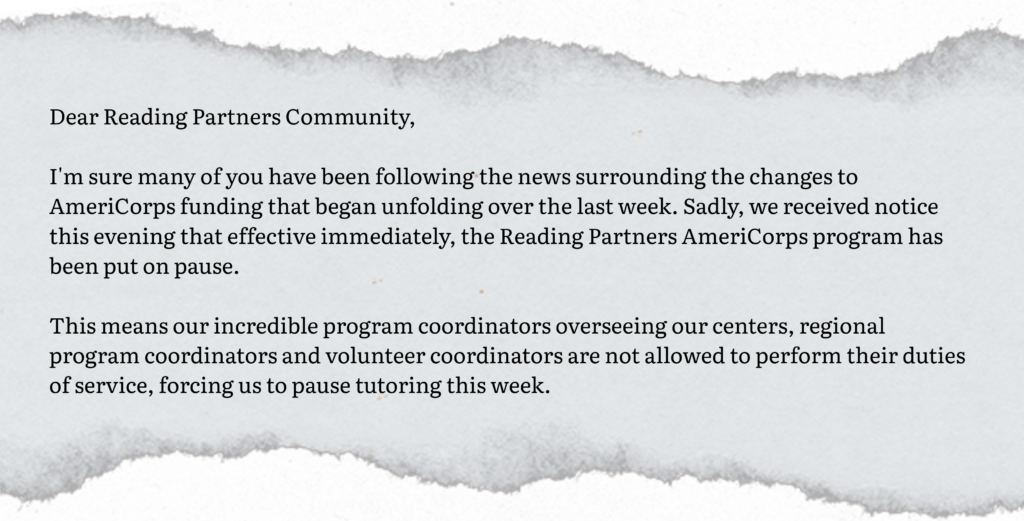
This was evident when federal grant reductions threatened the operations of organizations that provide vital reading support.
The Ripple Effect of Funding Cuts
Organizations that rely on federal grants, such as AmeriCorps, play a critical role in supporting educational initiatives.When these grants are reduced or eliminated, it can have a cascading effect, impacting the number of students who receive assistance and the resources available to them.
This uncertainty can be particularly distressing for students and families who have come to depend on these services.
The confusion surrounding potential cuts and subsequent legal challenges underscores the complex landscape of educational funding.
Disruptions to Learning: Beyond the Classroom
Educational disruptions can extend beyond funding issues.Natural disasters, like fires, can force school closures and displace families, creating additional challenges for students.
These events can lead to missed instructional time, interrupted routines, and emotional distress, all of which can affect a child's academic progress.
The need for consistent support systems becomes even more pronounced in the face of such adversities.
The Long-Term Vision: Fostering a Lifelong Love of Reading
While the immediate goal of tutoring is often to close the gap in reading proficiency, the ultimate aim is to foster a lifelong love of reading.This means equipping students with the skills and confidence to become independent, engaged readers who can navigate the world of literature and information.
The impact of dedicated tutoring can extend far beyond academic achievement, shaping a child's intellectual curiosity and their ability to connect with others through stories.
Empowering Future Readers
By providing targeted support, tutors empower students to overcome their reading challenges.This empowerment translates into increased confidence, improved academic performance across all subjects, and a greater sense of self-efficacy.
When kids realize they can tackle difficult texts and understand complex ideas, it opens up a world of possibilities.
This is the essence of what effective reading tutoring aims to achieve – not just to teach reading, but to unlock potential.
The Enduring Value of Mentorship
The role of a tutor often transcends that of an instructor; they become a mentor.This mentorship can provide invaluable guidance and encouragement, helping students develop not only their reading skills but also crucial life skills like perseverance and problem-solving.
The dedication of individuals who volunteer their time to tutor kids, like the author's experience with Jose, exemplifies the profound impact of such mentorship on young lives.
Even when faced with uncertainty, the commitment to supporting these learners remains a powerful testament to the value of education.
Conclusion
The journey of learning to read is a fundamental aspect of a child's development, and dedicated tutoring plays an indispensable role in this process.By offering personalized instruction, employing evidence-based strategies, and fostering strong mentor-student relationships, tutors can unlock a child's potential and build a solid foundation for academic success.
While challenges in funding and external disruptions can pose obstacles, the resilience and dedication of educators and organizations committed to improving reading skills ensure that the pursuit of literacy continues.
The impact of this work, as seen in the progress of young learners like Jose, underscores the vital importance of continued investment in reading intervention programs for all kids.







 Explore AI Teaching Tools
Comments (0)
Please login to comment
No comments yet
Be the first to comment on this article