
Stagecraft and Self-Discovery: How One Teacher Ignited a Compton School's Creative Spark
In the heart of Compton, where the echoes of ambition often compete with the realities of urban life, a remarkable transformation is unfolding on a makeshift stage. For nearly three decades, one dedicated educator has been proving that the power of theater can unlock potential, build confidence, and redefine narratives for a generation of students.
From English Scholar to Thespian Architect
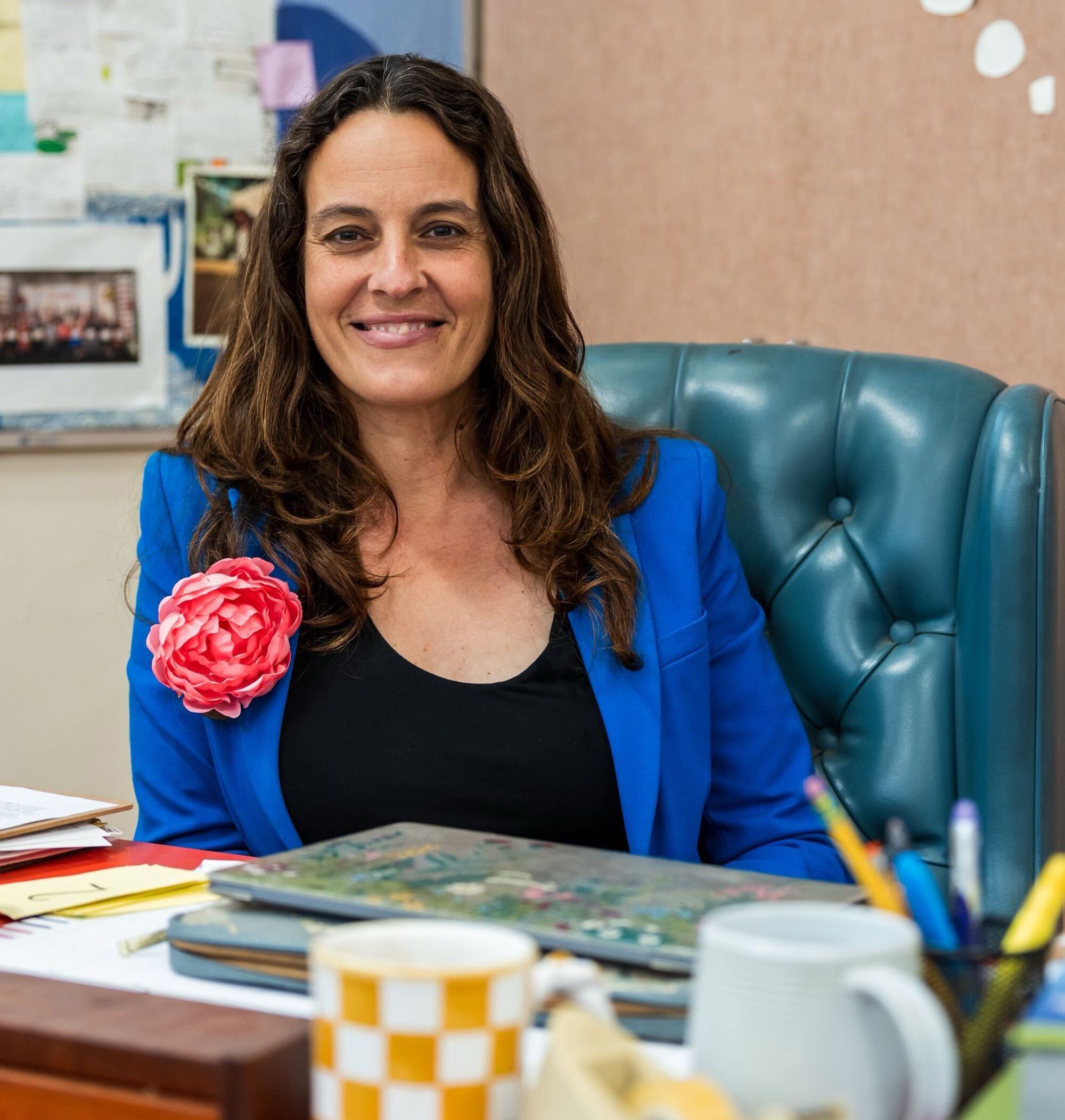
Catherine Borek arrived at Dominguez High School with a clear trajectory: a few years with a prestigious teaching fellowship, then onward to academia. Her initial role was to guide students through the intricacies of AP English literature. However, her own background as a high school theater enthusiast quickly led her down an unexpected, yet profoundly impactful, path.
Borek felt an immediate calling to breathe life into the classical texts her students were studying. She believed that lifting words from the page and onto the stage was the key to unlocking their deeper meaning. This instinct, honed over 29 years, has not only shaped her own career but has irrevocably altered the lives of countless students.
“You find yourself when you’re up on that stage,” Borek often reflects, a sentiment that earned her the prestigious California Teacher of the Year award in 2023. Her journey began with a stark reality: no dedicated stage, no rehearsal space, and no existing budget for the arts. The school hadn't produced a play in two decades.
Faced with these limitations, Borek tapped into an extraordinary resourcefulness. She describes entering a "MacGyver mode," where ingenuity trumped scarcity. Her philosophy became simple: "You take what you have, and you make something out of that."
This approach has led to an astonishing array of productions, from full-fledged plays and operas to vibrant poetry slams. Borek has demonstrated an unparalleled ability to create theatrical magic, even within the confines of a computer lab, and without a single cent from the school's coffers.
Igniting Ingenuity Beyond the Script
Her classroom has become a sanctuary for creativity, a space where teenagers willingly set aside their phones to engage in collaborative storytelling. Borek fosters an environment where students ignite each other's ingenuity, a process she describes with almost spiritual reverence.
“There’s something about creativity that’s almost religious to me,” she explains. “It’s the space to almost be divine, you know? And we use theater to get us there.” This profound belief underpins her entire teaching practice.
Borek's commitment to students in the Compton district, a community often defined by external perceptions, stems from a deep-seated conviction. She believes that these scholars deserve the same level of cultural enrichment as any student, regardless of their background. She consistently refers to her students as "scholars," focusing on their strengths and achievements.
“It lifts you up,” she says with characteristic modesty. “The students have a different energy here. They’re so gung-ho and excited and enthusiastic that it helps dispel some of the melancholy that we see around the world right now.” This infectious enthusiasm is a testament to the vibrant atmosphere she cultivates.
Challenging Perceptions, One Performance at a Time
Over the years, Borek has empowered her students to become cultural ambassadors, actively combating long-held stereotypes associated with Compton. Their achievements extend far beyond the school walls, showcasing a breadth of talent and resilience.
These students have not only participated in the LA Marathon and collaborated with the LA Opera but have also reached the regional finals of the Poetry Out Loud competition. Their creative endeavors have even included starring in a commercial and initiating a rugby club, demonstrating a remarkable range of interests and capabilities.
A 2003 documentary captured the raw energy of Borek's first major production, "OT: Our Town." This staging of Thornton Wilder's classic play, performed on a makeshift stage in the school cafeteria, highlighted the ensemble's raucous creativity as they tackled a masterpiece. The film featured a 16-year-old student, Ebony Star Norwood-Brown, who playing the narrator, pointedly noted that the arts offered a vital counter-narrative to the pervasive "Boyz n the Hood" tropes.
“Compton is home of gangster rap and gangsters,” Norwood-Brown stated in the documentary. “That’s all people know about Compton. That’s all people think about Compton. … We’re way different from what you think we are.” This sentiment underscores the profound impact theater has on shaping student identity and public perception.
The Antidote to a Screen-Dominated World
In an era increasingly dominated by digital interaction, drama has emerged as a crucial antidote. It offers a space for genuine human connection, fostering the vital bond between students and their teacher that can ignite a passion for learning.
Borek's classroom prioritizes personal connection, with fist bumps and regular check-ins forming an integral part of her curriculum. She speaks wistfully of the shift during the pandemic, noting, “One of the most heartbreaking parts of the pandemic is that we became an online learning community instead of a human, face-to-face learning community.”
She observes a marked difference in student engagement compared to the pre-pandemic era, lamenting the shift towards screens as the primary source of information. Borek prefers to frame learning as a cathartic experience, aiming for lessons that resonate deeply in a culture often characterized by short attention spans.
As a powerful example, she once tasked her class, a generation profoundly impacted by the pandemic, with creating scary movies. This exercise was designed to help them confront and process their fears in a tangible, creative way.
A Human-Centric Approach to Education
The principal of Dominguez High, Caleb Oliver, recognizes the fundamental value of Borek's approach. “Borek’s approach to instruction and lesson building is a reminder of what the last few years have demonstrated to be most important in education: people and the bodies we occupy,” he stated.
Oliver further elaborated, “When technology fails and funds are low, these endure as the conduit to learning that has stood the test of time. We learn best through action and others.” This highlights the enduring power of human interaction and kinesthetic learning, even when resources are scarce.
Theater as Therapy and Empowerment
Borek soon realized that for many of her students, drama served a purpose beyond artistic expression; it was a vital tool for coping with the pervasive mental health challenges facing their generation. She views theater as a form of exposure therapy, a means of gradual healing and growth.
“While so many of our students are struggling with anxiety and depression, theater is one of the best forms of therapy,” she explained. “It offers exposure bit by bit. We expose them to good stress, and we help them strengthen their wings so that they can fly.”
She recalls a student who was so consumed by anxiety that he initially couldn't even step onto the stage and considered dropping the class. Borek's patient encouragement, however, convinced him to persevere until he found his footing in the spotlight.
“Communication, teamwork and a positive attitude are among the skills that we strive to leave our students with to be ready for college and the workplace,” Oliver noted. “Borek’s students always return years later crediting her with igniting these skills within them in her class.” This speaks volumes about the lasting impact of her teaching.
In another poignant example, two students who were new immigrants struggled with shyness due to language barriers and social awkwardness. Throughout the semester, their confidence blossomed, culminating in a powerful performance of a poem on stage.
“They worked together not just to say the poem, but to become the poem,” Borek recounted. “These words became movements, these young women worked through language barriers to communicate beyond words. That is the power of the arts.” This illustrates how theater can transcend linguistic limitations and foster profound self-expression.
Navigating Pressure and Finding Voice
Drama also provides a crucial escape valve for students grappling with the immense pressure of college admissions in a highly competitive academic landscape. The relentless pursuit of perfection can be overwhelming for many young people.
“There’s a lot of pressure on kids in high school right now,” Borek observed. “It’s sort of an unforgiving, relentless punch in the face. And even if parents aren’t telling them they need to be perfect, they’re hearing it from everywhere else. You’ve got to get straight As.”
The feeling of being overwhelmed by external expectations can lead some young individuals to withdraw. Theater, however, offers a pathway to break down these self-imposed barriers.
Nathalie Reyes, a 17-year-old student, shared her transformative experience: “I honestly do feel like it changed my life. I used to be super shy, and speaking up in class felt nearly impossible, but drama gave me a space where I could experiment with my voice. It taught me how to take up space, be confident in my ideas, and not overthink every little thing.” Her words highlight the profound personal growth fostered by the program.
Connecting with Timeless Truths
Borek's pedagogical approach emphasizes the enduring wisdom found in classic literature as a means of navigating contemporary anxieties. Unlocking the universality of these texts is central to her mission.
She recalls a moment of frustration when her English students initially struggled to connect with Arthur Miller's "Death of a Salesman." The character of Willy Loman, a disillusioned traveling salesman, failed to resonate with them. Never one to be deterred, Borek organized a trip to see a professional revival of the play.
This excursion proved to be a pivotal moment. The production illuminated Miller's incisive critique of the American dream, opening the students' eyes to its darker implications. One student even found a poignant connection, recognizing aspects of his own father in Loman's struggles, leading to an emotional breakthrough.
“It was gobsmacking for them,” Borek recalls with evident satisfaction. “I can’t tell you how many students came up to me and they’re like, ‘Man, I related to that, the frustration between that father and son.’ It was their first time at the theater, and they were crying.” This experience underscores the power of art to foster empathy and connect students to universal human experiences, transcending time and circumstance.






 Explore AI Teaching Tools
Comments (0)
Please login to comment
No comments yet
Be the first to comment on this article