
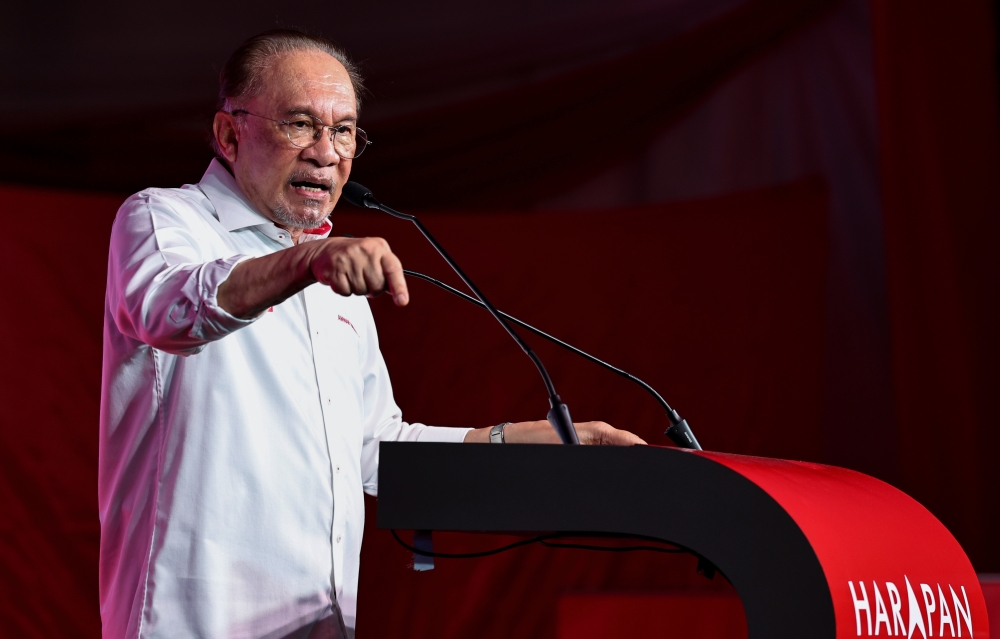
Anwar Declares End to Dehumanizing Aid Distribution: "People Are Not Slaves"
Prime Minister Datuk Seri Anwar Ibrahim has issued a strong directive, vowing to dismantle outdated systems that force citizens to endure long queues and indignities when receiving essential government assistance. The MADANI Government, he stated, is committed to a future where aid is distributed with respect and efficiency, reflecting the inherent dignity of every person.
Reimagining Welfare Distribution for a Modern Era
The days of people being treated as if they are in a bygone era, forced to wait for hours for financial aid, are numbered. Prime Minister Anwar Ibrahim made it unequivocally clear that such practices are incompatible with a sovereign nation in the 21st century. He emphasized that this is not a matter of political maneuvering but a fundamental issue of respect for the people.
“We are now independent, sovereign; the people have dignity, rights, freedom and the spirit of independence,” Anwar declared, underscoring the core values underpinning his government's approach to public service. The current digital landscape offers far more sophisticated and respectful methods for aid disbursement, rendering archaic queuing systems obsolete and, frankly, demeaning.
The Shift Towards Direct Digital Transfers
The government is actively prioritizing direct bank transfers as the primary mechanism for delivering financial assistance. This strategic shift aims to safeguard the welfare of citizens while upholding their dignity throughout the process. Programs like Sumbangan Tunai Rahmah (STR) and school aid are prime examples of initiatives that can and should be credited directly to beneficiaries.
Anwar questioned the continued reliance on outdated methods when modern financial systems allow for seamless and dignified disbursement. This move signals a clear commitment to ensuring that no individual is subjected to the humiliation of lengthy waits for support they are entitled to. The focus is on a system that acknowledges and respects the time and worth of each person.
Championing Educational Equity for All
Beyond welfare distribution, the government is reinforcing its commitment to educational equity. A significant policy decision guarantees places in the Matriculation Programme for all students who achieve 10As or above in their Sijil Pelajaran Malaysia (SPM) examinations. This applies irrespective of race, a move designed to celebrate and reward academic excellence.
This decision aims to acknowledge the outstanding achievements of Malaysian students and counter any narratives that suggest such policies are driven by narrow political interests. The guarantee of matriculation places for high-achievers is a testament to the government's belief in nurturing talent across all communities.
A United Front on Education
The Prime Minister highlighted that this crucial decision regarding matriculation placements was a consensus reached by all members of the Federal Government's Cabinet. This unified approach underscores the importance placed on providing opportunities for all deserving students.
Anwar also issued a stern reminder to all political parties, urging them to refrain from using educational platforms to incite racial division. Instead, he called for a collective focus on fostering educational excellence for the future prosperity of the nation's youth. The emphasis is on building a cohesive society through shared opportunities.
Navigating the Political Landscape
Addressing the emergence of new political parties, particularly in the context of the Johor State Election, Anwar acknowledged the democratic right of individuals to form parties. He views elections as the ultimate testing ground for political support and the effectiveness of these new entities.
While recognizing the right to form new parties, Anwar posed a critical question: what unique contributions can they offer to a nation facing complex challenges? He urged the people to exercise their power wisely, evaluating and choosing a government that prioritizes service and integrity over abuse of power or divisive racial politics.
The discourse surrounding new parties and the upcoming elections in Johor highlights a broader conversation about governance and representation. The people of Johor, like all citizens, are empowered to discern which parties and leaders will best serve their interests and uphold the dignity of all people.





 Explore AI Teaching Tools
Comments (0)
Please login to comment
No comments yet
Be the first to comment on this article