
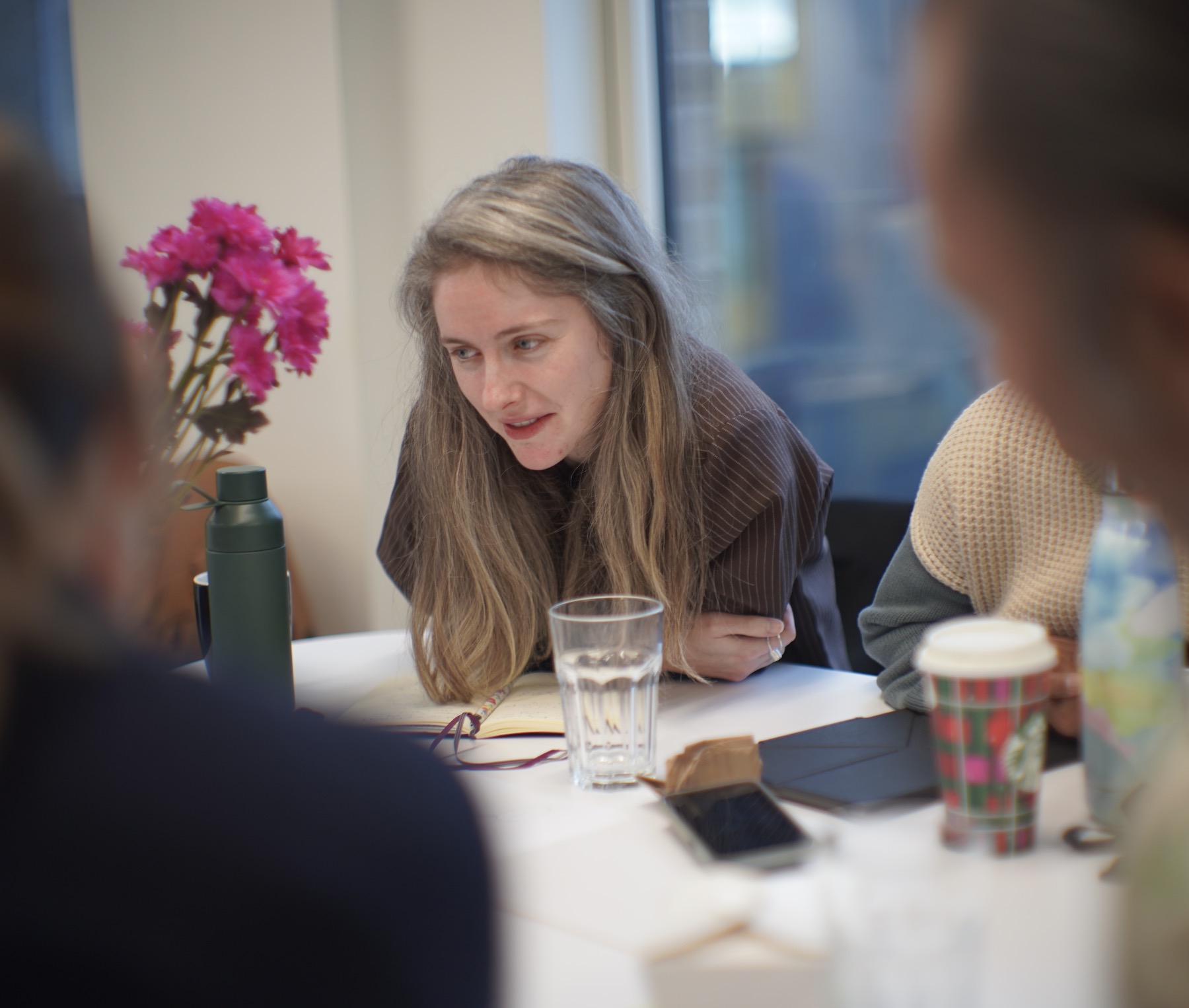
Beyond Silos: How One London School is Forging a New Path for Tackling Society's Toughest Challenges
In a world grappling with increasingly intricate problems, from climate change to public health crises, the traditional academic approach often feels like bringing a knife to a gunfight. Yet, a groundbreaking institution in the heart of London is challenging this paradigm, offering a radical new model for higher education that emphasizes interconnectedness and holistic problem-solving. This school isn't just teaching; it's actively building the next generation of thinkers equipped to navigate the complexities of the 21st century.
The Unconventional Journey to Interdisciplinary Mastery
Lucy Fox’s post-zoology degree path was far from linear. Her early career in adult social care, followed by a critical role in PPE logistics during the COVID-19 pandemic, exposed her to the messy, interconnected nature of real-world issues. These experiences, leading her through the National Health Service and Citizens Advice, revealed a stark deficiency.
“I witnessed firsthand how a fragmented approach was the norm, and that truly integrated systems were absent,” Fox explains. “I yearned to delve into subjects that were both fascinating and demanding, and The London Interdisciplinary School (LIS) emerged as the only institution actively addressing these complex issues and striving to connect disparate ideas.”
Established in 2018 by a collective of academics, entrepreneurs, and investors, LIS stands as the world's inaugural interdisciplinary university. Its core mission is to empower exceptional minds to confront and resolve society's most pressing problems. Uniquely, it is the first UK university in over half a century to secure its own degree-awarding powers from its inception.
A Radical Departure from Traditional Academia
Despite its relatively short existence, LIS is already making significant inroads, directly challenging established institutions. The passion radiating from its faculty is palpable; many have departed prestigious positions at world-renowned universities like Harvard, Cambridge, and Oxford, drawn by LIS's innovative and bold vision.
Learning from a diverse faculty—comprising philosophers, epidemiologists, artists, journalists, behavioral scientists, and mathematicians—offers a high-impact educational experience. This unique blend of expertise is yielding remarkable results, with nearly nine in ten (89%) LIS BASc graduates securing skilled employment within 15 months of completing their studies.
Now, this impactful approach is expanding its reach. The school has recently unveiled its new Master of Arts & Sciences (MASc) in Interdisciplinary Problems and Methods, a programme designed to equip graduates with the tools to tackle the world's most intricate challenges.
The MASc: A Programme Built for a Changing World
LIS’s MASc in Interdisciplinary Problems and Methods is meticulously crafted to transform students into adept problem-solvers. For many, it represents the only programme offering the breadth necessary to mirror the realities of contemporary professional life.
Mark Richardson-Griffith, a current MASc student, exemplifies this sentiment. A philosophy graduate, he transitioned into business consulting with major firms before moving into social innovation, with a particular focus on education. His motivation for joining the programme was clear:
“I sought to invigorate my skills, broaden my perspective, and unlock new professional avenues,” he states. “This programme offered the expansive scope I needed to achieve that.”
Sabine Vidal, another MASc student, shares this feeling of expansive opportunity. Her background is a rich tapestry of technology, design, social sciences, psychology, and education. LIS captivated her with its unwavering commitment to breaking free from outdated academic traditions.
“LIS stood out for its dedication to transcending ‘traditional’ and stagnant academic practices, offering us the chance to critically examine what we explore,” Vidal notes. The school provides a fertile ground for those eager to think differently.
Exploring the Mechanics of Complex Problem-Solving
The MASc programme is structured around two fundamental pillars: mastering interdisciplinary methodologies and applying them to real-world problems through a Capstone project. Students are encouraged to explore a wide array of qualitative and quantitative approaches, encompassing programming, statistics, visual media, and cultural analysis.
This exploration involves working with diverse data sets, including linguistic, numerical, visual, experimental, and algorithmic information. Richardson-Griffith recalls a particularly illuminating class that captured the essence of the programme’s innovative spirit.
“It was exhilarating when Dr. Carney demonstrated how to convert the complete works of Shakespeare and the King James Bible into two extensive lists,” he recounts. “We then made a call to an AI service to identify the most prevalent masculine and feminine nouns, followed by linguistic analysis to examine the distribution of these nouns across both texts.”
The programme’s Integration module pushes this methodological fusion even further. Students can then specialize in one of three distinct pathways, allowing them to delve deeply into specific areas of inquiry:
- AI Futures
- Designing for Life
- Acting Human
These pathways provide a structured yet flexible framework to explore real-world challenges and their underlying causes. Lucy Fox, reflecting on her experience, emphasizes the programme’s student-centric philosophy.
“Teaching and learning should be geared towards fostering genuine understanding, not merely passing exams,” Fox asserts. “LIS has proven that this approach is not only possible but also incredibly effective in supporting students to explore their areas of interest. It has shown me that education can be far more collaborative than is typically the case.”
Cultivating a Mindset for Lasting Impact
This transformative outlook has stayed with Fox long after her graduation. She remains committed to her field but is now driven by the LIS ethos to dismantle silos and champion more integrated working practices. The confidence instilled by the programme has even sparked thoughts of establishing her own charity or company.
Her advice to prospective students is straightforward and compelling: “If you are eager to learn a diverse range of subjects and possess an open, curious mind, LIS should be a top consideration. It offers a refreshingly different educational experience that provides the essential space for personal and intellectual growth.”
The school’s commitment to fostering adaptable mindsets prepares graduates not just for their first job, but for a lifetime of navigating evolving professional landscapes. By encouraging students to explore complex systems and problems from multiple angles, LIS is cultivating a generation of thinkers who can identify, analyze, and propose solutions to the multifaceted issues that define our era.
The London Interdisciplinary School is more than just an educational institution; it's a testament to the power of interdisciplinary thinking. By breaking down traditional academic barriers and fostering a collaborative, inquiry-driven environment, it is equipping individuals with the critical skills and innovative mindsets needed to address the complex problems of today and shape a better tomorrow.







 Explore AI Teaching Tools
Comments (0)
Please login to comment
No comments yet
Be the first to comment on this article