
Oregon's Public University on the Brink: How a $15 Million Budget Hole Threatened Closure
A childhood memory of university music students inspiring a young Ulysses McCready to pick up a flute at an elementary school assembly in Oregon is now overshadowed by the stark reality of Southern Oregon University's financial crisis. What began as a spark of inspiration has become a source of profound anxiety for students like McCready, who now face the potential dissolution of the very institution that ignited their passion.
A Cascade of Cuts: From Music Programs to Core Majors
McCready, now 26, chose Southern Oregon University (SOU) not only because of that formative elementary school experience but also because it was the sole four-year university in their region, allowing them to remain close to family. However, their first two years at SOU have been a turbulent journey through a deepening financial emergency. Initially a political science major, McCready found a new academic home in gender and women's studies, only to see both programs slated for discontinuation.
The impact rippled through extracurriculars as well. McCready's involvement in the wind ensemble and pep band was jeopardized when the music department was placed on the chopping block this past spring. These cuts, part of a desperate effort to salvage the university's budget, have created immense stress for students, faculty, staff, and the wider Oregon community.
The grim financial outlook has prompted many students, including McCready, to consider transferring to other institutions. The university's financial picture is so dire that without substantial intervention, this 150-year-old public university faced the unthinkable prospect of closure.
The Unforeseen $15 Million Deficit: A Budgetary Meltdown
For years, SOU has grappled with declining enrollment and escalating operational costs, creating a persistent financial strain. This year, however, a startling $15 million budget shortfall, attributed by officials to an ineffective budgeting strategy and significant computer system issues, pushed the university to the precipice. By February 2027, SOU found itself unable to meet essential obligations like payroll and utility bills without emergency state assistance.
Across the nation, colleges and universities have been buffeted by financial pressures, leading to the closure of numerous small private and for-profit institutions. While public universities have also faced challenges, resulting in campus closures or mergers, SOU's situation marks a critical juncture, representing one of the first instances of a public regional university facing such an imminent threat of outright closure.
For the immediate future, SOU's doors remain open, a testament to a one-time emergency funding infusion from the state. However, this lifeline came with a stringent condition: the university's leadership was mandated to balance its budget. This required a monumental task of identifying and implementing $20 million in cuts, a substantial portion—approximately one-fifth—of the university's roughly $100 million annual budget.
The "Vitality Plan": A Drastic Reshaping of the University
Following a tumultuous spring term, the unveiling of controversial cost-saving recommendations from an external consulting group, a series of public town halls, and impassioned student protests, SOU leaders presented their final plan on July 21. This "Vitality Plan" outlines a path to achieving the necessary $20 million in savings through a combination of drastic measures.
Key components of the plan include the sunsetting of one major academic program, the elimination of 61 faculty and staff positions, an increase in class sizes, and a reduction of over $1.45 million from the athletic department's budget. These new cuts follow a series of earlier, significant reductions that saw the elimination of eight majors, 11 minors, one graduate program, the undergraduate honors college, and a total of 151 full-time faculty, staff, and administrator positions.
Once the latest round of cuts is implemented, SOU will have shed a staggering 212 faculty and staff positions over a four-year period. Furthermore, a total of nine academic majors will have been eliminated, including vital fields such as chemistry, Spanish, and international studies. This drastic reshaping of the university's academic landscape raises profound questions about its future identity and its ability to serve its student population.
A State Agency's Stark Assessment: No "Plan B" in Sight
Ben Cannon, executive director of Oregon's Higher Education Coordinating Commission, the state agency responsible for overseeing public college and university funding and policy, offered a sobering assessment. He stated that the university appears to have no viable alternative strategy, no "Plan B" in place.
"There’s not someone out there — whether the legislature or another institution or philanthropist — that we are aware of that seems ready to swoop in and pick this place up if it’s unsuccessful with transformation," Cannon remarked. He further emphasized the gravity of the situation, noting that while closure is "a practically unthinkable outcome, and yet, it’s not evident what else would occur."
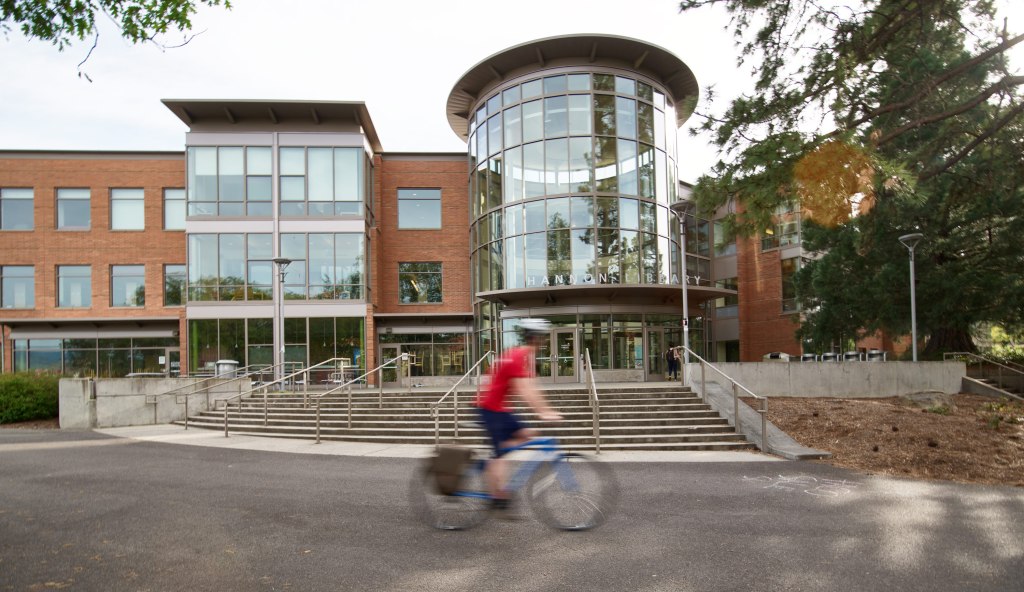
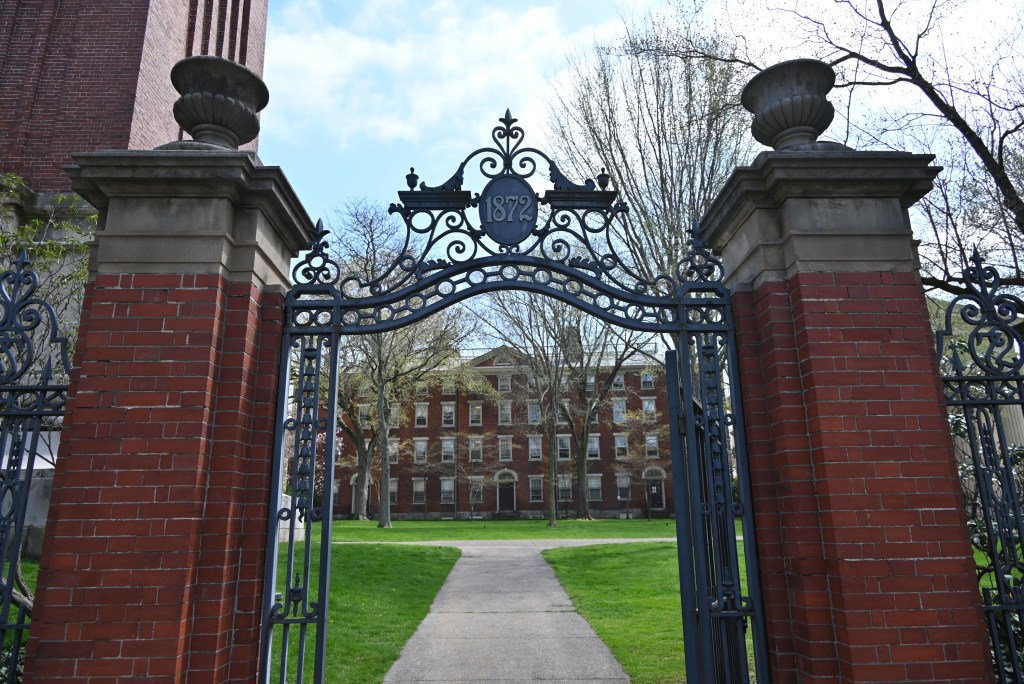
The university, with a history stretching back to 1872 under various names, stands as a significant landmark in Ashland, a vibrant, arts-focused city of approximately 22,000 residents situated near the California border. SOU is not only an academic institution but also one of the largest employers in its predominantly rural region.
Serving a Diverse Region: SOU's Crucial Role
While Ashland itself is a relatively affluent and highly educated community, many of the surrounding areas that SOU serves are not. For a considerable number of students, particularly those residing between the University of Oregon to the north, Oregon Institute of Technology to the east, and California State University, Chico to the south, SOU represents the closest and most affordable public four-year university option.
This accessibility is further amplified by SOU's tuition policies. Approximately 30 percent of the student body hails from California, partly due to an arrangement that grants students from five northern California counties in-state tuition rates. This policy underscores SOU's vital role in providing accessible higher education to a broad geographic and demographic spectrum.
Declining Enrollment and State Funding: A Double Whammy
Data reveals a concerning trend for SOU. Between 2019 and 2024, the university's revenue experienced a 9 percent decline, even after adjusting for inflation. This stands in stark contrast to the average 1 percent decrease observed at public colleges nationwide during the same period. Concurrently, SOU's enrollment dropped by 11 percent, a rate significantly higher than the national average decline of 4 percent for public institutions.
This downward spiral in revenue places a disproportionate strain on SOU, exacerbated by the state of Oregon's comparatively meager financial support for higher education. Oregon allocates approximately $9,672 per student, which is only about 80 percent of the national average of $12,082 per student, according to the State Higher Education Executive Officers Association.
President Bailey's Tenure: A Series of Restructuring Plans
Richard J. Bailey, who assumed the presidency of SOU in 2022, has been at the helm during a period of intense financial restructuring. He initiated the "SOU Forward" plan in 2023 and followed it with "SOU Resiliency" in 2025, both aimed at addressing the university's fiscal challenges. His latest initiative, the "SOU Vitality" plan, represents the most recent attempt to navigate the crisis.
Bailey acknowledged that he identified structural financial problems almost immediately upon taking office and launched the initial round of cuts within his first year. Less than two years later, in the fall of 2025, he declared the university to be in a state of "financial exigency," a formal recognition of severe financial distress.
However, these prior austerity measures proved insufficient to avert the current crisis. In February of this year, Bailey alerted the board of trustees to a critical cash flow problem, a revelation that reportedly caught them by surprise. Despite this, board chair Sheila Clough conceded that the university had been operating under a tight budget for at least the past eight years, suggesting that this crisis had been a long time in the making.
A Software Glitch and a Blind Spot: The Unraveling of Financial Awareness
In a candid interview, President Bailey admitted to a significant oversight, stating he had not adequately examined the institution's finances beyond the education and general fund, which constitutes roughly two-thirds of the total budget. He confessed to not paying sufficient attention to other critical budget areas, such as athletics and housing.
The situation was further complicated by a challenging transition between software systems. This led to complications in transferring financial and payroll data, resulting in what Bailey described as a "lack of awareness and granularity" regarding the university's financial standing. This deficiency in detailed financial information meant that the true scope of the problem did not become apparent until late January of this year, according to Bailey.
He reported meeting with the board just three days later to convey the gravity of the situation. "I’m responsible for everything that happens at the institution, so I accept full responsibility for not having the full awareness of just how dramatic and grave the challenges really were," Bailey stated, taking ownership of the oversight.
Ruth A. Johnston, vice president of the consulting arm at the National Association of College and University Business Officers, expressed surprise at the notion of a college losing track of its finances during a software transition, though she acknowledged that "anything is possible."
State Bailout and Stringent Oversight: A Conditional Lifeline
Following the board's notification of the budget shortfall, President Bailey and other university leaders approached the state capitol to seek assistance. The legislature responded by approving $15 million in emergency funding, contingent upon the university's successful balancing of its budget. As part of this agreement, SOU leaders are now obligated to submit monthly financial reports and quarterly cash flow projections to the state.
The ultimate success of the "Vitality Plan" hinges significantly on the accuracy of enrollment projections, both for incoming freshmen and returning students, according to President Bailey. The university's ability to attract and retain students will be a critical determinant of its financial stability moving forward.
Student Voices: Frustration and a Call for Accountability
At a board of trustees meeting, Sophia Smith, the student body president and a sophomore, characterized the ongoing financial crisis as a failure of leadership. "If these reductions and eliminations must occur, then ensure that they are the last that we see of you," Smith implored the board. "I beg you to break the cycle of failure."
Smith, who transferred to SOU from the Portland area, highlighted the profound impact of repeated cuts on students, suggesting that "it would be, at this point, less cruel to close our doors entirely." The financial instability has indeed taken a significant toll on the student body, with rumors of impending closures swirling in the months leading up to the final budget decisions.
Vincent Ghiglieri, a recent business graduate, described the university as feeling like "a dead man walking" due to the successive rounds of cuts during his tenure. He initially chose SOU from Shady Cove, a small river town, for its proximity and affordability, while also wanting to continue playing trumpet in the music program. He ultimately earned a minor in music, a program that will no longer be available to future students as a result of last year's budget reductions.
Ghiglieri's experience reflects a broader sentiment of uncertainty, where "it seemed like the school is done and they were just about to shut everything down and call it quits." Like McCready, many students have contemplated transferring to other institutions.
A Fight for the Future: Student Activism and Proposed Solutions
First-year student Natalya Smith revealed that during the winter term, she had begun seeking letters of recommendation for transfer applications. However, after the university secured the emergency state funding and it became clear that the criminology program was likely to remain intact, she reconsidered her decision. "Then it turned into like ‘OK, I’m staying and I’m going to fight for this institution,’" Smith stated, her resolve hardening.
In response to the crisis, students formed the Save SOU Coalition. The university even chartered a bus to transport students to the state capitol to advocate for the emergency funding. Tylar Penney, a sociology and anthropology major, took a proactive approach, conducting research on higher education funding and proposing innovative solutions to university leaders.
Penney's vision includes restructuring the university's core curriculum and merging certain academic disciplines to reduce overhead costs. At an emergency student town hall in early June, she engaged President Bailey directly, questioning his plans and presenting her ideas for preserving academic programs while simultaneously achieving financial savings.
Despite the state's clear indication that further bailouts or increased baseline funding are unlikely, Penney believes it is crucial to continue advocating for public institutions. "It shouldn’t be on students and families to fund institutions that were never designed to be profitable," Penney asserted. "Public universities are like public transportation. This is a public service, it’s not a business."
Legislative Scrutiny and a Path to Rebuilding Trust
State Representative Pam Marsh, an alumna of SOU, sponsored legislation mandating a comprehensive study of the financial health of all public institutions in Oregon. However, the revelation of SOU's financial crisis shifted the legislative focus. "It changed all the conversations from ‘How can we do this work, systemwide?’ to ‘How are we going to make sure that SOU can pay its bills for the next year and a half?’" Marsh explained.
Despite the immediate crisis, her bill successfully passed. Preliminary recommendations from the study are expected in the fall, paving the way for potential proposals during the 2027 legislative session. Marsh acknowledged the damage to SOU's reputation, stating, "SOU’s credibility took a blow. We need to climb back out of that hole and prove we can manage ourselves and that we have a vision for what we want to be and a pragmatic way to get there."
Dennis Slattery, a business professor who has been with the university since 2004, emphasized the need for greater accountability from university financial leaders. "We have an issue of trust within SOU right now," Slattery stated. "And of course we do — budgets are being cut, people are being cut. It’s mind boggling that you’re not tracking how much money you got in your pocket and if you could pay your bills."
Slattery reported surveying the faculty senate regarding their confidence in university leadership, finding that while there wasn't a complete lack of confidence, "there are a lot of questions." He understands the necessity of budget cuts but worries about the sustainability of a strategy that asks fewer people to shoulder more responsibilities. "As we continue to cut more and more — if cutting is the only strategy we have of dealing with this — we’re just going to cut ourselves into oblivion," Slattery warned.




 Explore AI Teaching Tools
Comments (0)
Please login to comment
No comments yet
Be the first to comment on this article