
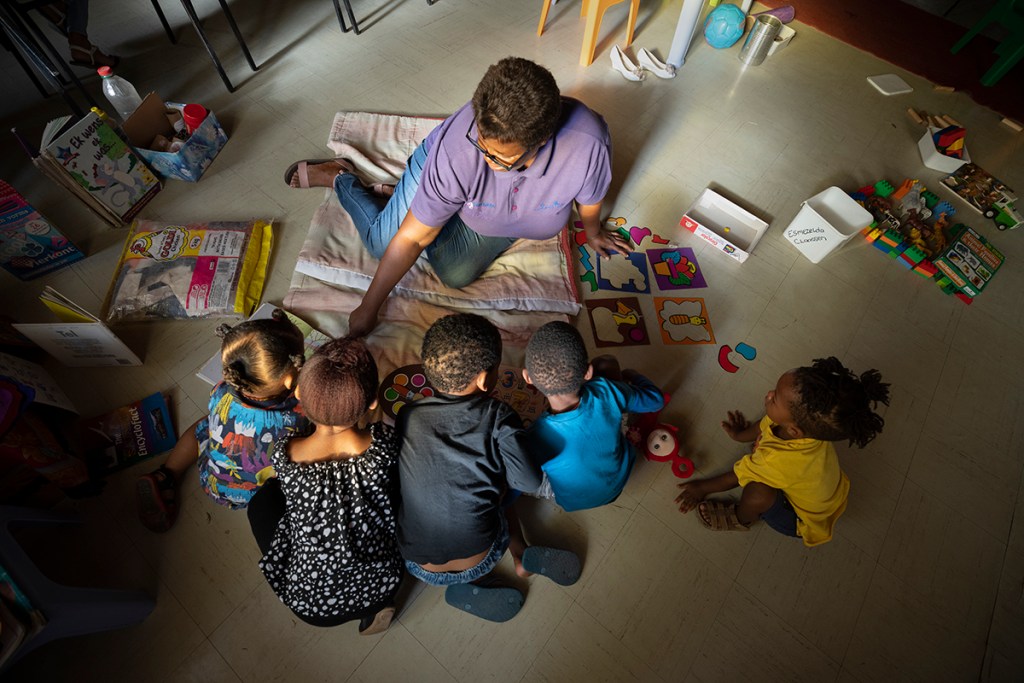
Global Insights: Elevating Home-Based Child Care Through Smart Strategies
Across the globe, a significant majority of young children spend their formative years in nurturing home-based environments, often guided by dedicated individuals outside their immediate family.
While these settings are foundational to early development, they frequently grapple with insufficient governmental support and limited access to professional training.
This article delves into the evolving landscape of home-based child care, drawing valuable lessons from international experiences, particularly highlighting advancements in South Africa and the established practices in countries like the United States.
We explore innovative approaches to enhance quality, foster accessibility, and advocate for greater recognition of this vital sector, offering actionable insights for educators, policymakers, and parents worldwide.
The Pervasive Role of Home-Based Child Care Globally
It's a widely acknowledged reality that a substantial portion of the world's children receive their initial care and educational experiences within the intimate setting of a home, managed by individuals other than their parents.
These arrangements, often informal, are predominantly led by women who play a critical role in early childhood development.
While this model is prevalent, many nations offer minimal financial aid or structured training opportunities for these caregivers.
This lack of formal support can create significant barriers to consistent quality and professional growth within the sector.
Recent global convenings have brought together leading experts in child care to address these shared challenges.
These discussions highlight common hurdles faced by early learning programs worldwide, including issues of low remuneration for caregivers and a general lack of societal respect for the profession.
However, these forums also serve as crucial platforms for sharing progress in securing funding, raising awareness, and achieving greater recognition for the indispensable work done in home-based child care settings.
South Africa's Journey: Building a National Model for Home-Based Early Learning
South Africa, like many nations, has historically leaned towards center-based child care as its primary model.
While this approach has been recognized and regulated, it often leaves a significant gap in equitable access for all children.
Recognizing this disparity, organizations have begun to champion home-based care as a viable and effective alternative for delivering quality early learning experiences.
The emergence of initiatives focused on home-based child care in South Africa represents a significant shift.
These programs aim to build a national framework that is not only effective but also acceptable to policymakers and the wider community.
By focusing on community-based practitioners and leveraging existing social structures, these efforts are paving the way for scalable and sustainable early childhood development solutions.
The SmartStart Approach: A Play-Based Curriculum for Community Empowerment
One pioneering organization in South Africa, SmartStart, has been instrumental in developing and implementing high-quality home-based early learning programs.
Their model is designed to empower community members by training them to deliver a play-based curriculum and manage their own early learning initiatives.
This approach has demonstrated a remarkable ability to reduce achievement gaps between children from different socioeconomic backgrounds.
The core philosophy behind SmartStart's success lies in its ability to adapt to local contexts and build upon existing community strengths.
By focusing on accessible training and a curriculum that emphasizes play and stimulation, the organization ensures that even in resource-limited environments, children receive enriching early learning experiences.
This has led to tangible improvements in child outcomes, often surpassing national averages, even in areas with informal housing and economic challenges.
Addressing the "Quality Perception" Challenge
A significant hurdle in the widespread adoption and acceptance of home-based child care is the ingrained perception that quality is solely tied to physical infrastructure.
Many individuals associate high-quality care with purpose-built facilities and extensive material resources.
This mindset often overlooks the profound impact of attentive, loving, and pedagogically sound interactions between a caregiver and a small group of children.
The "secret sauce" of effective home-based care, as highlighted by experts, lies in the personalized attention, emotional connection, and skillful guidance provided by a dedicated practitioner.
Changing these deeply held beliefs requires a concerted effort to educate the public and policymakers about the value of relational pedagogy and the positive outcomes achievable in well-managed home environments.
This involves showcasing success stories and demonstrating that quality care is about the *experience* and the *nurturing environment* created, not just the physical space.
Lessons from the United States: Maturity and Practitioner-Led Advocacy
Discussions among global child care experts often reveal significant differences in the maturity and structure of the sector across various countries.
The United States, for instance, presents a more developed landscape for home-based child care, characterized by established practitioner-led advocacy groups and a more robust infrastructure for professional development and support.
The presence of organizations like the National Association for Family Child Care (NAFCC) signifies a mature sector where practitioners have a strong voice and a platform to represent their interests.
This practitioner-led advocacy is crucial for driving policy changes, securing funding, and ensuring that the unique needs and contributions of home-based providers are recognized and addressed.
The experience in the U.S. offers a valuable roadmap for other countries looking to strengthen their own home-based child care sectors.
The Power of Practitioner Alliances and Coalitions
The maturity of the home-based child care sector in the United States is, in part, a testament to the power of practitioner-led alliances and coalitions.
When caregivers come together, they can amplify their voices, share best practices, and collectively advocate for policies that support their work.
These alliances foster a sense of community, reduce professional isolation, and empower individuals to become agents of change within their field.
For countries like South Africa, observing the strength and influence of such alliances in the U.S. provides a clear vision for the future.
The journey towards practitioner self-representation and driving advocacy at provincial or state levels is a critical step in ensuring the long-term sustainability and growth of home-based child care.
Building these networks is not just about advocacy; it's about creating a supportive ecosystem where caregivers can thrive and continuously improve their practice.
Policy and Funding: The Next Frontier for Home-Based Care
As the home-based child care sector matures, the focus inevitably shifts towards securing formal recognition, regulation, and sustainable funding.
In South Africa, for example, significant strides are being made in this direction, with organizations actively engaging with government bodies to influence policy and secure financial support.
The establishment of advocacy organizations, often co-founded by multiple early childhood development (ECD) stakeholders, plays a pivotal role.
These groups invest in policy research, drawing insights from global best practices, particularly from regions like Latin America, which have developed innovative approaches to home-based care.
By partnering with government departments, such as the Department of Education, these organizations can effectively translate research findings and emerging trends into actionable policy recommendations.
Influencing National Priorities: A Strategic Approach
A key strategy for advancing the home-based child care agenda involves influencing national priorities.
When early childhood development is recognized as an apex priority by the government, it opens doors for increased investment, policy reform, and broader societal support.
This can be achieved through persistent advocacy, data-driven research, and demonstrating the tangible benefits of investing in early years education.
The announcement by the South African President to prioritize early years in his education agenda, coupled with a substantial financial allocation to expand early childhood development programs, exemplifies the impact of strategic advocacy.
This commitment acknowledges the decades of underinvestment in the sector and signals a national recognition of its importance.
The goal is to elevate early childhood development, with a particular emphasis on promoting home-based child care as a primary, accessible, and effective approach, making it a true societal priority.
Enhancing Quality Through Training and Community Support
The quality of home-based child care is intrinsically linked to the skills, knowledge, and support available to the caregivers.
Investing in comprehensive training programs is paramount to ensuring that these providers are equipped to deliver high-quality early learning experiences.
Training should encompass various aspects of child development, including age-appropriate pedagogy, health and safety protocols, child protection, and effective communication with parents.
Furthermore, ongoing professional development opportunities are crucial to keep caregivers updated on the latest research and best practices.
This continuous learning fosters a culture of excellence and adaptability within the home-based care sector.
The Role of Communities of Practice
Creating supportive networks for home-based caregivers is essential for their professional growth and well-being.
Communities of practice, where caregivers can connect, share experiences, and learn from one another, offer invaluable peer support.
These groups can help combat feelings of isolation, provide practical problem-solving, and foster a sense of collective identity and purpose.
When caregivers are recruited and supported within close proximity to one another, they can naturally form these supportive groups.
This not only enhances their individual practice but also strengthens the overall quality and reach of home-based child care within a community.
The emphasis on building belonging and identity through these networks contributes significantly to the cultural acceptability and sustainability of the model.
The Economic and Social Impact of Investing in Home-Based Care
Investing in home-based child care yields significant economic and social returns.
For families, it provides accessible and affordable care options, enabling parents, particularly mothers, to participate more fully in the workforce.
This contributes to household income stability and economic empowerment.
For communities, home-based care models can create local employment opportunities and stimulate local economies.
By empowering individuals to run their own businesses, these programs foster entrepreneurship and community development.
Furthermore, the improved early learning outcomes for children translate into a more skilled and capable future workforce, benefiting society as a whole.
Reducing Inequality Through Accessible Early Learning
One of the most profound impacts of robust home-based child care programs is their potential to reduce socioeconomic inequalities.
By providing high-quality early learning opportunities to children in underserved communities, these programs can help level the playing field from the outset.
Early interventions have been shown to have long-lasting effects on educational attainment, health, and overall life chances.
When programs are designed to be affordable and accessible, they can reach children who might otherwise be excluded from early education.
This is particularly important in countries like South Africa, where historical disparities have created significant achievement gaps.
By focusing on community-based solutions and leveraging existing social capital, home-based care can be a powerful tool for social mobility and breaking cycles of poverty.
Conclusion
The global landscape of early childhood education is increasingly recognizing the critical role and immense potential of home-based child care.
From the established practices in the United States to the innovative advancements in South Africa, a common thread emerges: the power of community, the importance of practitioner support, and the necessity of policy reform.
By embracing a holistic approach that prioritizes caregiver training, fosters supportive networks, and advocates for governmental recognition and funding, nations can significantly enhance the quality and accessibility of early learning for all children.
The lessons learned from diverse global contexts offer a compelling blueprint for building a future where every child has the opportunity to thrive in a nurturing and stimulating home-based environment, laying a strong foundation for lifelong learning and well-being.







 Explore AI Teaching Tools
Comments (0)
Please login to comment
No comments yet
Be the first to comment on this article