
Chicago's May Day: A Civic Action Day or a Classroom Disruption?
A young student's plea for a pre-algebra worksheet cut through the fervor of a May Day rally in Chicago, highlighting a growing tension between traditional academics and mandated civic engagement in the city's schools.
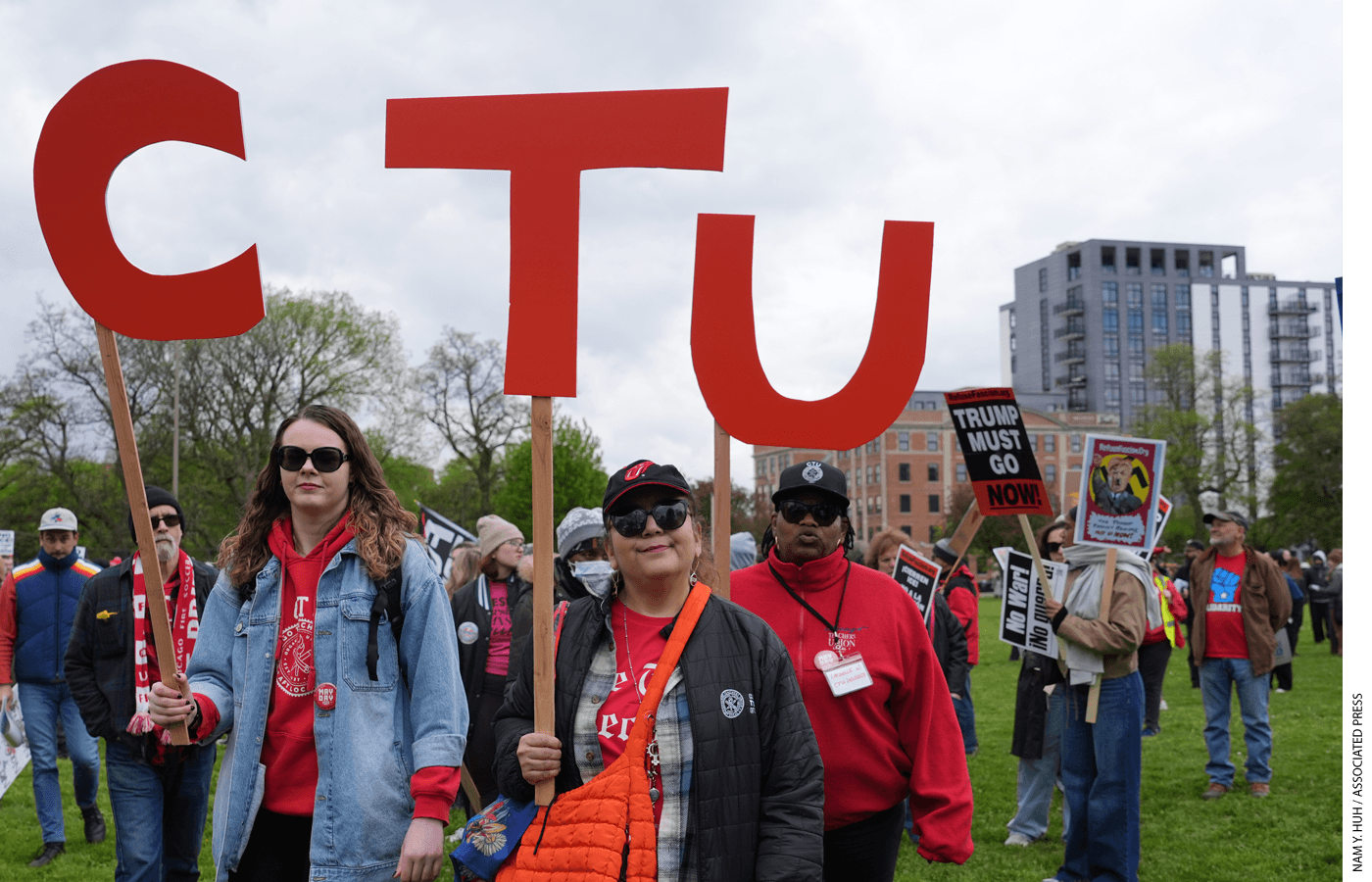
On May 1st, Union Park in Chicago became a focal point for a unique "day of civic action," a concept championed by the Chicago Teachers Union and adopted by Chicago Public Schools. The initiative aimed to immerse students in protests concerning the treatment of Black, Brown, and immigrant communities by federal agents, a move intended to foster a deeper understanding of social justice.
School officials articulated a vision that extends beyond classroom management, asserting a duty to "actively expand rights, fight for equitable funding, confront injustice, and build a more just and democratic future." This ambitious agenda, however, seemed to clash with the immediate academic needs of some students.
A Student's Plea Amidst the Protest
Amidst the organized movement of students arriving by bus, a young boy approached, his voice laced with desperation. "Mister, help me!" he pleaded, tugging at a visitor's shirt.
The visitor, present to observe the day's events, inquired about the problem. The boy's response was a stark contrast to the political slogans echoing around them: "I just want to finish my pre-algebra worksheet," he explained, his misery palpable. "I’ve got a test in two days. I still don’t really understand the unit, and I actually find math pretty interesting."
He recounted his principal's directive: students were expected to participate in protests against "the billionaire-imperialist war on Iran and make Congress defund ICE" before resuming their studies. The student admitted his principal might have been exaggerating for effect, noting the rally speakers were intensely focused on historical grievances.
His primary concern, however, was academic. "I just wanted to go sit on the bus and study a little bit. But the teachers said no," he sighed, a hint of resignation in his voice. He then gestured towards a bus, asking if he could be helped through a window to catch up on his work.
The Disconnect Between Mandate and Motivation
The scene quickly intensified. Another student attempting to board the same bus was physically intercepted by a teacher, who guided them back towards the rally. The teacher wore a yellow t-shirt with a political slogan, a visual representation of the ideological currents at play.
Turning back to the first student, the visitor observed a look of profound disappointment. "I’m trapped," the boy lamented. He explained his mother had signed the permission slip for the "Day of Civic Action," but he felt compelled to be elsewhere. His classmate, he noted with a touch of dark humor, was fortunate to be absent all week after being hit by a bus.
The protest was a vibrant, if somewhat chaotic, display of activism. Teachers, many holding signs, moved with the rhythm of a drum circle. The messages on the signs ranged from political commentary to sharp critiques of societal figures, often employing strong imagery.
One sign declared, "A Woman’s Place Is in the Resistance," featuring an illustration of Princess Leia wielding a lightsaber. Another depicted a caricature of a prominent businessman with a bloody head, accompanied by the text, "One less CEO, many more to go." The visitor found the prevalence of violent imagery striking for a school-sanctioned event.
Historical Echoes and Modern Realities
When asked if he had learned anything from the experience, the student offered a pragmatic response. "Maybe if my test was to name all the ways Trump is a fascist and ICE is evil," he conceded. "But I’m trying to make sure I can take algebra in 9th grade next year. This doesn’t really help with that."
Attempts by some teachers to lead students in chants, intended to connect local issues with broader social justice themes, faltered. Many students were engrossed in their phones, documenting the event on social media rather than participating vocally.
The visitor attempted to frame the experience as a historical lesson, referencing the Haymarket Affair. They explained the bombing and subsequent shootout that occurred during a labor protest in 1886, noting its significant impact on the labor movement.
The student's reaction was one of surprise and confusion. "Wait, that’s what this is all about?" he asked, a frown creasing his brow. "That’s why the grown-ups are all screaming about blowing up cops? This is so cringe. It’s like they think we’re all anti-cop. But my cousin’s a cop. The cops stopped a mugger from hurting my auntie. I’m missing study hall so I can hear Mrs. Smith hyping up a bunch of cop-killers?"
The visitor acknowledged his feelings, suggesting that teachers likely wanted students to apply their civic education in a practical way, rather than solely engaging with theoretical texts like the Lincoln-Douglas debates or the Bill of Rights.
Curriculum Debates and Academic Priorities
The student expressed bewilderment regarding historical figures and documents, admitting that much of his schoolwork involved more contemporary, politically charged tasks. He cited an instance where his social studies class spent an entire week writing emails to a political figure advocating for tax increases on specific corporations.
The atmosphere shifted as a teachers union official took the stage, addressing the crowd with a passionate, if controversial, message. She invoked the pandemic, criticizing "MAGA billionaires" for allegedly pressuring schools to reopen amidst health risks, and celebrated the union's stance on delaying reopenings until universal healthcare was achieved.
She then pivoted to the day's theme, framing it as a fight against ignorance and a push for critical thinking. The official highlighted the academic achievements of Chicago's teachers, citing statistics on student proficiency in reading and math, though these figures were presented in a context that suggested room for significant improvement.
Her address culminated in a call to action, urging students to understand and articulate their opposition to specific political figures and policies, while simultaneously embracing other, often conflicting, ideologies. The message was met with enthusiastic cheers from the assembled crowd.
A Lingering Question of Educational Purpose
As Mayor Brandon Johnson encouraged the attendees to "take it to the streets," a woman in a politically charged t-shirt approached the young student, identifying him as "Marcus." She firmly took his ear and declared it was time to "confront injustice."
As they moved away, the visitor could faintly hear Marcus's persistent plea over the din: "Just let me study math, please!" His simple request underscored a fundamental question about the balance between civic education and the core academic mission of schools, particularly in a city like Chicago where the union plays a significant role in shaping educational policy.
The day's events in Chicago offered a complex tableau. While the intention was to empower students with civic awareness and a sense of social responsibility, the experience of at least one student raised critical questions about whether these goals were being met at the expense of foundational academic learning. The union's commitment to civic action is clear, but the impact on individual students' academic progress remains a crucial point of discussion for teachers, parents, and policymakers alike.





 Explore AI Teaching Tools
Comments (0)
Please login to comment
No comments yet
Be the first to comment on this article