
Beyond the Beaker: Why Tulane's Chemistry Department is a Launchpad for Future Innovators
In a world increasingly shaped by scientific discovery, the demand for skilled chemists is not just holding steady – it's accelerating. With over 19,000 chemistry degrees awarded annually and a median salary hovering around $84,000, the field offers compelling career prospects. Yet, in a crowded academic landscape, how do students secure a truly transformative educational experience that sets them apart? At Tulane University, the Department of Chemistry within its School of Science and Engineering is cultivating that edge, embedding research at the core of every student's journey.
Where Big University Resources Meet Small Department Focus
Since its inception in 1834, Tulane's Chemistry Department has cultivated a dual identity: offering the vast resources and collaborative potential of a major research institution while fostering the intimate, supportive environment often found in smaller academic settings. This unique blend allows students to engage deeply with faculty, pushing the boundaries of chemical knowledge.
Professor Russ Schmehl, a senior figure in the department, highlights this synergy. "The compactness of the School of Science and Engineering facilitates a truly collaborative atmosphere," he explains. "Faculty-student engagement is exceptionally high, with a strong emphasis on advancing research projects from inception all the way to publication." This hands-on approach ensures students are not just learning chemistry, but actively contributing to its evolution.
Fueling Discovery: Financial Support for Doctoral Aspirations
For aspiring doctoral candidates, the financial burden of advanced study can be a significant hurdle. Tulane's Chemistry Department is committed to removing these obstacles, ensuring that financial concerns do not impede a student's pursuit of groundbreaking research.
Dr. Gibb, Chair of the Chemistry Department, outlines the department's comprehensive support system. "All PhD students receive full funding from the university," she states. "This includes a living stipend exceeding $30,000 annually, coupled with a complete tuition waiver." This financial security is typically provided through Teaching Assistantships or Research Assistantships, directly linked to faculty research grants.
Beyond these core provisions, students are also encouraged to explore opportunities for graduate fellowships, federal grants, scholarships, and internships, further enhancing their ability to focus on their academic and research endeavors.
A Nexus of Innovation: Interdisciplinary Research at its Finest
Chemistry, by its very nature, is a foundational science that intersects with nearly every other discipline. Tulane's Department of Chemistry thrives on this interconnectedness, leveraging its position within the School of Science and Engineering and its proximity to other leading departments and research centers.
Collaborations are not just encouraged; they are a cornerstone of the department's research philosophy. Faculty and students engage actively with experts in fields such as biomedical engineering, physics, engineering physics, and even the university's prestigious School of Medicine. This cross-pollination of ideas fuels innovation across diverse areas.
Pioneering Research Frontiers
The department boasts a strong reputation for its work in several key areas, including:
- Organic Synthesis: Developing materials and polymers with significant biological and medical applications.
- Physical Chemistry: Investigating phenomena like magnetism and ultrafast laser spectroscopy.
- Inorganic Synthesis: Focusing on bioinorganic chemistry and catalysis.
- Inorganic Materials: Exploring novel material properties and applications.
- Mechanistic Organic and Inorganic Chemistry: Unraveling the fundamental steps of chemical reactions.
Professor Scott Grayson, a noted polymer chemist, emphasizes the breadth of these collaborations. "Interdisciplinary research experiences are commonplace, both within our department and with complementary programs across many other departments," he notes. These partnerships extend to Tulane's Department of Chemical and Biomolecular Engineering, Biomedical Engineering, Physics and Engineering Physics, and the Department of Microbiology and Immunology within the medical school.
University-Wide Research Hubs
Furthermore, chemistry plays a vital role in several state-of-the-art university-wide institutes. The Centre for Bioinformatics and Genomics, for instance, advances research in genomics, biomedical informatics, and precision medicine, areas where chemical principles are indispensable. The Center for Computational Science (CCS) provides crucial support for high-performance computing and complex computational research, enabling chemists to model and simulate intricate molecular interactions.
State-of-the-Art Tools for Cutting-Edge Research
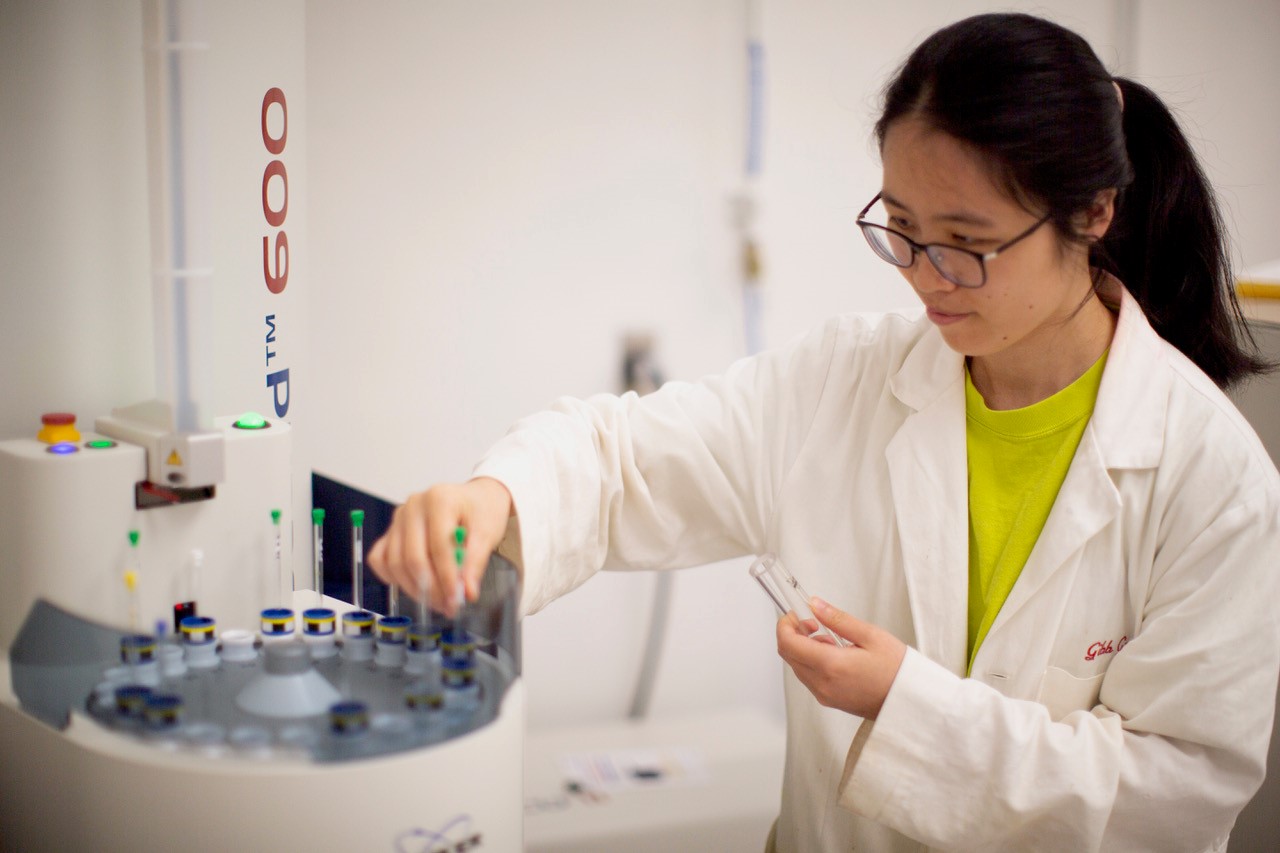
The pursuit of advanced chemical research is intrinsically linked to access to sophisticated instrumentation. Tulane's Chemistry Department is equipped with a comprehensive suite of cutting-edge tools, empowering students to become proficient in the technologies that drive modern scientific inquiry.
Professor Schmehl underscores the importance of this technological infrastructure. "Tulane's Chemistry Department possesses excellent instrumentation, and students have the opportunity to become master users, significantly enhancing their future employability," he states. This hands-on experience with advanced equipment is a critical component of their academic and professional development.
A Glimpse into the Instrumentation Arsenal
Students gain expertise with a wide array of analytical and characterization tools, including:
- Four Fourier Transform Nuclear Magnetic Resonance (FT-NMR) spectrometers, including 600 MHz, 2 400 MHz, and a 300 MHz instrument.
- Gas Chromatography–Mass Spectrometry (GC/mass) spectrometers for separating and identifying compounds.
- MALDI and ESI mass spectrometers for precise molecular weight determination.
- Fourier Transform Infrared (FTIR) spectrophotometers for identifying functional groups in molecules.
- Single crystal X-ray crystallography facilities for determining the three-dimensional structure of crystalline solids.
These shared facilities are augmented by specialized instrumentation housed within individual research groups. For example, the Rubtsov lab features advanced femtosecond 2D IR facilities, while the Straus lab is equipped with a Physical Properties Measurement System (PPMS) capable of characterizing the electronic, magnetic, and thermodynamic properties of materials across a temperature range of 1.8-400 K and magnetic fields from 0 to ±9 T. Synthetic laboratories are outfitted with the latest technology for handling sensitive samples under inert atmosphere conditions, ensuring the integrity of experimental work.
Embracing the Vibrancy of a Historic American City
Beyond the academic rigor and research opportunities, the experience of studying chemistry at Tulane is enriched by its location in New Orleans. This iconic city offers a unique cultural tapestry that profoundly influences the student experience.
"The university is situated in New Orleans, a fascinating and affordable city with a rich history and diverse culture," shares Professor Schmehl. The city's heritage, a vibrant blend of French, Spanish, African, Caribbean, and Central and South American influences, has shaped a culture renowned for its community, history, and artistic expression.
A City Alive with Culture and Community
Music is an intrinsic part of life in New Orleans, the birthplace of jazz. The city consistently nurtures legendary musicians, and experiencing live performances is a daily possibility. This vibrant artistic atmosphere extends to the culinary scene, a defining characteristic of the city.
From classic Cajun and Creole dishes to influences from French, Italian, and Caribbean cuisines, New Orleans boasts an unparalleled array of iconic restaurants. The city's dynamic environment provides a stimulating backdrop for students, offering a rich cultural immersion that complements their rigorous academic pursuits in the chemistry department and the broader engineering school.




 Explore AI Teaching Tools
Comments (0)
Please login to comment
No comments yet
Be the first to comment on this article