
The Great Digital Detox: How Banning Cellphones is Reshaping Student Learning
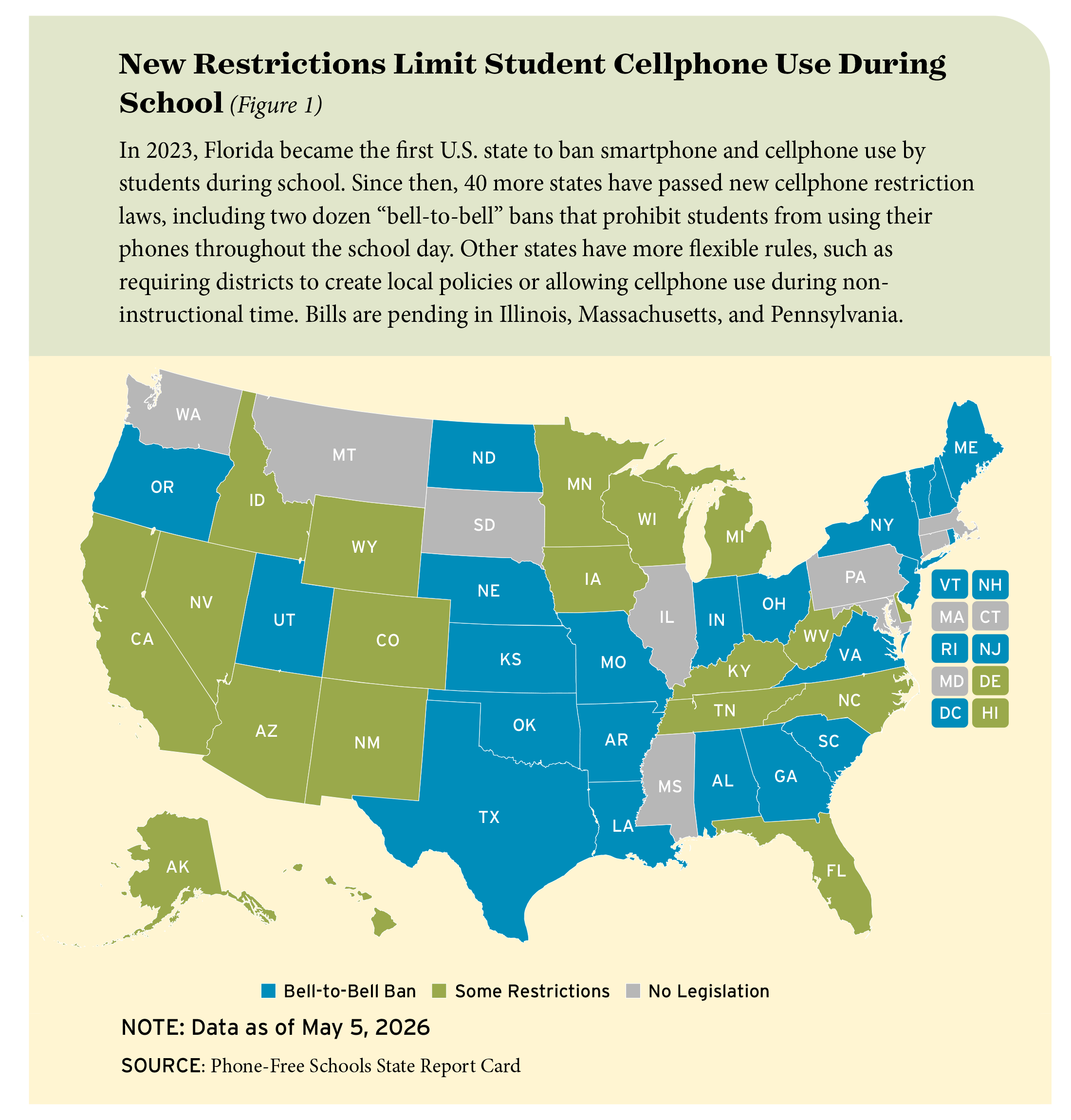
Imagine a school day where the constant buzz of notifications is silenced, replaced by the focused hum of learning. This isn't a nostalgic dream; it's the emerging reality in nearly two dozen states across the U.S. as a wave of cellphone bans sweeps through educational institutions.
While educators largely champion these restrictions, citing a desperate need to reclaim classroom attention, the true impact on student learning remains a subject of intense debate. Now, groundbreaking research from Florida offers a compelling glimpse into the potential benefits and unforeseen challenges of this nationwide shift.
A Nation Embraces the Ban
The movement to restrict cellphone use in schools has gained significant momentum. In the past few years, a substantial number of states have enacted legislation aimed at curbing student distraction from these ubiquitous devices.
Twenty-two states and the District of Columbia have implemented "bell-to-bell" bans, effectively prohibiting cellphone access for students throughout the entire school day. Another 19 states have adopted more nuanced policies, allowing local districts to tailor rules or permit phone use during non-instructional periods.
The trend is palpable, with legislative proposals currently under consideration in states like Illinois, Massachusetts, and Pennsylvania, signaling a widespread desire to address the pervasive influence of cellphones in the learning environment.
Educators See a Clear Path to Focus
For teachers on the front lines, the rationale behind cellphone restrictions is often crystal clear. The constant temptation of digital distractions can derail even the most engaging lesson plans.
A recent survey revealed overwhelming support among educators for stricter cellphone policies. A staggering 90 percent of teachers favor banning cellphones during class time, with an equally high 83 percent advocating for comprehensive, bell-to-bell restrictions.
School principals echo this sentiment. A 2025 survey indicated that a significant majority of school leaders, including 81 percent of those in middle and high schools, believe that cellphone bans contribute positively to the overall school climate.
Student Voices and Parental Concerns
However, the enthusiasm for cellphone bans is not universally shared. Students, for whom these devices are often integral to their social lives and information access, tend to view such policies with skepticism.
The same survey that highlighted principal support found that only about one in ten students actively supports a ban on cellphones in school. This stark contrast underscores the generational divide in perceptions of device utility within the educational setting.
Parents, too, express a range of opinions, often citing safety as a primary concern. A 2024 survey found that 56 percent of parents believe students should have some level of access to their phones at school, highlighting a complex balancing act between academic focus and parental peace of mind.
Florida's Bold Experiment: A Bell-to-Bell Mandate
Amidst this national dialogue, Florida emerged as a pioneer, enacting the nation's first statewide cellphone ban in May 2023. This landmark legislation prohibited cellphone use during instructional time, allowing districts to implement further restrictions as needed.
A subsequent law in 2025 solidified a bell-to-bell ban for elementary and middle schools across the state. This study delves into the impact of these policies by examining one of the nation's largest urban districts, which opted for an even more stringent approach: a complete bell-to-bell prohibition on phones, earbuds, and smartwatches throughout the entire school day.
The research meticulously tracked changes in test scores, attendance records, and disciplinary incidents. Crucially, it also utilized geolocated cellphone data to provide an objective measure of how student cellphone usage actually changed after the ban was implemented.
Unveiling the Data: A Dramatic Shift in Usage
The findings from Florida are striking, offering concrete evidence of the ban's immediate impact on student behavior. After the bell-to-bell cellphone ban took effect, students' engagement with their devices during school hours plummeted.
Cellphone usage data revealed a dramatic reduction in daily phone visits. For high school students, the average number of daily phone visits per 100 students dropped by over 80 percent, from 46 to a mere 10. Middle school usage saw a significant decrease as well, falling by half from 62 to 31 daily visits per 100 students.
This trend continued into the second year of the ban. Middle school cellphone use declined further by 23 percent, while high school usage saw a slight uptick but remained significantly lower than pre-ban levels.
The Discipline Dilemma: A Temporary Spike
While the reduction in cellphone use was swift and substantial, the initial implementation of the ban brought an unexpected consequence: a temporary surge in disciplinary actions.
In the first year of the ban, the overall suspension rate increased by 25 percent compared to the same period the previous year. This elevated rate persisted throughout the initial year, suggesting that enforcing the new rules led to a greater number of students facing disciplinary measures.
The second year, however, saw disciplinary and suspension rates return to pre-ban levels, indicating that the initial spike was a transitional phenomenon.
Disparities in Disciplinary Impact
A deeper dive into the disciplinary data revealed concerning disparities. The increase in suspensions was not evenly distributed across the student population.
Black students experienced the most significant rise in disciplinary referrals immediately following the ban. In the first year, in-school suspensions for Black students increased by approximately 30 percent, while white and Hispanic students saw no significant change. This effect, however, dissipated by the second year.
These findings underscore the critical need for careful consideration of equity when implementing such policies, ensuring that enforcement does not disproportionately affect certain student groups.
Academic Gains Emerge from the Silence
Beyond disciplinary shifts, the study provides compelling evidence of positive academic outcomes. After an initial period of stability, student performance on standardized tests began to improve.
By the end of the second year of the cellphone ban, test scores had risen by approximately 4 percentiles on average, compared to scores from the pre-ban year. This modest but significant improvement suggests that reducing digital distractions can indeed foster a more conducive learning environment.
The most pronounced gains were observed in schools that had the highest levels of cellphone use before the ban. This indicates that students who were previously most engaged with their phones during school hours benefited the most from the policy change.
Targeted Improvements for Key Student Groups
The academic benefits were not uniform across all demographics. While overall scores improved, specific subgroups saw particularly notable gains.
In high-use schools, the cellphone ban led to an increase of 1.1 percentiles in overall test scores. Black students saw an improvement of 1.2 percentiles, white students 1.4 percentiles, and male students 1.4 percentiles. Middle and high school students also experienced gains of 1.3 percentiles.
Interestingly, no significant effects were observed for female students or students in elementary school, suggesting that the impact of cellphone bans may vary by age and gender.
Attendance Trends: A Proxy for Engagement
To understand the mechanisms behind the improved test scores, researchers examined student attendance as a key indicator of engagement and school climate.
The findings revealed a significant reduction in unexcused absences, ranging from 5 percent to 10 percent. This decrease was primarily driven by students in middle and high schools, aligning with the observed academic improvements in these age groups.
The reduction in absences was substantial enough to account for nearly half of the positive impact on student test scores. This suggests that a more focused school environment, free from constant digital interruptions, can lead to increased student presence and participation.
Navigating the Transition: Potential and Pitfalls
The Florida experience offers a valuable blueprint for other states and districts contemplating cellphone bans. The research clearly demonstrates that a "bell-to-bell" policy can effectively reduce cellphone use and lead to tangible academic benefits, including higher test scores and improved attendance.
However, the study also highlights the critical challenge of managing the transition period. The initial spike in disciplinary actions, particularly for Black students, serves as a stark reminder that implementing such policies requires careful attention to equity and support systems.
As the nation continues to grapple with the role of technology in schools, the lessons learned from Florida's bold experiment provide crucial insights. The goal is to harness the power of a phone-free learning environment while mitigating the short-term disruptions, ultimately fostering a more focused and equitable educational experience for all students.






 Explore AI Teaching Tools
Comments (0)
Please login to comment
No comments yet
Be the first to comment on this article