
California Mandates Financial Literacy: A New Era Dawns for High School Graduates
Starting with the graduating class of 2031, every California high school student will be required to complete a personal finance course to earn their diploma. This landmark legislation positions the Golden State as a leader in equipping young people with essential life skills, moving beyond traditional academics to address the realities of financial management.
The state's third-largest school district, Fresno Unified, has already emerged as a trailblazer in this educational shift. Students in Fresno are actively engaging with concepts like budgeting, credit building, and investment strategies, offering a compelling preview of how this unified state requirement will be implemented across California.
Pioneering the Path: Fresno's Early Adoption of Financial Education
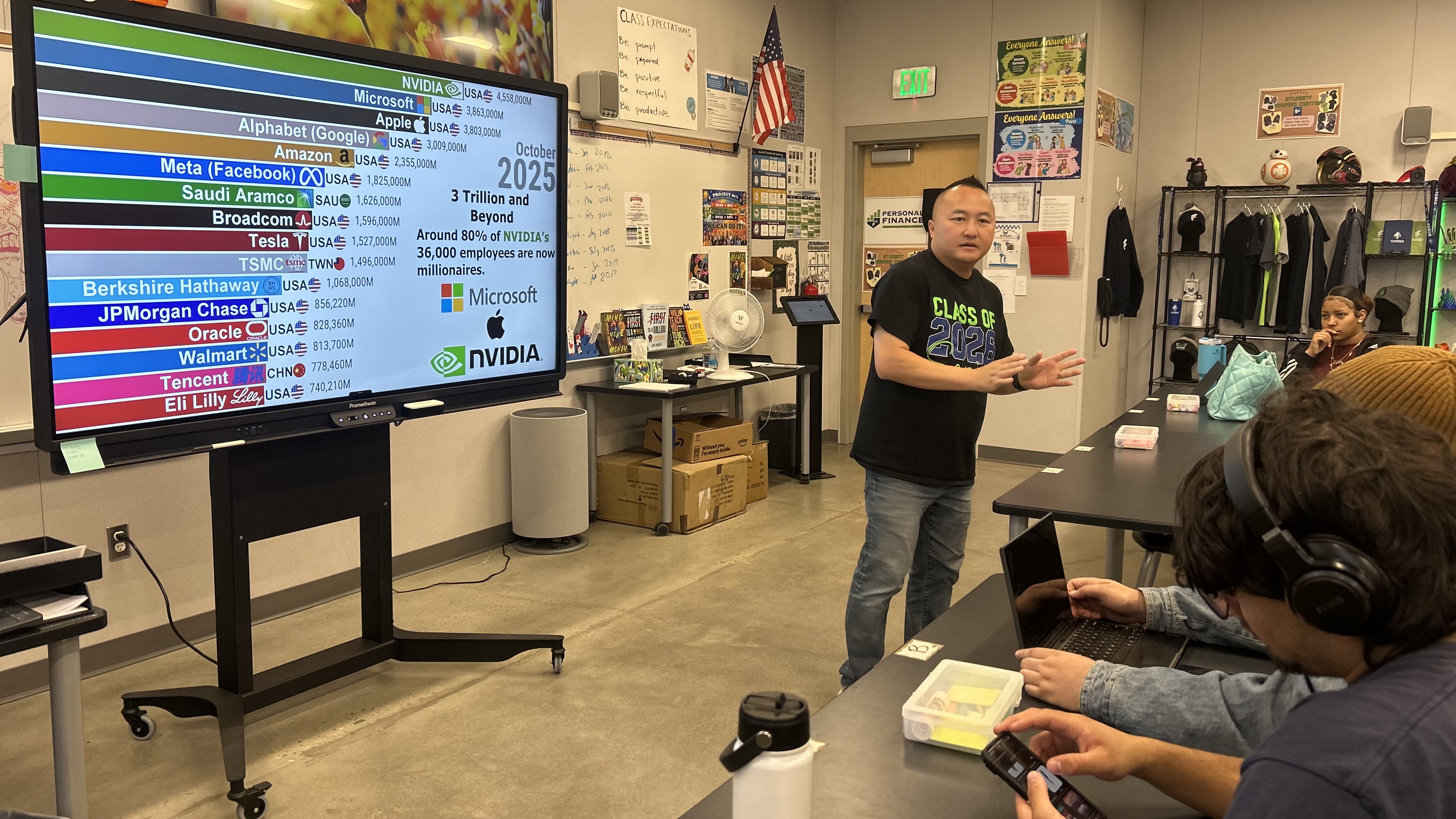
Imagine a classroom buzzing with the energy of students dissecting the rise and fall of corporate giants, from the enduring legacy of Walmart to the meteoric ascent of Apple and the disruptive force of Amazon. This isn't a business school lecture; it's a typical Friday morning in a Fresno Unified high school personal finance class.
Just days earlier, students at the Farber Educational Center, an alternative learning environment, were immersed in a competitive stock market simulation. Armed with $100,000 in virtual currency, they meticulously crafted investment portfolios, tracking their strategies with keen interest. These hands-on projects are a hallmark of Fresno Unified's approach, showcasing how the district is proactively preparing students for the new state mandate.
Fresno Unified's commitment to personal finance education predates the statewide legislation. By integrating these courses into most of its high schools, the district has become a model for others, even contributing expertise to the state's broader rollout efforts.
A Guiding Hand: From Fresno Classrooms to Statewide Implementation
Jeff Allen, a dedicated educator within Fresno Unified, has been instrumental in shaping the district's personal finance curriculum since the 2023-24 academic year. His leadership has transformed these courses into highly sought-after electives, demonstrating a clear student demand for practical financial knowledge.
Allen's deep understanding of classroom realities and his proven success in implementing financial literacy programs led the California Department of Education to tap him for a pivotal role in the statewide rollout. His expertise is now being leveraged to guide educators across the state.
"He demonstrated a combination of subject-matter expertise and direct, district-level implementation experience, along with a strong understanding of scheduling, credentialing and classroom realities," noted Scott Roark, a spokesperson for the state department of education, highlighting Allen's unique qualifications.
The Universal Call: "I Wish I Had That"
The addition of personal finance as a mandatory high school graduation requirement, solidified by Assembly Bill 2927, makes California the 26th state to enact such a policy. This widespread adoption reflects a growing consensus among adults about the critical importance of financial literacy.
Allen observes that the concept of personal finance education elicits a near-universal positive response. "You say personal finance, and it's like a universal, 'Oh, I wish I had that,'" he explained. "You do not see that physical reaction (to other subjects) from parents and community members the same way that you see it with personal finance because, as an adult, you understand what you didn't know and how you paid the consequences for it."
This sentiment is echoed by students themselves. Daniel Tecomulapa, an 18-year-old student at the Farber Educational Center, shared his motivation: "I wanted to be better with my finances." The tangible benefits of understanding money management are clearly resonating with the next generation.
Beyond Theory: Practical Lessons in Personal Finance
Educators like KongMia Her, who teaches personal finance at Farber, are driven by a desire to prevent students from repeating the financial missteps they themselves may have encountered. "I didn’t have any education," Her stated. "No one taught me at school or at home."
Her is among a cohort of 17 Fresno Unified teachers currently instructing 730 students in this vital subject. While state law mandates a semester-long course, Fresno Unified's program typically spans a full academic year, allowing for deeper exploration of the 13 topics required by AB 2927.
Key areas of focus include retirement planning, savings strategies, investment principles, and the intricacies of credit scores. For students like Daniel, understanding credit scores was a revelation. A call to a credit reporting agency revealed he hadn't established a credit profile due to insufficient history with credit cards, a common scenario for many young people.
The curriculum emphasizes not only the importance of credit but also the practical steps involved in building and maintaining a strong credit history, such as consistent on-time payments. As 16-year-old Autumn Walker aptly put it, "(The class) teaches you to manage money correctly."
A Foundation Built on Experience: Jeff Allen's Role
Jeff Allen's journey into personal finance education is rooted in over two decades of teaching social science within Fresno Unified. His current role as a teacher on special assignment has placed him at the forefront of developing and implementing personal finance courses district-wide since the 2023-24 school year.
His extensive experience and dedication have earned him the distinction of being selected by the California Department of Education as the lead author for the state's personal finance curriculum guide. This initiative aims to standardize and elevate financial education across all public high schools.
Allen's background provides him with a unique perspective on the challenges and opportunities associated with introducing a new, mandatory subject. He understands the practicalities of scheduling, the need for qualified instructors, and the importance of engaging content for students.
From Local Success to Statewide Impact
Over the past three years, Allen has been a cornerstone of support for teachers, offering guidance on curriculum development, lesson review, and professional development opportunities. With many educators now in their second year of teaching personal finance, the focus is shifting towards enriching the learning experience through community engagement.
This involves forging partnerships with local credit unions, Rotary clubs, and various businesses, bringing real-world financial scenarios directly into the classroom. These collaborations provide students with invaluable insights into how factors like housing, transportation, and food costs directly impact their budgets.
At McLane High, students gain practical experience by utilizing the on-campus bank as part of their coursework. Meanwhile, at Edison High, a "Shark Tank"-style project challenges students to develop business ideas, requiring them to meticulously calculate startup costs, potential investments, and projected profit margins.
Evolving Requirements and a Growing Movement
The upcoming state mandate will introduce new qualification requirements for teachers tasked with instructing personal finance. Currently, any teacher with a single-subject credential can teach the course in Fresno Unified. However, starting in the 2027-28 academic year, instructors will need credentials in four specific subject areas to be eligible.
This evolving landscape is not unique to Fresno. Numerous school districts across California are proactively implementing personal finance courses, anticipating the state mandate. Pasadena Unified, Yosemite Unified, and San Luis Coastal Unified are among those that have already launched these programs in multiple high schools.
Elk Grove Unified in Sacramento County, for instance, has been offering a personal finance course since 2021, with enrollment numbers steadily increasing year after year, underscoring the growing demand and perceived value of this education.
Empowering Educators: A Comprehensive Curriculum Guide
Addressing potential staffing challenges that often accompany new graduation requirements, the state's personal finance law provides districts with a multi-year window to train educators. Jeff Allen's leadership in authoring the state's personal finance curriculum guide is designed to alleviate the burden on teachers and simplify the implementation process.
Allen intentionally structured the guide around three fundamental questions: why personal finance education is crucial, what students need to learn, and how schools can effectively deliver the course. This framework aims to provide a clear and actionable roadmap for districts across the state.
As the state continues its rollout, Allen remains a vital resource for districts, offering ongoing support and guidance. A recent webinar he led on legislative requirements, implementation hurdles, and professional learning opportunities attracted nearly 700 educators, demonstrating the widespread need for such resources.
Unlocking Student Engagement: The Power of Relevance
Allen consistently observes that personal finance classes generate some of the highest levels of student engagement he has witnessed throughout his career. Students often arrive eager to continue discussions from previous sessions, indicating a deep personal connection to the material.
"This is clearly seen by families, by students as one of the most, if not the most, relevant topics that they can be exposed to right now," Allen remarked, emphasizing the immediate applicability of financial literacy in students' lives. The unified push towards financial education promises to equip a generation of Californians with the tools they need to navigate their financial futures with confidence.






 Explore AI Teaching Tools
Comments (0)
Please login to comment
No comments yet
Be the first to comment on this article