
California Universities Draw a Line: New Policies Target Campus Encampments and Restrict Protest Tactics
As students prepare to return to university campuses this fall, the nation's two largest public higher education systems in California are rolling out significantly revised protest policies. These new regulations signal a marked shift towards stricter enforcement, particularly concerning encampments and other disruptive demonstration tactics that became prominent during last spring's campus activism.
A Systemwide Overhaul of Protest Protocols
The California State University (CSU) system, the largest in the country, was the first to unveil its comprehensive update. This bundle of restrictions governs public assemblies across all 23 of its campuses, aiming for a more uniform approach. Shortly after, the University of California (UC) system followed suit, with President Michael Drake issuing a letter to campus chancellors outlining expectations for imposing similar limitations on student protests.
These moves by both state university systems place them in line with a broader trend across higher education. Many institutions are revisiting their policies on demonstrations in the wake of widespread pro-Palestinian protests that characterized the previous academic year. While proponents argue these changes are necessary for maintaining order and safety, critics express concerns that some of the strengthened restrictions could inadvertently stifle free speech rights.
Cal State's Firm Stance on Encampments
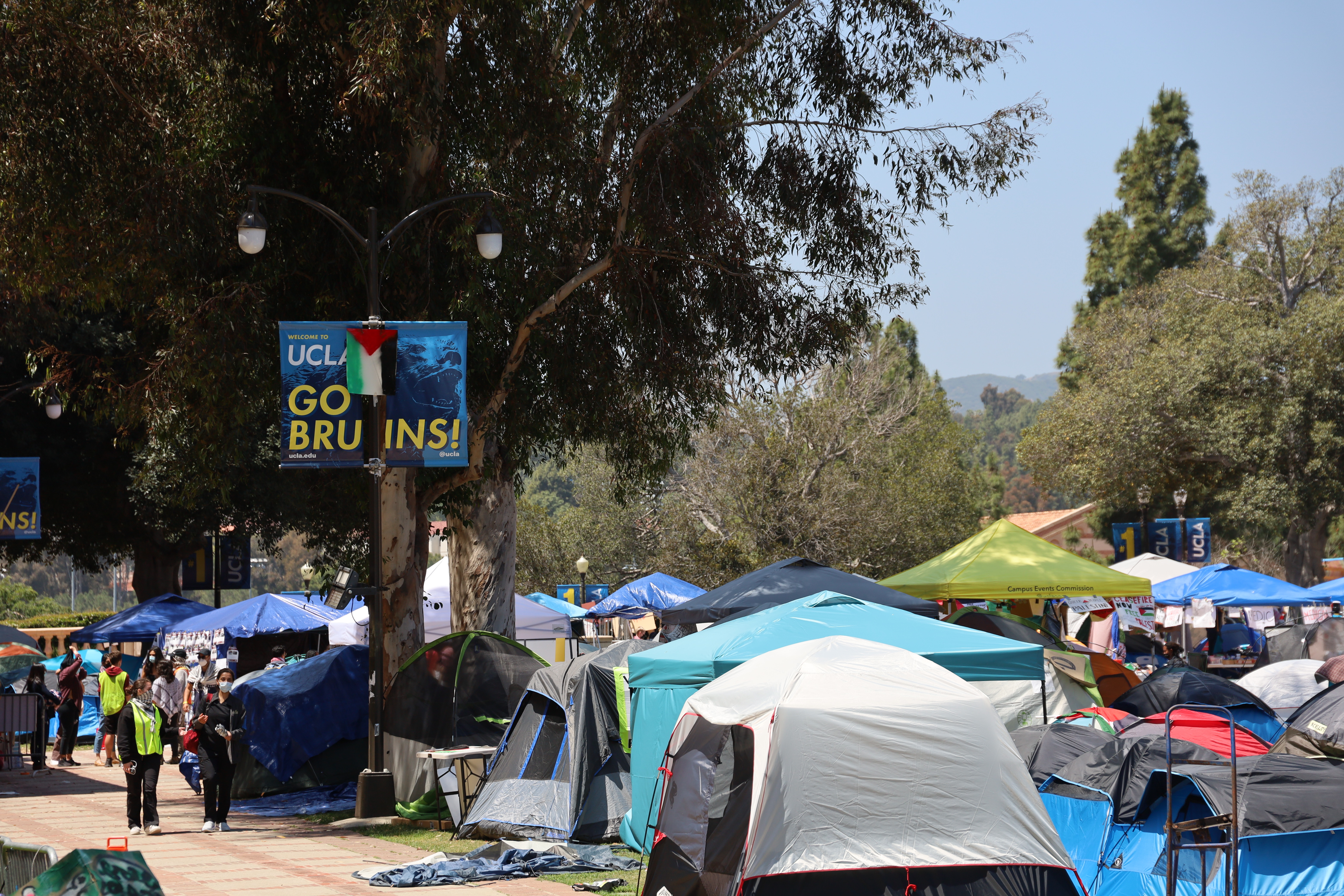
A central tenet of the new CSU policy is a definitive ban on tent encampments and overnight demonstrations. This directly addresses a tactic that became a hallmark of student activism, not only within the CSU but across higher education nationwide. The policy also explicitly prohibits the erection of unauthorized barricades, fencing, and furniture.
“Encampments are prohibited by the policy, and those who attempt to start an encampment may be disciplined or sanctioned,” stated CSU spokesperson Hazel Kelly in a written statement. She emphasized that campus presidents and designated officials are empowered to enforce this prohibition, taking immediate steps to dismantle any encampments. This includes issuing clear notices for immediate discontinuation of such activities.
Kelly further explained that encampments are viewed as disruptive and can foster a hostile environment for some community members. The university system asserts an obligation to ensure all members can access university property and programs without impediment.
UC's Directive for Consistent Enforcement
Similarly, UC campuses are directed to ban encampments and any other "unauthorized structures." President Drake's letter to chancellors stressed the importance of prohibiting anything that restricts movement on campus. This could encompass protests that block walkways, roadways, or deny access to university facilities for any individual.
“I hope that the direction provided in this letter will help you achieve an inclusive and welcoming environment at our campuses that protects and enables free expression while ensuring the safety of all community members by providing greater clarity and consistency in our policies and policy application,” Drake wrote, aiming to foster a more predictable and equitable application of protest rules.
A Legislative Push for Clarity
The UC system's efforts to standardize protest rules are partly driven by state legislative action. As part of this year's state budget agreement, lawmakers mandated that President Drake's office develop a "systemwide framework" for consistent enforcement of protest policies across all UC campuses. This directive comes with a financial incentive: $25 million in state funding is being withheld from the UC system until Drake submits a report to the Legislature by October 1, detailing these plans.
Echoes of Spring Protests Shape New Policies
The recent policy revisions by both the CSU and UC systems are a direct response to the significant wave of protests that occurred last school year, particularly those related to the Israel-Hamas war. Many higher education institutions have since bolstered their policies to constrain demonstrations and gatherings.
Examples from other universities highlight this trend. The University of Pennsylvania, for instance, introduced "temporary guidelines" that include bans on bullhorns and speakers after 5 p.m. on weekdays, along with a two-week limit for displaying posters and banners. Indiana University's policy restricts "expressive activities" to between 6 a.m. and 11 p.m. and requires prior approval for hanging or placing signs on university property. The University of South Florida has implemented rules stipulating that no protests are allowed in the final two weeks of a semester, among other restrictions.
Tyler Valeska, an assistant professor of law at Loyola University Chicago, observes that many universities are now signaling a more assertive approach to enforcing protest rules, even if they previously adopted a more lenient stance. He notes a significant departure from past practices where policies on paper often differed from actual enforcement.
“For years, maybe even decades, it did seem to be the case that university officials had a policy on paper and then another policy in their actual approach to enforcement,” Valeska stated. “And we saw a major change from that status quo in the spring, where universities around the country started suddenly enforcing policies that had been on the books for years or decades, but had never really been enforced against relatively nondisruptive student speech.”
He added that while some universities might be emphasizing their policies without immediate stringent enforcement, the events of the past spring suggest a genuine shift in approach is likely.
Key Provisions Across Both Systems
The new guidance from both the CSU and UC systems indicates a convergence towards a stronger stance against protest tactics that were prevalent in the spring. Several key areas are addressed:
Camping and Overnight Stays
The CSU's interim policy explicitly bans "encampments of any kind, overnight demonstrations… and overnight loitering." The use of camping paraphernalia, including recreational vehicles and tents, is outlawed. Bringing "copious amounts of personal belongings" to campus without permission is also restricted, with exceptions for student housing and university workspaces.
President Drake's letter similarly instructs UC chancellors to clarify their policies to prohibit setting up camps, tents, or temporary housing structures without prior approval.
Barricades and Unauthorized Structures
UC campuses are requested to ensure their policies prohibit the construction of unauthorized structures. The CSU's interim policy provides a detailed list of prohibited temporary and permanent structures, including tents, platforms, booths, walls, barriers, barricades, fencing, and furniture, unless explicitly permitted.
Masking and Identification
Both the CSU and UC systems have adopted similar language regarding face coverings. Masks are prohibited when used "with the intent of intimidating and harassing any person or group, or for the purpose of evading or escaping discovery, recognition, or identification in the commission of violations" of laws or policies. However, face masks remain permissible for those complying with university policies and applicable laws.
Furthermore, both systems prohibit individuals from refusing to identify themselves to a university official acting in their official capacity on campus.
Ensuring Free Movement
The UC system's guidance emphasizes that campus policies should prohibit restricting another person's movement. This includes blocking walkways, windows, or doors in a manner that denies access to university facilities. This directive follows a federal judge's preliminary injunction against UCLA concerning the alleged exclusion of Jewish students.
The CSU's interim policy includes broad advisories against actions that "impede or restrict the free movement of any person" or block streets, walkways, parking lots, and other pedestrian or vehicle paths.
CSU spokesperson Kelly noted that many of these provisions, particularly those concerning encampments, barricades, and face coverings, are not entirely new and were largely in place at individual universities.
Campus-Specific Adaptations and Discretion
While the CSU has implemented an interim systemwide policy, university leaders retain discretion on specific details. This includes defining which campus buildings and spaces are considered public areas and the hours of access for those spaces. These specifics will be outlined in campus-level addenda to the systemwide policy.
In contrast, President Drake's letter to UC chancellors does not establish a systemwide policy but directs each campus to develop its own. These campus policies must adhere to certain requirements, notably the ban on encampments. Drake indicated that many UC campuses likely already possess the necessary policies, while others will need to amend or create them promptly. Each campus is required to make its policies publicly accessible through a document or webpage.
Navigating the Intersection of Free Speech and Order
Both the CSU and UC systems have faced scrutiny over their responses to pro-Palestinian protests last spring. Some campus leaders initially adopted a more lenient approach, allowing peaceful overnight encampments and engaging in negotiations. However, as conflicts escalated on some campuses, university administrations called in law enforcement to disperse encampments and arrest students who refused to comply.
The new protest guidance suggests a unified direction towards a more assertive stance against practices that were common during spring protests. For instance, San Francisco State University, which had granted an exception to its time, place, and manner policy for student encampments last spring, anticipates the new CSU policy will create "greater urgency in resolving a situation like the one we had last spring."
The CSU's interim policy also extends to prohibiting items like firearms, explosives, and body armor, as well as actions such as shooting arrows, climbing light poles, and public urination. Demonstrations are also banned in university housing, including employee residences on university property, unless public events are occurring.
A Tiered Approach to Enforcement
President Drake's directive outlines a tiered system for policing violations. Initially, individuals would be informed of a violation and asked to cease the activity. Failure to comply would lead to a warning about potential consequences. Subsequent steps could involve UC police or campus fire marshals issuing orders, such as an unlawful assembly announcement or an order to disperse or identify oneself.
If conduct persists, individuals could face citations for violating university policy and, if laws are broken, detention and arrest. Repeat offenses or more severe violations could result in orders to stay away from campuses. However, the guidance acknowledges that this system is not a rigid prescription for all situations.
Concerns Over Chilling Effects
Margaret Russell, an associate professor at Santa Clara University School of Law, believes the CSU's policy is clearly motivated by a desire to minimize disruptions. While many restrictions target conduct rather than speech, she expresses concern over broad language that could require written permission for posters, signs, banners, and chalking.
“Such language could create ‘a chilling effect’ because it ‘is so potentially broad and far-reaching that people don’t know ahead of time what’s allowed and what’s not allowed,’” Russell explained. She added, “The overall message is, ‘Be careful. Be careful where you express your opinion aloud.’ And so to me, it seems suppressive of freedom of speech, which is probably what they want.”
CSU spokesperson Kelly countered that the policy aims to describe how university property can be used without inhibiting free expression. She clarified that individual written permission is generally not required for signage unless it's being posted in a prohibited area, and this rule does not apply to signs carried or used personally.
A statement from the American Association of University Professors (AAUP) broadly criticized school administrations for policies that "severely undermine the academic freedom and freedom of speech and expression that are fundamental to higher education." The AAUP pointed to policies that strictly limit demonstration locations, amplified sound, and types of postings, suggesting that harsh sanctions for violations could broadly discourage students and faculty from protesting.
The AAUP also noted that some institutions require protest groups to register in advance, which can effectively block spontaneous protests and discourage participation due to surveillance concerns. This statement followed a guide released by the American Council of Trustees and Alumni (ACTA), which encouraged universities to ban encampments and act decisively against students who violate such policies, arguing that negotiation and concessions embolden coercive tactics.
The CSU's interim policy states that the university supports the free exchange of information and ideas, provided it does not violate laws or university policies. Kelly reiterated that the system "places the highest value on fostering healthy discourse and exchange of ideas in a safe and peaceful manner, by sustaining a learning and working environment that supports the free and orderly exchange of ideas, values, and opinions."




 Explore AI Teaching Tools
Comments (0)
Please login to comment
No comments yet
Be the first to comment on this article