
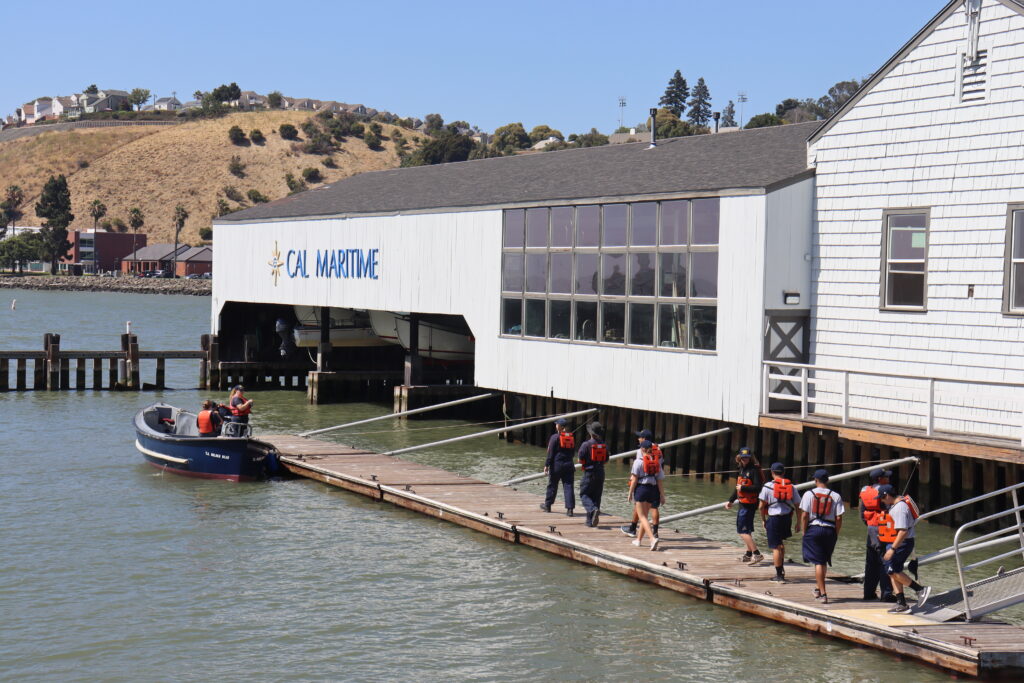
Cal Maritime's Strategic Integration with Cal Poly San Luis Obispo: A New Era for Maritime Education
The landscape of higher education is constantly evolving, driven by innovation, necessity, and the pursuit of enhanced learning opportunities.In a significant development for maritime studies and broader academic excellence, a pivotal merger has been officially sanctioned, uniting the California State University Maritime Academy (Cal Maritime) with the esteemed Cal Poly San Luis Obispo.
This strategic integration, approved by the California State University system's board of trustees, marks a transformative moment, aiming to bolster the future of maritime training and expand academic horizons for students across both institutions.
This article delves into the intricacies of this landmark decision, exploring its motivations, anticipated benefits, and the path forward for this newly unified educational powerhouse.
1.
The Imperative for Union: Addressing Financial Viability and Enrollment Challenges Cal Maritime, the sole maritime academy in the California State University system, has long been a beacon for specialized maritime education.
However, like many institutions facing evolving economic climates and shifting student demographics, it encountered significant financial pressures.
Declining enrollment numbers, a critical factor in institutional sustainability, threatened its operational capacity as an independent entity.
Studies indicate that a consistent and robust student pipeline is essential for maintaining the financial health of specialized academic programs.
The financial state of the campus, marked by projected budget deficits, underscored the urgent need for a strategic intervention.
Enrollment Trends and Financial Strain
Research shows a substantial dip in student headcount at Cal Maritime over recent academic years, a trend that directly impacted its revenue streams.Coupled with rising operational expenses, this created a challenging financial environment.
The campus anticipated a notable budget deficit, necessitating difficult decisions, including workforce adjustments.
The financial viability of operating essential, high-cost programs, such as those requiring specialized training vessels, became a significant concern.
Without a sustainable enrollment model, the academy faced an uncertain future, raising questions about its ability to continue offering its unique educational offerings.
The Merger as a Solution
The decision to merge was not a step taken lightly but rather a strategic imperative to ensure the continuation and enhancement of maritime education.By integrating with Cal Poly San Luis Obispo, a university renowned for its academic rigor and selective admissions, Cal Maritime sought to leverage a more robust financial and administrative system.
This union is designed to safeguard the academy's legacy while infusing it with the resources and stability needed to thrive in the contemporary educational landscape.
This approach is seen as an expansion of opportunity, not a contraction, for the entire university system.
2.
Synergistic Benefits: What Each Institution Gains from the Merger The union of Cal Maritime and Cal Poly San Luis Obispo is envisioned as a mutually beneficial partnership, creating a more comprehensive and dynamic educational ecosystem.
Each institution brings unique strengths and resources to the table, promising a richer experience for students and faculty alike.
This merger is more than just a consolidation; it's a strategic alignment aimed at maximizing potential and fostering innovation.
Cal Poly's Enhanced Capabilities
For Cal Poly San Luis Obispo, the integration offers access to specialized maritime facilities that are unparalleled within the broader university system.This includes the significant asset of a state-of-the-art training vessel, a $360 million investment in maritime education, and associated pier infrastructure.
These facilities provide unique hands-on learning environments that can complement Cal Poly's existing engineering, technology, and business programs.
The opportunity to engage with maritime operations can open new avenues for research, interdisciplinary projects, and experiential learning for Cal Poly students, broadening their career perspectives.
Cal Maritime's Revitalized Future
The primary objective for Cal Maritime is to secure its operational future and enhance its core mission: training the next generation of merchant marine professionals.The merger is expected to significantly boost enrollment numbers by tapping into Cal Poly's broader student base and implementing enhanced recruitment and marketing strategies.
This influx of students is crucial for the successful operation of the new training vessel and for maintaining the vitality of the maritime programs.
The integration aims to revitalize the academy, ensuring it can continue to produce highly skilled individuals essential to the global maritime industry and national security.
Expanding Opportunities for Students
A key promise of this merger is the expansion of opportunities for all students within the unified system.Students will have access to a wider array of academic programs, faculty expertise, and campus resources.
The intention is for all students to be enrolled under the Cal Poly banner, with the maritime campus operating as a distinct, yet integrated, entity.
This provides a clear pathway for students interested in maritime careers to pursue their goals within a well-established and financially secure university structure.
Furthermore, it opens doors for students at Cal Poly to explore specialized maritime training and careers that they might not have previously considered.
3.
Navigating the Integration: Key Milestones and Challenges Ahead The path to a fully integrated university is complex, involving intricate administrative, academic, and logistical considerations.
The system faces a defined timeline to unite the two institutions, requiring a coordinated effort across various departments and stakeholders.
The successful execution of this merger hinges on meticulous planning and proactive problem-solving.
Administrative and Governance Restructuring
A significant undertaking will be the alignment of administrative structures and governance models.The Solano campus, as the maritime academy will be known, will be led by a vice president and CEO who will report to the Cal Poly president.
The maritime academy itself will continue to be led by a superintendent with the rank of rear admiral in the U.S.
Maritime Service, ensuring continued specialized leadership.
This dual leadership structure aims to preserve the unique identity and operational needs of the maritime academy while integrating it seamlessly into the larger Cal Poly system.
Accreditation and curriculum Updates
The merger necessitates a thorough review and potential update of accreditation processes to reflect the new institutional structure.Furthermore, academic programs will undergo scrutiny to identify overlaps, adjacencies, and opportunities for synergy.
The curriculum for maritime programs will be refined and potentially expanded, pending approval from relevant maritime authorities.
This process will involve extensive collaboration between faculty from both institutions to ensure a cohesive and high-quality educational offering.
The renaming of the maritime academy to the Cal Poly Maritime Academy is a key step in this process, pending necessary approvals.
Enrollment and Recruitment Strategies
Revitalizing enrollment at the maritime academy is a paramount objective.Substantial investments in recruitment and marketing efforts targeting high schools and prospective students will be essential.
The goal is to significantly increase the number of students pursuing merchant marine licenses and other maritime-related degrees.
This will involve developing targeted outreach programs and highlighting the expanded opportunities available through the merged institution.
The success of these initiatives will be a critical metric for the merger's overall progress.
4.
The Future of Maritime Education: A Vision for the Cal Poly Maritime Academy The integration of Cal Maritime with Cal Poly San Luis Obispo represents a forward-thinking strategy to secure the future of specialized maritime education.
The newly formed Cal Poly Maritime Academy is poised to become a leading center for training professionals essential to the nation's economic and defense infrastructure.
This union is not merely about survival; it is about elevating and expanding the reach and impact of maritime training.
A Strengthened Maritime Workforce
Merchant mariners form the backbone of the civilian workforce responsible for global shipping and vital support to U.S. military operations.By ensuring the continued operation and enhancement of the maritime academy, this merger directly contributes to strengthening this critical workforce.
The new training vessel, set to arrive in 2026, will be a powerful tool in this endeavor, providing students with cutting-edge training capabilities.
The merger's success will be measured not only in financial terms but also in its ability to produce a larger, more skilled cohort of merchant mariners.
Leveraging Technology and Innovation
The integration provides an opportunity to infuse maritime education with new technologies and innovative teaching methodologies.Cal Poly's strengths in engineering and technology can be leveraged to enhance the maritime curriculum, potentially leading to the development of new programs focused on areas such as autonomous shipping, advanced navigation systems, and sustainable maritime practices.
This will ensure that graduates are equipped with the skills needed to navigate the evolving demands of the maritime industry.
A Model for Systemic Growth
This merger serves as a potential model for other institutions within large university systems facing similar challenges.By demonstrating how strategic integration can lead to enhanced academic offerings, improved financial stability, and expanded opportunities for students, the Cal Poly-Cal Maritime union can inspire similar collaborations.
The focus on creating a "great opportunity for the whole system" highlights a proactive approach to institutional development, turning potential challenges into catalysts for growth and innovation.
Conclusion
The approved merger between Cal Maritime and Cal Poly San Luis Obispo is a landmark event that promises to redefine maritime education.This strategic union, driven by the need for financial stability and the pursuit of enhanced academic excellence, is poised to create a more robust and dynamic learning environment.
By combining the specialized expertise of Cal Maritime with the broad strengths of Cal Poly, the newly formed Cal Poly Maritime Academy will be well-positioned to train the next generation of maritime leaders, contribute to critical national interests, and serve as a beacon of innovation in higher education.
The journey ahead involves careful navigation of administrative and academic integration, but the potential for synergistic growth and expanded opportunities for students makes this a truly exciting development for the maritime industry and the entire California State University system.






 Explore AI Teaching Tools
Comments (0)
Please login to comment
No comments yet
Be the first to comment on this article