
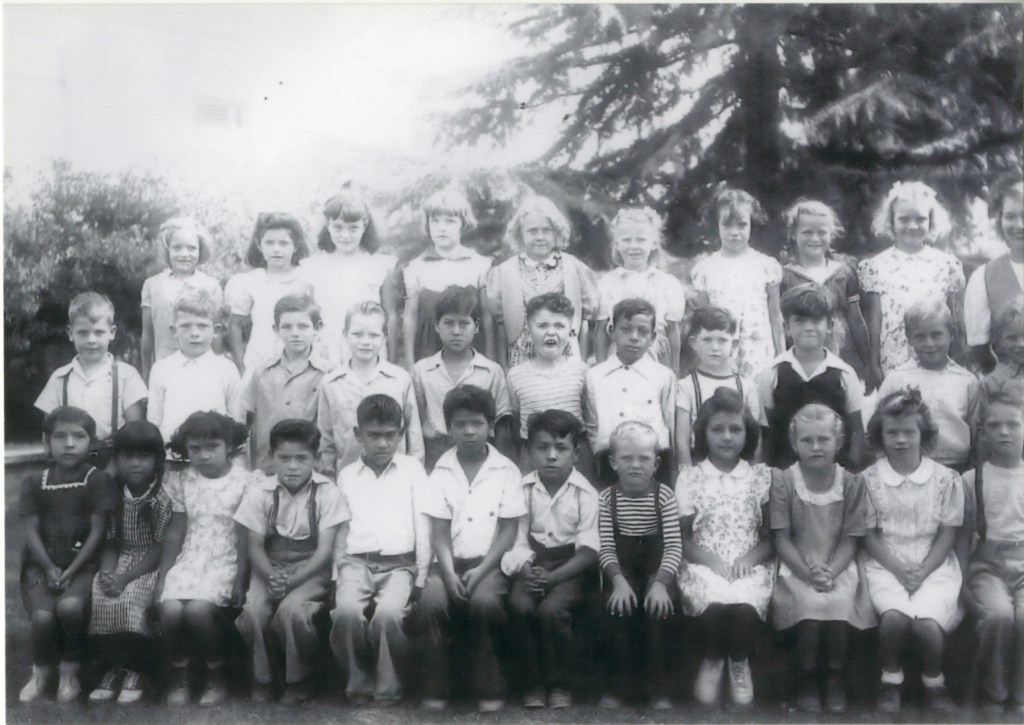
Imagine your child being denied education not because of a lack of aptitude, but because of their name or the color of their skin. For five families in 1940s California, this wasn't imagination; it was a harsh reality. Their outrage over children being relegated to dilapidated facilities, learning from discarded textbooks, ignited a legal battle that predated Brown v. Board of Education, fundamentally altering the landscape of public schools for generations to come. This is the powerful, often overlooked, story of Mendez v. Westminster, a case that underscores the enduring fight for educational equity and the profound impact of parental advocacy.
A Fight Born of Ramshackle Schools and Discarded Books
In rural Orange County, California, during the 1940s, the stark reality for Mexican-American children was a segregated education system that offered little more than neglect. School officials, under the guise of providing separate but equal instruction, funneled these children into makeshift classrooms—often former cattle sheds or horse stables—that were literally falling apart, lacking basic amenities and reeking of animal waste. The learning materials were equally dismal, consisting of tattered books that White schools had deemed unfit for their own students.
This indignity was too much for Gonzalo and Felicitas Mendez, along with four other families: the Ramirezes, Guzmans, Estradas, and Palominos. Witnessing their children’s potential stifled by such substandard conditions, they decided to challenge the status quo. Their collective spirit of resistance, fueled by a deep-seated belief in their children's right to a quality education, set the stage for a landmark legal confrontation.
When "Separate" Meant Unequal
California law at the time didn't explicitly ban Mexican-American students from attending schools with their White peers. Instead, school districts employed a thinly veiled argument about language barriers to justify segregation. However, the true basis for exclusion became clear when the Mendez children, despite having adequate English proficiency, were denied admission to the all-White 17th Street School based on their appearance.
The principal's assessment was swift and brutal: the children's skin tone, not their academic readiness, determined their educational fate. Even more telling, their lighter-skinned cousins, bearing a different surname, were readily admitted. This blatant discrimination, experienced by multiple families like the Guzmans, who were among the first to sue in Orange County, highlighted the systemic nature of the injustice.
“They demonstrated a spirit of resistance, an unwillingness to settle for lesser benefits than what they were entitled to as full participants in the American experiment.”
Community Mobilization and Legal Strategy
Cindy Mata, site director of the University of California, Irvine’s History Project, emphasizes that the community's activism was a crucial precursor to the lawsuit. "The community was already really active. They had their own agency," Mata explains. "They were primed to be able to fight that segregation. That's the story that is undertold." This pre-existing network of engaged parents and community members provided the foundation for a unified legal challenge.
The five families, pooling their resources and courage, filed a class-action lawsuit against multiple school districts. This collective action, known as Mendez et al. v. Westminster School District of Orange County, represented approximately 5,000 students and aimed to dismantle the discriminatory practices that were systematically disadvantaging Latinx youth.
A Federal Ruling Against Segregation
In 1947, the federal court delivered a resounding victory for the plaintiffs. The ruling declared that California had no legal basis for segregating children of Mexican descent and that such practices violated the Fourteenth Amendment's guarantee of equal protection under the law. This decision marked one of the nation's first federal condemnations of school segregation, setting a critical precedent.
The significance of Mendez v. Westminster cannot be overstated. It provided a blueprint for future legal challenges, most notably paving the way for the Supreme Court's landmark decision in Brown v. Board of Education in 1954, which ordered the integration of schools nationwide. The courage displayed by these families, as noted by Thomas Saenz, president of the Mexican American Legal Defense and Educational Fund (MALDEF), was immense: "It took a great deal of courage to challenge the status quo. You’re putting your name out there. That can be dangerous."
The Long Shadow of Mendez: Recognition and Resilience
Despite its profound impact, the Mendez v. Westminster case remained largely unknown to the public for decades. It wasn't until 2011, when President Barack Obama awarded Sylvia Mendez the Presidential Medal of Freedom, that the story began to gain wider recognition. This honor brought national attention to the family's pivotal role in the civil rights movement.
In recent years, there has been a concerted effort to ensure this history is not forgotten. Legislation in California now mandates that schools teach students about the Mendez case, a victory championed by educators, activists, and scholars like Sandra Robbie. Robbie, who grew up in the same community, found the case to be a "paradigm shift," offering her a framework to understand her own experiences with subtle and overt discrimination.
“The Mendez family teaches us that parents will always advocate for their children. My job is to make sure our students see themselves not as victims of history but as its makers.”
Echoes of Segregation in Modern Schools
While Mendez v. Westminster achieved a monumental legal victory, the issue of school segregation continues to manifest in contemporary education. Today, segregation often takes subtler forms, influenced by socioeconomic factors and residential patterns, but the impact on students remains profound. Schools like Felicitas & Gonzalo Mendez High School in Boyle Heights, Los Angeles, named in honor of the plaintiff couple, serve a predominantly Latinx student body, highlighting the persistent demographic segregation in many urban areas.
Emily Grijalva, the community school coordinator at Mendez High, sees the daily impact of historical inequities. She notes that despite academic achievements, the school's student body reflects the broader segregation in Los Angeles, where White families often opt for private or charter schools, leaving public schools with a disproportionate number of students of color. This phenomenon, Gary Orfield, a renowned school segregation researcher, describes as a "systemic failure" due to a lack of enforcement of desegregation policies.
The Threat of Censorship and the Fight for Truth
Adding to the challenges of educational equity is the growing wave of censorship in education. Laws restricting what children can learn about race, history, and social justice threaten to erase critical narratives like the Mendez v. Westminster case. This push to sanitize curricula, as noted by Lisa Ramos, a professor whose dissertation focused on the case, creates a "faux unity" that prevents a true understanding of America's complex past.
The suppression of such histories is not merely an academic concern; it has tangible consequences for students. Grijalva worries that by removing these narratives, "they’re not going to have that opportunity to see themselves, be empowered and do something with that empowerment." The bravery of figures like Felicitas Mendez, who refused to accept subpar education for her children, serves as a vital inspiration that censorship seeks to extinguish.
Lessons for Today's Educators
The story of Mendez v. Westminster offers invaluable lessons for educators navigating the complexities of modern schooling. It underscores the power of parental advocacy, the importance of confronting uncomfortable historical truths, and the ongoing need to champion educational equity for all children.
For educators seeking to foster inclusive and engaging learning environments, incorporating diverse historical narratives is crucial. Tools like Mentofy AI teaching tools can assist in developing curriculum materials that explore such vital civil rights cases, while MentofyCove classroom games can transform historical lessons into interactive experiences. Furthermore, understanding the systemic issues that contribute to segregation, as highlighted by the Mendez case, can inform strategies for equitable student grouping using MentofyGroups and the creation of supportive classroom displays with MentofyBoards.
The enduring legacy of Mendez v. Westminster is a testament to the power of ordinary families to enact extraordinary change. It reminds us that the fight for equitable education is a continuous journey, one that requires vigilance, courage, and a commitment to ensuring that every child has the opportunity to learn and thrive, unhindered by prejudice or systemic disadvantage. As Mike Ramirez, son of plaintiffs Lorenzo and Josefina Ramirez, continues to advocate for recognition of his parents' role, his words resonate: "The truth has to come out." This truth, embodied by the Mendez case, is essential for building a more just and equitable future for all students.



 Explore AI Teaching Tools
Comments (0)
Please login to comment
No comments yet
Be the first to comment on this article