
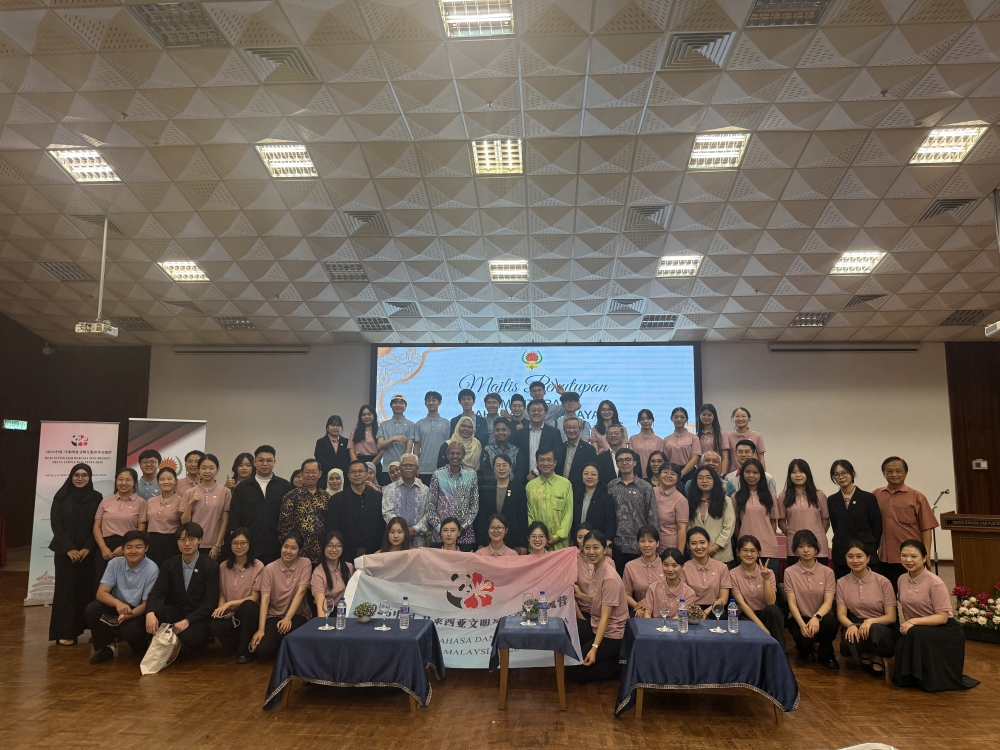
Bahasa Melayu's Ascendancy: From Nusantara Lingua Franca to Global Classroom Staple
Once confined to the archipelagic heartlands of Southeast Asia, Bahasa Melayu is experiencing a remarkable global resurgence, captivating learners and scholars far beyond its traditional borders. This vibrant language, spoken daily by millions, is proving to be much more than a national tongue; it's a dynamic linguistic heritage with deep historical roots and an increasingly influential international presence.
A Lingua Franca Forged in History
The story of Bahasa Melayu as a unifying language stretches back over a millennium. Historical accounts reveal its crucial role as a lingua franca as early as the 7th century, flourishing under the Sriwijaya Empire. This status was further cemented during the Melaka Sultanate in the 13th century.
During these influential periods, Bahasa Melayu served as the primary language for administration, trade, and diplomatic exchanges. It was the essential tool that connected diverse peoples and kingdoms across the vast Nusantara region, fostering a shared understanding and facilitating regional cohesion.
Today, the perception of Bahasa Melayu being solely regional is rapidly fading. The language is now spoken by an estimated 290 million individuals worldwide, a testament to its enduring appeal and expanding reach.
Beyond Borders: The Expanding Reach of Malay
Dr. Rozaimah Rashidin, Deputy President of the Malaysian Linguistics Association, emphasizes that Bahasa Melayu has always possessed an innate ability to transcend geographical limitations. Its influence extends far beyond the shores of Southeast Asia.
Communities in the Cocos (Keeling) Islands and Christmas Island, both Australian territories, maintain a connection to the language. Furthermore, pockets of Malay speakers can be found in South Africa and Sri Lanka, demonstrating its historical migratory pathways.
The global Malay diaspora has played a significant role in disseminating the language. Today, individuals conversant in Bahasa Melayu reside in countries as diverse as Saudi Arabia, Australia, the United Kingdom, Germany, the Netherlands, and even across the United States in cities like Los Angeles.
Globally, Bahasa Melayu, often studied alongside its close relative Bahasa Indonesia, ranks among the top 10 most spoken languages. This widespread usage is not confined to oral communication; the language is also the fourth most frequently employed on digital platforms and social media, signaling its growing digital footprint.
The Allure of Accessibility
A key factor contributing to Bahasa Melayu's global appeal is its inherent accessibility. Dr. Rozaimah notes that the language boasts a structured yet relatively straightforward grammatical system, making it an attractive option for new learners.
This ease of acquisition is evident in Malaysia itself, where many foreign workers from countries such as Bangladesh, Vietnam, and Nepal quickly achieve conversational fluency. Their rapid progress underscores the language's learnability.
The late Malay scholar Za’ba once eloquently described the language as "flexible and gentle," a characteristic that continues to resonate strongly today. In the current digital age, foreign content creators, tourists, and influencers often find themselves picking up Bahasa Melayu with surprising speed, using it confidently during their stays.
Language Attitude: The Crucial Catalyst
However, Dr. Rozaimah stresses that the long-term vitality of any language hinges critically on what linguists term "language attitude." This encompasses the perceptions, emotional connections, and value individuals place upon a language.
A positive language attitude fosters pride, loyalty, and a commitment to its correct and widespread use. Conversely, a negative attitude can emerge when a language is perceived as outdated, lacking economic utility, or when foreign languages are excessively prioritized over indigenous ones.
Interestingly, many foreign learners exhibit a profound appreciation for Bahasa Melayu, often inspiring a renewed sense of pride and commitment among native speakers themselves. This external validation can be a powerful force in shaping domestic language attitudes.
A Language of Scholarship and Soft Power
In a world where approximately 7,168 languages are actively spoken, Bahasa Melayu is steadily carving out its niche as a significant language of knowledge and academic pursuit. Its increasing adoption by foreign learners, particularly in nations like China and the United Kingdom, carries profound implications.
These growing academic ties not only elevate the prestige of Bahasa Melayu but also strengthen Malaysia's diplomatic and economic relationships on the global stage. The language is becoming a vital conduit for cross-cultural understanding and collaboration.
Academic Hubs Cultivating Malay Studies
In China, leading institutions such as Beijing Foreign Studies University and Guangdong University of Foreign Studies offer comprehensive degree programs in Bahasa Melayu. These initiatives are instrumental in producing graduates who are not only proficient in the language but also deeply immersed in Malay cultural values.
These graduates effectively serve as invaluable cultural ambassadors, bridging understanding between China and the Malay-speaking world. Their expertise fosters deeper connections and facilitates more nuanced interactions.
Meanwhile, esteemed institutions like the School of Oriental and African Studies (SOAS) at the University of London play a pivotal role in sustaining and advancing Malay studies within Europe. Through dedicated research encompassing classical Malay manuscripts and contemporary sociolinguistics, Bahasa Melayu continues to gain recognition as an academic language of global significance.
Furthermore, dedicated translation efforts by international scholars are bringing a wealth of Malay literary works to a wider global audience. This exposure opens new avenues for international appreciation of the language's inherent beauty and rich cultural tapestry.
Consolidation and Global Ambition
While Bahasa Melayu has undoubtedly achieved a significant international standing, it remains in a crucial phase of consolidation. The language is actively working to rival the dominance of established global languages such as English in various spheres.
Professor Dr. Su Ying Ying, Director of the Centre for Malay Studies at Beijing Foreign Studies University, highlights the direct impact of increasingly close Malaysia-China relations on the surge of interest in learning each other's languages and cultures. This diplomatic synergy is a powerful driver for linguistic exchange.
Language as a Cultural Mirror
Language, as Dr. Rozaimah explains, is often described as a mirror reflecting the culture from which it springs. In the case of Bahasa Melayu, its elegance is not solely derived from its linguistic structure but also from the deeply embedded values it conveys.
To learn Bahasa Melayu is to embark on a journey into the cultural landscape of the Nusantara, a world characterized by courtesy, subtlety, and profound respect. Core concepts such as budi bahasa (graciousness) and adab (proper conduct) are intrinsically woven into the fabric of the language.
These linguistic elements shape not only communication patterns but also influence social behavior and interpersonal interactions. They provide a framework for harmonious coexistence and mutual understanding.
Bridging Divides Through Linguistic Immersion
For foreign learners, mastering Bahasa Melayu often serves as a crucial gateway to comprehending these intricate cultural nuances. It acts as a powerful tool for bridging differences, mitigating feelings of unfamiliarity, and fostering genuine trust within diverse communities.
In this profound sense, language transcends its role as a mere instrument of communication; it becomes a vital bridge connecting individuals and cultures across vast divides.
The Cultural Magnet of Malaysia
Echoing this sentiment, Professor Dr. Su Ying Ying of Beijing Foreign Studies University underscores how the inherent richness of Malay culture has significantly contributed to the language's growing appeal in China. The allure extends beyond linguistic study to cultural immersion.
Currently, over 500 students across 18 institutions in China are pursuing undergraduate studies in Bahasa Melayu. Beijing Foreign Studies University, which initiated its Malay language program in 1961, remains a cornerstone for the language's development within the country.
Professor Su herself pursued her undergraduate studies in Bahasa Melayu at BFSU before continuing her postgraduate work at Universiti Kebangsaan Malaysia. She observes that many students are drawn to Malaysia not only for academic pursuits but also for its peaceful environment, vibrant cultural tapestry, and diverse culinary offerings.
“Students want to feel closer to Malaysia,” she states. “When they come here, they not only learn the language faster but also experience the culture firsthand.” This immersive approach accelerates learning and deepens cultural appreciation.
Many students achieve remarkable fluency within just two years, a testament to both the language's inherent accessibility and its enduring, multifaceted appeal. The global journey of Bahasa Melayu is a compelling narrative of historical significance meeting contemporary relevance.







 Explore AI Teaching Tools
Comments (0)
Please login to comment
No comments yet
Be the first to comment on this article