
Bridging Worlds: How Immersive Border Experiences Forge Exceptional Bilingual educators
Embarking on a career in bilingual education is a profound calling, one that demands not just linguistic fluency but a deep, empathetic understanding of diverse student experiences.For aspiring teachers, particularly those aiming to serve in dual-language classrooms, gaining firsthand insight into the lives of their future students is paramount.
This article explores how innovative educational programs are transcending traditional classroom walls, offering prospective bilingual teachers transformative experiences that profoundly shape their pedagogical approaches and foster genuine connection with the students they will serve.
1.
The Imperative of Experiential Learning in Bilingual Teacher Preparation The landscape of modern education is increasingly diverse, with students arriving in classrooms from a multitude of backgrounds, each carrying unique stories and challenges.
For bilingual educators, this reality is amplified.
They are tasked with not only facilitating academic growth but also navigating cultural nuances and supporting students who may be experiencing significant life transitions.
Traditional teacher training, while foundational, can sometimes fall short in equipping these educators with the visceral understanding needed to truly connect with and support their students.
This is where experiential learning, particularly programs that involve direct engagement with communities on both sides of cultural and geographical divides, becomes invaluable.
Understanding the Student's Journey
Prospective bilingual teachers often enter the profession with theoretical knowledge about second language acquisition and cultural competency.
However, research shows that theoretical understanding alone cannot replicate the impact of witnessing firsthand the realities faced by students and their families.
When teachers have the opportunity to see the environments from which their students come, to understand the daily lives, the challenges, and the aspirations, they develop a more nuanced and compassionate approach to teaching.
This direct exposure helps demystify the student experience, moving beyond statistics and into the realm of human connection.
The Role of Empathy in the Classroom
Empathy is a cornerstone of effective teaching, especially in bilingual settings.
When teachers can put themselves in their students' shoes, they are better equipped to anticipate difficulties, provide targeted support, and create a truly inclusive learning environment.
Studies indicate that educators who cultivate strong empathetic skills are more likely to build trust with students and families, leading to improved academic outcomes and greater student engagement.
Experiential learning initiatives are designed to cultivate this empathy by exposing teachers to the emotional and practical realities that shape their students' lives.
2.
Innovative Programs: Crossing Borders for Deeper Understanding Forward-thinking educational institutions are recognizing that the most impactful learning often happens outside the conventional classroom.
For bilingual teacher candidates, this has led to the development of unique programs that facilitate direct engagement with communities across international borders.
These initiatives are not mere field trips; they are carefully curated immersive experiences designed to provide prospective teachers with a profound understanding of the interconnectedness of lives and the shared humanity that transcends geographical boundaries.
A Glimpse into Life in Tijuana
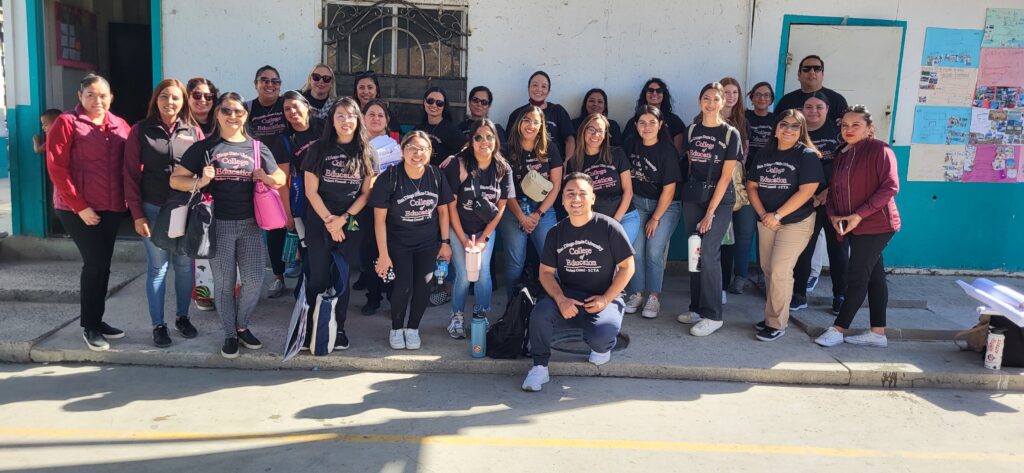
One exemplary model involves prospective bilingual teachers from institutions like San Diego State University undertaking intensive, multi-day visits to schools and communities in Tijuana, Mexico.
These trips are meticulously planned to offer a comprehensive view of the educational and social landscape.
They have been a cornerstone of teacher preparation for nearly a decade, aiming to illuminate the experiences of students who may have recently arrived in the United States or who have strong ties to Mexico.
The core objective is to foster an understanding of the daily realities that shape these students, recognizing that a student in Tijuana today might be in a San Diego classroom tomorrow, and vice versa.
These visits are not about observing from a distance; they involve active participation.
Student teachers have the opportunity to engage directly with students, observe classroom dynamics, and interact with educators in different school settings.
This hands-on approach allows them to witness the resourcefulness and resilience of both students and teachers, even in environments with limited resources.
They have the chance to teach lessons in both English and Spanish, adapting their pedagogical strategies on the fly and experiencing the challenges and rewards of bilingual instruction in a real-world context.
Diverse Educational Settings for Comprehensive Insight
The program's structure ensures exposure to a variety of educational environments, providing a holistic perspective.
Visits have included:
- Schools in low-income neighborhoods on the outskirts of the city, highlighting the impact of socioeconomic factors on education.
- Institutions with specialized programs, such as those catering to blind students, demonstrating the importance of inclusive practices.
- Schools located within migrant shelters, offering a direct encounter with the immediate needs and vulnerabilities of children and families in transition.
Beyond school visits, these programs often incorporate cultural and social learning opportunities.
This can include visits to local universities to understand higher education pathways and engaging with multimedia resources, such as documentaries that shed light on the arduous journeys many children undertake to reach the border.
These elements collectively paint a vivid picture of the complex migratory routes and the human stories behind them.
3.
Personal Transformations: Stories from the Field The impact of these immersive border experiences on aspiring educators is profound and deeply personal.
Many student teachers report that these journeys are not just educational but transformative, reshaping their perspectives and solidifying their commitment to serving diverse student populations.
They have said that the insights gained are invaluable for their future careers.
Erika Sandoval's Journey of Connection
Erika Sandoval, a participant in an online bilingual credential program, shared her deeply moving experience during a trip to Tijuana.
Having migrated from Mexico to California at the age of nine, the visit evoked powerful memories and emotions.
She described crying as the experience brought back her own childhood struggles of leaving her home country and starting anew.
Sandoval, who is now working as an aide with special education students while pursuing her part-time online studies, felt a profound connection to the children she met, recognizing herself in their situations.
She said that she was once that child.
Sandoval's participation in the program was initially motivated by a desire to maintain her Spanish language skills, a sentiment shared by many in her community who see the language being forgotten by younger generations.
The trip to Tijuana underscored for her the critical need for schools to provide robust support systems for immigrant children and their families.
She emphasized that many students arrive with compelling reasons for leaving their home countries, and these reasons often present significant hurdles in their educational journey.
She noted that many of them had not had the opportunity to attend school regularly or had to work at a young age, impacting their literacy and foundational learning.
Furthermore, Sandoval highlighted the importance of challenging assumptions about students' home lives.
She pointed out that the reality for many students is far from the idealized nuclear family, and that leaving behind so much to come to a new country is a testament to their resilience.
This realization, she said, is crucial for building a classroom environment where every student feels seen, respected, and understood.
Clarissa Gomez: Witnessing Resilience and Hope
Clarissa Gomez, whose parents and grandparents are from Mexico, grew up in an area with a significant immigrant population.
Despite her background, she found her visit to a migrant shelter in Tijuana to be an eye-opening experience.
She met children who were fleeing violence and had to leave family members behind.
One young girl's poignant statement, "Tomorrow we wake up and we make a long journey.
I feel so sad that I’ve met you guys and tomorrow I have to leave.
I’m scared," deeply affected Gomez, describing it as heart-wrenching.
Despite the immense hardships these children had endured, Gomez was struck by their eagerness to learn and their willingness to share their knowledge.
She believes that hearing their stories firsthand will be instrumental in her development as a teacher.
Currently student-teaching at a dual-language immersion charter school, Gomez anticipates that some of the students she met at the shelter may well become her future students.
The experience reinforced for her the paramount importance of respecting and learning about students' cultures and life experiences.
She stated that while mastering academic standards is vital, fostering a culture of welcome, respect, and acknowledgment of family dynamics is equally crucial for building genuine connections with students as individuals.
4.
Cultivating Adaptability and Resourcefulness in Educators Beyond fostering empathy and cultural understanding, these immersive experiences are crucial for developing essential pedagogical skills, particularly adaptability and resourcefulness.
The realities of teaching in diverse and often challenging environments necessitate a flexible approach, where lesson plan Generator">lesson plans are not rigid but fluid, able to adapt to unexpected circumstances and student needs.
The Art of Flexible Pedagogy
Prospective teachers often prepare detailed lesson plans for their immersive experiences.
However, they quickly learn that reality rarely adheres to a pre-written script.
As Erika Sandoval recounted, a group prepared to teach second graders found themselves teaching fifth graders at one school and preschoolers at another.
This unpredictability is a key takeaway.
Rick Froehbrodt, a lecturer involved in organizing these trips, emphasizes that teachers must understand that their role is not simply to deliver a predetermined curriculum but to navigate a complex web of factors that influence learning.
They have to be prepared for constant change.
This constant need for adjustment hones a teacher's ability to think on their feet, to assess student needs in real-time, and to modify instruction accordingly.
It teaches them to be responsive rather than reactive, a critical skill for any educator, but especially for those working with diverse learners who may have varying levels of academic preparedness and unique learning styles.
Making the Most of Limited Resources
Another significant lesson learned during these border experiences is the power of resourcefulness.
Sandoval observed how teachers and children in Tijuana made exceptional use of the limited classroom supplies available.
She noted the children's willingness to share and their ability to maximize the utility of every item.
This stood in stark contrast to her observations in the United States, where, despite an abundance of resources, students sometimes struggle with sharing even basic items like pencils.
This observation prompts reflection on how educators can foster a greater sense of community and collaboration within their classrooms, regardless of the material resources available.
It encourages a focus on pedagogical strategies that promote sharing, teamwork, and mutual support, emphasizing that the most valuable resources are often human connection and a positive learning environment.
Teachers learn to be creative, to leverage community assets, and to inspire a sense of collective effort, demonstrating that effective teaching is not solely dependent on the quantity of materials but on the quality of instruction and the strength of relationships.
5.
The Mentofy Advantage: Empowering Global Educators At Mentofy, we understand that the future of education lies in empowering teachers with the knowledge, skills, and perspectives necessary to thrive in an increasingly interconnected world.
Our platform is dedicated to providing comprehensive learning resources and innovative training modules that support educators at every stage of their careers.
We believe that by fostering a global community of learners and educators, we can collectively address the challenges and embrace the opportunities presented by diverse student populations.
Building a Foundation for Bilingual Excellence
For aspiring bilingual teachers, Mentofy offers a robust curriculum designed to cover essential linguistic, pedagogical, and cultural competencies.
Our courses are developed by leading experts in the field and are accessible globally, allowing teachers to learn at their own pace and on their own schedule.
We recognize that the journey to becoming an exceptional bilingual educator is multifaceted, requiring a deep understanding of language acquisition, effective instructional strategies for diverse learners, and a profound appreciation for cultural contexts.
Fostering a Global Community of Practice
Mentofy is more than just a learning platform; it is a vibrant community where teachers can connect, share experiences, and collaborate with peers and mentors from around the world.
We facilitate discussions, provide forums for idea exchange, and highlight best practices that have proven effective in diverse educational settings.
This global network is crucial for educators who are navigating the complexities of bilingual education, offering a support system that transcends geographical boundaries.
Actionable Insights for Immediate Impact
Our commitment extends to providing practical, actionable insights that teachers can implement immediately in their classrooms.
We focus on strategies that promote student engagement, enhance learning outcomes, and foster inclusive environments.
Whether it's developing culturally responsive teaching methods, mastering new language acquisition techniques, or understanding the unique needs of immigrant students, Mentofy equips teachers with the tools they need to make a tangible difference in the lives of their students.
We believe that every teacher, regardless of their location or the challenges they face, has the potential to be an agent of positive change.
Conclusion
The path to becoming an outstanding bilingual educator is paved with a commitment to continuous learning and a deep well of empathy.
Immersive experiences, such as those undertaken by prospective teachers crossing international borders, offer an unparalleled opportunity to gain firsthand understanding of the diverse lives and backgrounds of their students.
These journeys cultivate not only linguistic proficiency but also the crucial qualities of adaptability, resourcefulness, and profound human connection.
By embracing these transformative learning opportunities, aspiring teachers are better prepared to create inclusive, supportive, and effective learning environments where every student can thrive.
Mentofy is dedicated to supporting this vital mission, providing the resources and community necessary for educators worldwide to achieve excellence in bilingual education.

 Explore AI Teaching Tools
Comments (0)
Please login to comment
No comments yet
Be the first to comment on this article