
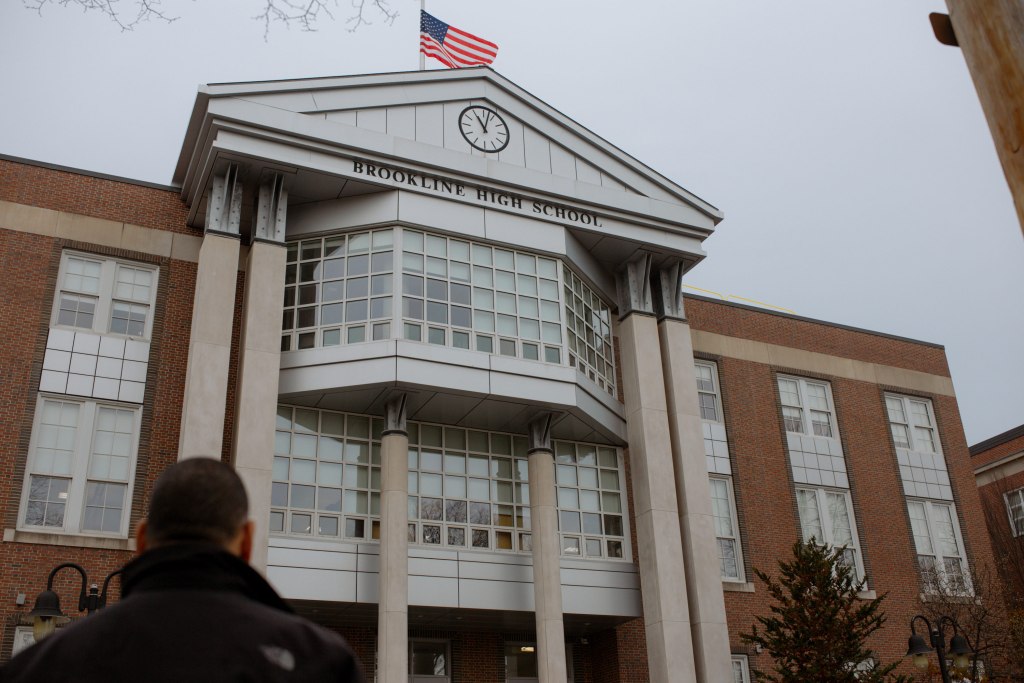
Budget Cuts Force Equity Offices to the Brink: Is This the End of DEI in Schools?
In a move that has sent shockwaves through communities and sparked fierce debate, a growing number of school districts are dismantling their dedicated diversity, equity, and inclusion (DEI) offices, often citing severe budget deficits. This trend, exemplified by the recent closure of Brookline, Massachusetts’ Office of Educational Equity, raises urgent questions about the future of equitable education for students from marginalized backgrounds.
Brookline's Bold Experiment in Equity Meets Fiscal Reality
Brookline, a district long recognized for its affluence and academic prestige, found itself at a critical juncture. In July 2023, Claire Galloway-Jones stepped into the role of leading the Office of Educational Equity, tasked with rebuilding trust amidst serious allegations of failing to address racial bullying and harassment. The district had seen a concerning exodus of educators of color, with 18 leaving between 2021 and 2023, and a revolving door of five superintendents in the preceding decade.
The situation escalated dramatically with the announcement of a projected $8 million budget deficit for the 2024-25 school year. Operations funding for Galloway-Jones’ department was abruptly halted. Despite her efforts to secure alternative funding, including a state grant aimed at recruiting and retaining teachers of color, her requests were reportedly denied without explanation.
By spring, the school board proposed shuttering the office entirely, citing budget constraints and a perceived lack of direct student support. This decision ignited a passionate response from parents and local organizers, who rallied to raise over $188,000 in a desperate bid to save the office. However, in March 2025, the school board voted 5-4 to close the office, returning all donated funds to their original sources.
“I’m disappointed,” Galloway-Jones stated, reflecting on the office’s responsibilities, which included supporting students from marginalized backgrounds, fostering the recruitment and retention of Black and brown educators, and conducting anti-bias training. “And I don’t think that people are being honest and transparent about what’s happening,” she added, expressing a belief that the work was undervalued due to a lack of understanding.
A National Pattern of Cutbacks Amidst Shifting Political Winds
Brookline is not an isolated case. At least four school districts in Massachusetts have recently scaled back or eliminated DEI initiatives and positions, despite significant community backing. These decisions are often attributed to declining student enrollment and reduced federal funding, which are placing immense pressure on school budgets across the nation.
Compounding these financial pressures are the ongoing political challenges to DEI efforts. Educators report a chilling effect stemming from what they perceive as attacks on diversity, equity, and inclusion, even as specific anti-DEI directives for K-12 schools have faced legal challenges and been defeated in court.
The potential loss of offices and dedicated leaders whose primary mission is to advance equity—by addressing racial disparities in academics, school discipline, and staffing—is viewed by many parents, educators, and experts as a significant setback with profound short- and long-term consequences for Black, brown, low-income students, and students with disabilities.
The Federal Shadow: A Threat to Equitable Practices
Just one month prior to Brookline’s decision, a “Dear Colleague” letter from the federal Department of Education sent ripples of concern through the educational landscape. The letter suggested that schools engaging in DEI programs or curricula, or providing services specifically for students of certain racial or ethnic groups, could risk losing federal funding, arguing such efforts constituted discrimination against white and Asian students.
This guidance, however, faced significant opposition. Following a lawsuit filed by the American Federation of Teachers and other organizations, a federal judge ruled in August that the directive was unconstitutionally vague, infringed upon free speech, and violated procedural rules. The federal administration subsequently dropped its appeal and reached a settlement with the NAACP, agreeing to cease the use of its anti-DEI portal and refrain from reinstating similar guidance.
Legal advocates emphasized that these directives have been effectively neutralized. “It’s perfectly fine for students to learn about systemic racism, whether that shows up in instruction about the civil rights movement, slavery, in any aspect of our history or our present,” stated Michaele Turnage Young, co-lead counsel with the NAACP’s Legal Defense Fund.
New England States Stand Firm, But Local Cuts Persist
In response to the federal pressure, several New England states took a firm stance. Connecticut, Maine, Massachusetts, and Rhode Island declared their non-compliance with the anti-DEI directive even before it was legally challenged. The Massachusetts Department of Elementary and Secondary Education, in an April 2025 letter, defended diversity initiatives as a driver of success, not a hindrance.
Governor Maura Healey and Attorney General Andrea Joy Campbell of Massachusetts also pledged to challenge anti-DEI educational policies. Vermont’s education secretary, after initially requesting districts confirm compliance with the federal guidance, rescinded that request and publicly affirmed DEI practices, asserting the state’s compliance with existing laws.
New Hampshire stands as an outlier in the region, with its house education chair reportedly advocating for politically segregated schools. Several New Hampshire districts, including Nashua and Inter-Lakes, had initially agreed to cease DEI efforts before the federal guidance was struck down.
Some states have moved to codify anti-DEI sentiments through “parental rights” laws. In New Hampshire, a proposed bill, the Countering Hate and Revolutionary Leftist Indoctrination in Education (CHARLIE) Act, is under consideration. This legislation would prohibit teaching that frames conflict as between an “oppressed” and “oppressor” or discussing systemic racism, with potential consequences for teacher licensure. Despite opposition from the state’s attorney general, who warns of potential litigation and conflicts with civil rights law, the bill is progressing.
The Ripple Effect: Districts Grapple with Financial Strain and Shifting Priorities
Even in states committed to DEI, like Massachusetts, the impact of budget cuts is being felt. School districts are increasingly framing these reductions as necessary responses to broader financial challenges. Brookline, for instance, has eliminated nearly 20 central office positions in recent years.
Brockton Public Schools, a district with a majority-Black student population of approximately 15,000, dissolved its equity, diversity, and inclusion office in 2024 amidst a projected $25 million deficit, resulting in the elimination of four staff positions. While the district initially planned to integrate the work under a single director, hiring difficulties and ongoing financial issues prevented this, according to communications director Jordan Mayblum. He emphasized, however, that the district’s commitment to equity, diversity, and inclusion remains strong, believing this work should be embedded within the fabric of the entire district rather than confined to a single department.
The cessation of Brockton’s equity work included an annual conference that brought together staff, students, educators, and community organizations to discuss critical issues such as bias, trauma-informed practices, de-escalation, and restorative justice. Leon Smith, an attorney and director of Citizens for Juvenile Justice, noted the significance of this conference as a former presenter.
High school students in Brockton voiced their concerns. Marcos Gomes, speaking at a school committee meeting, stated, “A lot of people do not feel included every day they come here. I can hear it in the hallways.” He credited the EDI program with fostering a greater sense of belonging. Another student, Amelia Viera, described the office as “life-changing,” attributing a newfound sense of purpose to its existence.
Framingham's Belonging Initiative Faces Budgetary Hurdles
Framingham Public Schools, a diverse district west of Boston known for its significant multilingual population, appointed a new director of belonging in December 2025. The role was designed to enhance inclusive practices, amplify student and family voices, and cultivate a welcoming and equitable learning environment across all schools. However, just two months later, the district considered eliminating this position to address a $9 million budget cut. Framingham has experienced a notable decline in student enrollment, losing over 700 students in the past two school years.
Adding to the challenges, the district had previously terminated its diversity, inclusion, and compliance manager in March 2024, citing budget constraints. This manager, Saundra Edwards, has since filed a lawsuit alleging discrimination and wrongful termination, becoming one of several Black women to pursue legal action against the district. Framingham did not respond to requests for comment.
Newton's DEI Office Reduced Amidst Rising Costs
In Newton Public Schools, a budget approved in April saw reductions to its diversity office. The superintendent, who declined to comment for this article, indicated in a public presentation that increased healthcare and utility costs were primary drivers for these cuts. The district had established its DEI office in 2020, initially employing two full-time and one part-time staff member. By the current school year, only the director remained, and the new cuts will reduce this role to part-time.
Newton serves approximately 11,000 students. Even before these latest reductions, some parents felt there was insufficient support for students from underrepresented backgrounds. Rielle Montague, a parent with two children in Newton schools, expressed her disappointment, stating, “I thought it was inadequate as it was. To me, it’s a big statement to say, ‘You know what, it’s not even that important to have a full-time person for this large school district.’ It is very disappointing and a step in the wrong direction.”
The Lingering Impact: Community Efforts and the Fight for Equity
In Brookline, the closure of the diversity office and the lingering effects of the federal anti-DEI letter have left many families concerned about lasting harm. Raul Fernandez, a parent and director of Brookline for Racial Justice and Equity, believes the federal letter provided a pretext for some individuals to abandon DEI efforts they might have otherwise supported. “Sometimes people just need a permission structure to do what they might have done on their own if they didn’t feel like they were gonna be cast as racist or bigoted,” he observed.
During public meetings, Brookline’s school board members assured the community that equity initiatives would continue under other district offices. However, beyond an existing partnership with a local nonprofit supporting students in public housing, no new supplemental initiatives have been communicated since the office’s closure, according to parents and students.
The district also recently lost the Calculus Project, a program designed to close opportunity gaps in mathematics for Black, Latino, and low-income students, following a dispute over its implementation. While the district has introduced a new program, Fostering Excellence in Math (FEx), school board member Mariah Nobrega highlighted the continued existence of cultural affinity groups for students from underrepresented backgrounds.
Nobrega acknowledged the community’s frustration with persistent disparities in Brookline and encouraged reporting of issues. She was one of four board members who voted against closing the equity office. Sofia Laforest, a 10th-grade student involved with Steps to Success and the Calculus Project, expressed sadness over the loss of the math program, noting its positive impact. She also shared her experience of attending Brookline schools for a decade without ever having a teacher of color, other than substitutes, underscoring the ongoing challenge of diversifying the teaching staff.
Galloway-Jones’ former equity office was specifically tasked with ensuring students like Laforest from marginalized backgrounds had equitable opportunities to thrive academically and socially. Her commitment to this work remains unwavering. As a descendant of Sarah and Benjamin Roberts, who initiated the landmark legal challenge against school segregation, Galloway-Jones sees her current efforts as a continuation of a long-standing fight for justice.
“When you think about that repair and the work that we’re doing, you say to yourself, you know what, it’s tough, it’s hard, but we can do it,” Galloway-Jones stated. “We have to continue to do it. Diversity work, equity work, is not a one and done.” The ongoing struggle to maintain and fund these vital initiatives in school districts across the nation highlights the persistent challenges and the critical need for sustained commitment to educational equity.







 Explore AI Teaching Tools
Comments (0)
Please login to comment
No comments yet
Be the first to comment on this article