
Navigating Faculty Free Speech in the Digital Age: University Policies and Global Conflicts
In today's interconnected world, universities serve as crucial hubs for discourse and the pursuit of knowledge.However, the complex geopolitical landscape, particularly events like the Israel-Hamas war, has brought faculty free speech to the forefront of debate.
This article explores how universities are grappling with balancing academic freedom, institutional policy, and the passionate expression of faculty views amidst global controversies.
We will delve into the nuances of university policies, the challenges faced by educators, and the broader implications for the academic community.
The Delicate Balance: Academic Freedom vs.
Institutional Policy Universities are founded on the principle of fostering an environment where ideas can be freely exchanged and debated.
Academic freedom is a cornerstone of this mission, empowering faculty to explore, research, and teach without fear of reprisal.
However, this freedom is not absolute and often intersects with institutional policies designed to maintain order, prevent the misuse of university resources, and uphold the institution's reputation.
When public policy controversies, such as the Israel-Hamas war, erupt, faculty members often feel compelled to speak out, drawing upon their expertise and personal convictions.
This is where the tension between individual expression and institutional guidelines becomes most apparent.
Many universities have policies that restrict the use of college resources, including official websites, email, and letterhead, for expressing personal political stances on ongoing public policy debates.
The rationale behind such policies is often to ensure that the university itself does not appear to endorse specific political viewpoints, thereby maintaining a degree of neutrality in contentious public discourse.
Understanding University Speech Codes
University policies regarding faculty speech can vary significantly.Some institutions have broad mandates that require faculty to engage in political activity solely on their personal time and through personal channels.
This is to delineate between an individual's personal beliefs and the official position of the university.
For example, a faculty member might be permitted to express their views on a controversial topic on a personal blog or social media account, but using university letterhead or an official university email address to do so could be a violation of policy.
Research indicates that faculty members are often acutely aware of these distinctions.
Many consciously frame their statements as personal opinions to avoid potential scrutiny or challenges to their speech.
This deliberate framing acknowledges the heightened level of attention and potential for invalidation that can accompany discussions of sensitive global issues from within an academic setting.
The goal is to protect their right to speak while respecting the boundaries set by the university.
Campus Controversies and the Faculty Voice
The Israel-Hamas war has become a focal point for these free speech debates on university campuses worldwide.As protests and demonstrations have gained momentum, faculty members have become increasingly visible, participating in activism or issuing statements critical of institutional responses or global events.
This heightened visibility often places faculty in a precarious position, navigating the complexities of their roles as educators, scholars, and private citizens.
Navigating Political Speech in the Classroom
One of the most challenging areas involves discussions within the classroom.Studies indicate that when faculty members express views that deviate from established governmental positions or widely held public opinions on sensitive matters, it can lead to significant controversy.
Audio recordings of classroom discussions, when shared on social media, can quickly go viral, prompting intense public and administrative scrutiny.
In some instances, faculty have faced suspension or disciplinary action for remarks made during lectures that were perceived as contrary to official stances, such as the designation of certain groups as terrorist organizations by governmental bodies.
These situations often trigger widespread student and faculty protests, leading to complex negotiations and, in some cases, the reinstatement of the educators.
The debate then shifts to whether such actions constitute an infringement on academic freedom or a necessary response to uphold institutional values and public trust.
Policy Debates and Academic Freedom Concerns
Beyond the classroom, university governing bodies are actively debating and, in some cases, implementing new policies to govern faculty speech.For instance, some university systems are considering policies that would prohibit faculty departments from making political statements on their official university websites.
The intention is often to prevent departmental pages from becoming platforms for individual political advocacy.
However, many faculty members argue that such policies represent a significant infringement on their academic freedom.
They contend that departmental websites often serve as vital platforms for scholarly communication, where faculty can apply their academic expertise to contemporary social and political issues.
Imposing blanket restrictions on such expressions, they argue, can stifle scholarly discourse and limit the valuable contributions faculty can make to public understanding.
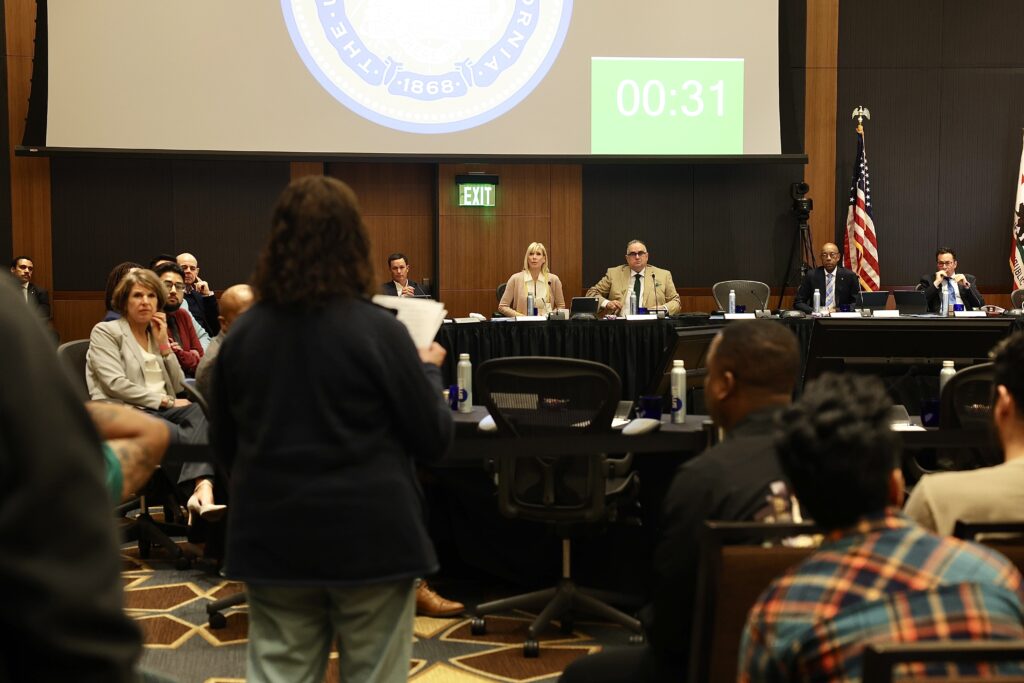
The University of California's board of regents, for example, has been engaged in discussions about a policy that would restrict faculty from using certain university websites for opinionated and political statements, sparking considerable debate within the academic senate.
Institutional Responses and Emerging Trends
Universities across the globe are responding to these challenges in diverse ways, reflecting a spectrum of approaches to free speech and institutional responsibility.While some institutions are tightening restrictions, others are striving to uphold broad protections for academic inquiry.
Varied Policy Landscapes
A survey of various universities reveals a wide range of policies.Some states have laws mandating political neutrality for educational institutions, while others offer robust support for free speech, albeit with specific conditions.
Interestingly, these restrictions are not confined to any particular political leaning of a state; they appear in both "blue" and "red" states, indicating a broader societal pressure on academic institutions.
High-profile universities are often under intense pressure from external stakeholders, including members of Congress and national advocacy groups, to address faculty speech on controversial topics.
This external pressure can influence internal policy development and enforcement.
The Barnard College Example
Barnard College, a private institution, made headlines for its decision to monitor and, in some cases, remove pro-Palestinian statements from its websites, deeming them overly political.This move drew widespread condemnation from those who viewed it as an attack on academic freedom.
The college subsequently revised its policies regarding political activity and the content permissible on college-owned websites.
Under these revised policies, faculty are generally barred from making political statements on any Barnard website or social media accounts that bear the college's name.
The University of Southern California and the University of Virginia
Other universities, like the University of Southern California, have policies that prohibit the use of university logos, graphics, or websites to express political positions.Their faculty handbook emphasizes that faculty members speaking or writing as citizens must clearly indicate that they are not speaking on behalf of the university, as the public may judge the institution by their statements.
Similarly, the University of Virginia advises faculty against posting political positions on university-owned websites in a way that implies institutional endorsement.
The University of Chicago's Approach
In contrast, the University of Chicago has stated that its faculty are free to speak or issue statements in their individual capacities, including on their individual faculty webpages hosted by the university.This approach emphasizes individual expression while implicitly acknowledging the potential for such speech to be interpreted as personal rather than institutional.
The Role of Academic Freedom Organizations
Organizations dedicated to advocating for free speech and academic freedom play a crucial role in these ongoing debates.They often advise universities to involve faculty leaders in the development of policies concerning academic freedom and political speech, arguing that such policies should not be unilaterally imposed by boards or administrators.
The American Association of University Professors (AAUP)
The AAUP, for instance, advises universities to collaborate with faculty leaders when crafting policies related to academic freedom, including those governing political speech.They emphasize that these policies should be developed through a consultative process, ensuring faculty input and buy-in.
The Foundation for Individual Rights and Expression (FIRE)
FIRE, another prominent organization, advocates for the protection of free speech for faculty, staff, and students.They encourage university administrators and trustees to remain institutionally neutral and to protect speech and academic freedom in all circumstances, even when that speech is controversial.
Challenges and Future Directions
The complexities of free speech on university campuses are amplified by the deeply divisive nature of global conflicts.Remaining neutral in such situations can itself be perceived as a political stance, placing administrators under immense pressure.
The larger the controversy, the greater the pressure on university leaders, potentially leading them to seek ways to silence speech rather than reaffirm core principles of free expression.
The "Chilling Effect" on Discourse
The existence of restrictive policies and the potential for disciplinary action can create a "chilling effect" on faculty speech.Faculty members may self-censor, fearing that their discussions or statements on controversial topics could lead to complaints or repercussions.
This is particularly concerning when faculty are discussing subjects that fall within their area of academic expertise.
For example, a professor specializing in Middle Eastern studies might feel hesitant to discuss the historical context of the Israel-Hamas conflict in their lectures for fear of violating a vaguely defined policy on public policy controversies.
Viewpoint Discrimination Concerns
A significant concern raised by advocates is the potential for viewpoint discrimination.They observe that when departments issue statements on issues like police brutality, many universities do not clamp down.
However, when it comes to other political views, especially those that are critical of certain governments or policies, institutions may be more inclined to restrict or suppress such speech.
This perceived inconsistency suggests that universities might be making subjective judgments about which political views are acceptable and which are not, which is a form of viewpoint discrimination.
The Importance of Clear Policies
The lack of clear definitions within university policies, such as the term "public policy controversy," can lead to ambiguity and inconsistent application.This ambiguity can create uncertainty for faculty and make it difficult to understand the boundaries of acceptable speech.
For instance, a proposed bill regarding firearms on campus could be considered a public policy controversy, and faculty might debate whether a resolution opposing it would violate policy.
The administration's interpretation of whether such legislation directly impacts university operations can determine the outcome.
Conclusion
The intersection of faculty free speech, university policy, and global conflicts presents a profound challenge for higher education.While universities are committed to fostering open inquiry and academic freedom, they must also navigate complex institutional responsibilities and societal pressures.
The ongoing debates surrounding the Israel-Hamas war highlight the critical need for clear, consistent, and fair policies that protect both individual expression and the integrity of the academic environment.
As educators and institutions continue to grapple with these issues, the pursuit of knowledge and the robust exchange of ideas must remain at the forefront, ensuring that universities continue to be beacons of intellectual freedom for students and faculty alike.
The ability to speak freely, without fear or favor, is fundamental to the advancement of knowledge and the enduring mission of higher education.




 Explore AI Teaching Tools
Comments (0)
Please login to comment
No comments yet
Be the first to comment on this article