
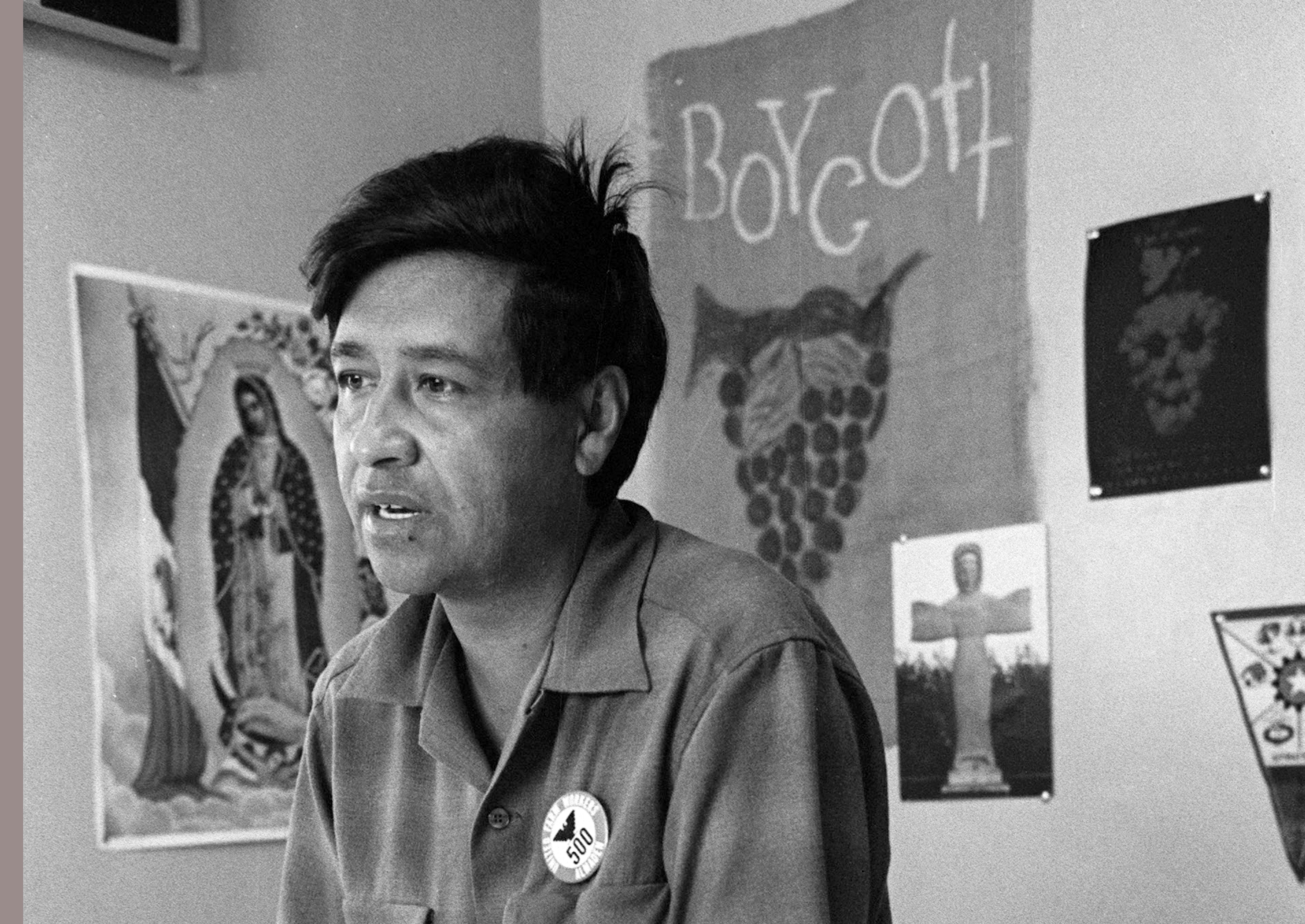
California Schools Confront Legacy After Abuse Allegations Surface Against Labor Icon
A seismic shift is underway in California's educational landscape as schools grapple with the fallout from deeply disturbing allegations of sexual abuse against a revered historical figure. The swift removal of symbols honoring César Chávez from campuses across the state signals a profound reckoning, prompting urgent conversations about how to address historical complexities and protect students.
A Reckoning on Campus: Symbols Fall Amidst Painful Truths
Within days of allegations surfacing, Fresno State University saw a statue of César Chávez removed, a move quickly followed by the appearance of signs highlighting accusations of sexual abuse against him. These signs bore the powerful statement of Dolores Huerta, a co-founder of the United Farm Workers, who detailed her own experiences of sexual abuse by Chávez, alongside other women and girls, decades ago.
The initiative at Fresno State stemmed from a "marathon texting conversation" among faculty and staff in the Women's, Gender and Sexuality Studies department. Professor Larissa M. Mercado-López, who chairs the department, explained their motivation: "We really wanted to center her voice and story, and shift the focus of the conversation to violence against women, because it is ongoing."
This response is part of a broader movement across California schools, where educators and students are confronting the uncomfortable reality of a historical figure's alleged misconduct. The timing is particularly poignant, as the state was set to formally recognize March 31st as César Chávez Day, a day now shadowed by these serious allegations.
Beyond Symbols: The Imperative for Deeper Dialogue
The rapid pace of change—from renaming buildings to removing murals—raises a critical question for many educators: Is the removal of symbols enough? Or must schools move beyond symbolic gestures to confront the underlying issues of power, historical legacy, and the pervasive reality of sexual violence?
"To me, I’m less concerned about the speed with which we are responding, and more concerned about what we are doing afterward," Mercado-López stated. "Removing a statue is simply removing a symbol of someone whose actions don’t align with our values. What next? Now that we have this information, what will we do in accordance with our values?"
This sentiment underscores a growing demand for educational institutions to foster environments where difficult truths can be explored, and where the safety and well-being of students are paramount. The challenge lies in navigating these complex issues without diminishing the legitimate achievements of movements that have brought about significant social change.
Navigating the Nuances of Historical Figures
History professor Miroslava Chávez-García from UC Santa Barbara cautions against equating César Chávez's alleged actions with the entirety of the labor movement he helped lead. "It could be a really easy excuse to say this whole movement was for nothing, or this whole movement was based on a lie or abuse of power," she noted.
The rights and protections secured for farmworkers, Chávez-García emphasized, are substantial and far-reaching, representing a legacy that transcends any single individual. The movement's origins are rooted in the courageous actions of Filipino farmworkers who initiated a strike in 1965 to protest meager wages in California's grape fields. Mexican farmworkers joined weeks later, united under the leadership of Dolores Huerta and César Chávez.
While Chávez became the most recognizable face of the movement, his name and image have been deeply embedded in the fabric of California's educational system for decades, adorning school buildings, scholarships, murals, statues, and street signs.
Empowering Students Through Honest Conversations
Jeff Duncan-Andrade, a professor at San Francisco State University, sees this moment as a critical opportunity for educators to engage students in profound discussions about challenging topics, including sexual violence. He argues that making curriculum or renaming decisions without student input risks addressing symptoms rather than root causes.
"What we effectively end up doing is handing out aspirin," Duncan-Andrade explained, borrowing an analogy from human rights lawyer Bryan Stevenson. Aspirin, he noted, offers temporary relief but doesn't solve the underlying problem. True progress, according to Stevenson, requires confronting painful history head-on.
Engaging in these difficult conversations—whether about allegations against historical figures, founding fathers, or contemporary leaders—is essential for cultivating "critically engaged democratic citizens." Duncan-Andrade recently advised a graduate student preparing to teach about the Chávez allegations, emphasizing the importance of honesty and avoiding definitive pronouncements.
"It’s more incumbent on us to have the courage and the integrity to just tell the truth to children," he urged. This approach allows students to grapple with complexity and develop their own informed perspectives.
Students themselves are echoing this sentiment. Manjot Dhanda, a senior at Fresno State, wrote for the university's student publication, "Students aren’t satisfied with simplified versions of history anymore. They expect institutions to be honest, especially when that honesty is uncomfortable."
Supporting Students Through Trauma and Truth
Discussions surrounding sexual abuse require careful guidance and robust support systems for students, many of whom may have personal experiences that surface during these conversations. Organizations dedicated to preventing sexual violence are stepping up to provide resources and facilitate these sensitive dialogues.
Luke O’Quinn, who manages the violence prevention division at Peace Over Violence, a nonprofit advocating against sexual, domestic, and interpersonal violence, highlighted their readiness to address students' questions. Their work includes summer institutes for teenagers focused on preventing dating violence, understanding power dynamics, and fostering healthy relationships.
During the school year, Peace Over Violence supports students in campus-based "Students Together Organizing Peace" (STOP) clubs. O’Quinn stressed the importance of emotional regulation skills in their curriculum, acknowledging that these topics can evoke a wide range of emotions.
"Conversations on the Chávez allegations 'could bring up past experiences that are uncomfortable for them, so we want to be very mindful of how this is landing, give them time and space to process and heal, but also give them the knowledge and information to learn and help identify what these behaviors are,'" O’Quinn explained.
Some students are aware of the allegations but may need time to process the news. O’Quinn noted that students at a school in Boyle Heights, where a main boulevard is named after Chávez, regularly face significant challenges, including immigration raids and exposure to gang violence, making these conversations particularly sensitive.
The Path Forward: Reassurance and Rebuilding Trust
The swiftness of institutional responses has been notable. At Southwestern College in San Diego County, "César E. Chávez" signage was removed from the student services center within two days, and the annual event honoring his legacy was canceled. The college's board of trustees is also moving to rescind a resolution recognizing César Chávez Day.
"Chávez’s reputation—that’s irrelevant to me. It’s the people that we protect," stated Robert Moreno, a trustee on the college's governing board. "We want students to walk away from this moment not discouraged but reassured that the institution will act when it matters, and we are choosing to use this as a learning opportunity even though we wish it hadn’t come to us this way."
While some praise the rapid changes, others express skepticism, particularly in light of unresolved cases of sexual abuse involving other prominent figures. Mercado-López of Fresno State noted that removing physical objects or renaming institutions can be a way to deliver justice in contexts where it has been slow or absent.
Chávez-García suggests that the swift and uniform response may be influenced by the numerous precedents of similar allegations and institutional reactions in other sectors, such as the Catholic Church and professional sports. "There’s precedent, because this has happened so many times. It’s not like we’re fumbling in the dark," she observed.
Ultimately, educators agree that the work must extend far beyond symbolic removals. "Our responsibility as the institution is to first listen and acknowledge those concerns directly and prioritize and reaffirm that student safety is not negotiable," Moreno emphasized. "We are also creating safe space for dialogue, because policy has to start with trust."




 Explore AI Teaching Tools
Comments (0)
Please login to comment
No comments yet
Be the first to comment on this article