
Unlocking Potential: The Expansive Role of Adult Education Within K-12 Campuses
Discover how adult education programs, often discreetly situated within K-12 school grounds, offer a profound and multifaceted impact far beyond initial assumptions.
These vital initiatives empower adults, strengthen families, and enrich the entire educational ecosystem, proving that learning is a lifelong journey with far-reaching benefits for students of all ages.
The Unseen Pillars: Core Offerings of Adult Education
Within the familiar landscape of K-12 schools, a powerful yet often overlooked sector thrives: adult education.
These programs are designed to serve individuals aged 18 and above, providing essential pathways to personal and professional growth.
They are instrumental in equipping adults with the foundational skills and knowledge necessary to navigate an increasingly complex world.
The core curriculum typically encompasses several critical areas.
For many, the journey begins with English as a Second Language (ESL) instruction, a crucial stepping stone for individuals seeking to integrate more fully into their communities and the workforce.
Beyond language acquisition, adult education offers pathways to formal academic achievement.
This includes Adult Basic Education (ABE) and Adult Secondary Education (ASE), which provide opportunities for students to earn their high school diplomas or prepare for equivalency exams like the GED.
These programs are vital for individuals who may not have completed their secondary education earlier in life, offering them a second chance to achieve this significant milestone.
Furthermore, a significant component of adult education is dedicated to Career Technical Education (CTE).
These short-term, focused programs are designed to equip adults with in-demand skills for specific vocational fields.
They offer a direct route to employment or career advancement, responding to the evolving needs of the job market.
The goal is to provide practical, hands-on training that can lead to immediate economic benefits for students and their families.
Beyond the Classroom: Adult Education as a Community Catalyst
The influence of adult education extends far beyond its direct student population, acting as a crucial connector and resource hub for the entire K-12 school community.
These programs often embody the principles of community schools, fostering stronger ties between educational institutions and the families they serve, even before the term "community school" gained widespread recognition.
Adult education staff frequently serve as invaluable liaisons, bridging gaps that might otherwise prevent parents from actively participating in their children's education.
They are instrumental in ensuring that parents are aware of and encouraged to attend important meetings, such as the District English Language Advisory Committee (DELAC).
At these gatherings, parents have the opportunity to voice their needs and help shape how funds are allocated to support English learners, directly impacting the educational experience of their children.
This active involvement empowers parents and ensures that educational strategies are responsive to the diverse needs of the student population.
Moreover, adult education programs often act as vital conduits to external support services.
They frequently connect parents with immigration attorneys, financial literacy workshops, and other essential resources that can significantly improve their quality of life.
This holistic approach recognizes that a student's success is deeply intertwined with the well-being and stability of their family.
By providing these wraparound services, adult education fosters a more supportive environment for both parents and their K-12 students.
Synergistic Benefits: How Adult Education Elevates K-12 Students
The positive ripple effects of adult education are profoundly felt by students within the K-12 system.
For immigrant families, the challenges of navigating a new country and educational system are often shared.
When parents participate in ESL classes and learn about the intricacies of the school system, it directly benefits their children.
This understanding allows parents to better support their children's academic progress, communicate more effectively with teachers, and advocate for their child's needs.
The provision of short-term CTE programs for parents is another powerful example of this synergy.
Once parents gain a stronger command of the language and feel more comfortable within the educational environment, they can transition into career training.
For instance, programs like Integrated Education and Training (IET) in fields such as medical assistance can lead to improved job prospects and increased family income.
This financial stability creates a more secure home environment, which in turn positively impacts a child's ability to focus on their studies and thrive in their K-12 schools.
A more stable family structure is a fundamental building block for a child's educational success.
Furthermore, adult education plays a critical role in addressing student attrition within K-12.
Despite robust support systems, some students may face circumstances that lead them to leave school before graduation.
Adult schools provide a crucial safety net, offering these students a welcoming environment to return and complete their high school diploma or earn their equivalency.
This ensures that every student has the opportunity to achieve their educational goals, regardless of when or how they pursue them.
Navigating Challenges: The Resilience of Adult Education Funding
The inherent flexibility and adaptability of adult education programs, while a strength, have also made them vulnerable during times of fiscal constraint.
Historically, when state budgets face pressure, adult education funding is often among the first to be reduced.
Studies indicate that during economic downturns, such as the period around 2008-09, significant cuts were imposed, leading to a substantial decrease in program availability and resources.
In some instances, funds originally designated for adult education were reallocated to support K-12 programs, further diminishing the capacity of adult learning initiatives.
This practice, while perhaps intended to address immediate K-12 needs, had a detrimental long-term effect on adult education services.
By 2013-14, legislative efforts were made to restructure funding, moving away from categorical programs and encouraging consortia models that brought together community colleges and K-12 adult schools.
The aim was to preserve the adult education system by fostering collaboration and shared resources.
However, the transition to these new funding structures often meant operating with significantly reduced budgets compared to earlier years.
This historical context explains why adult educators may react with apprehension to the term "flexibility" when it implies potential budget cuts or resource reallocation.
Despite these challenges, the commitment to adult education remains strong.
A Beacon of Support: Sustained Investment in Adult Learning
Despite the historical funding fluctuations, there is encouraging news regarding the ongoing support for adult education.
Research indicates that in recent years, the budget allocated to adult education has seen growth, reflecting a renewed recognition of its value.
This sustained investment is crucial for ensuring that these vital programs can continue to serve their communities effectively.
While some reports may question the efficacy of certain funding structures, the educators on the front lines are keenly aware of the comprehensive support they provide.
They understand that their impact extends far beyond traditional classroom instruction, offering a wide array of wraparound services that benefit both adults and the children attending K-12 schools.
By actively communicating the breadth and depth of these services, adult educators aim to cultivate greater respect and secure the long-term sustainability of their programs.
The fundamental goals of adult education are widely acknowledged and supported.
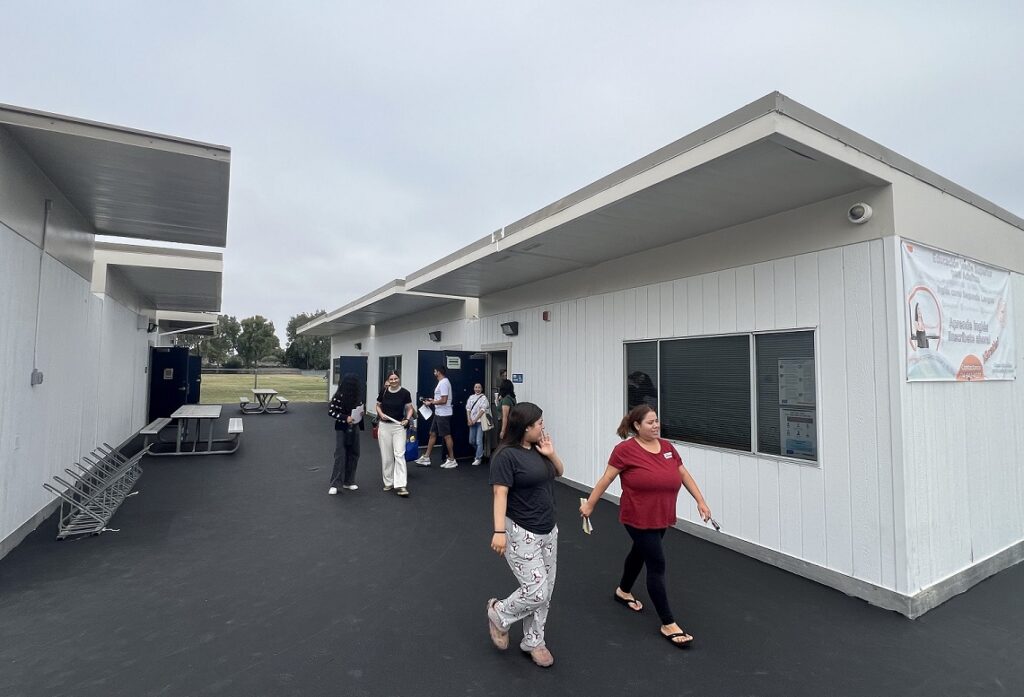
Even if many K-12 educators are not fully aware of the specific activities taking place in the dedicated spaces for adult learners on their campuses, the value proposition is clear.
These programs are strategically located within K-12 districts, making them accessible to the parents of current students.
This proximity is a significant advantage, fostering a sense of connection and encouraging participation.
The Enduring Value: Adult Education's Integral Role
The presence of adult education programs within K-12 campuses is a testament to their enduring value and integral role in the educational landscape.
They are more than just classrooms; they are centers of opportunity, empowerment, and community building.
The dedication of adult educators, often working in unassuming spaces, is instrumental in transforming lives and strengthening the fabric of our communities.
These programs offer a critical pathway for individuals seeking to improve their language skills, earn a diploma, or acquire new career competencies.
The impact on families is profound, leading to greater financial stability and improved parental engagement in K-12 schools.
By providing these essential services, adult education not only benefits the adults themselves but also creates a more supportive and enriching environment for the students who attend the schools that house them.
The commitment to lifelong learning, facilitated by these dedicated programs, is an investment in a brighter future for all.





 Explore AI Teaching Tools
Comments (0)
Please login to comment
No comments yet
Be the first to comment on this article