
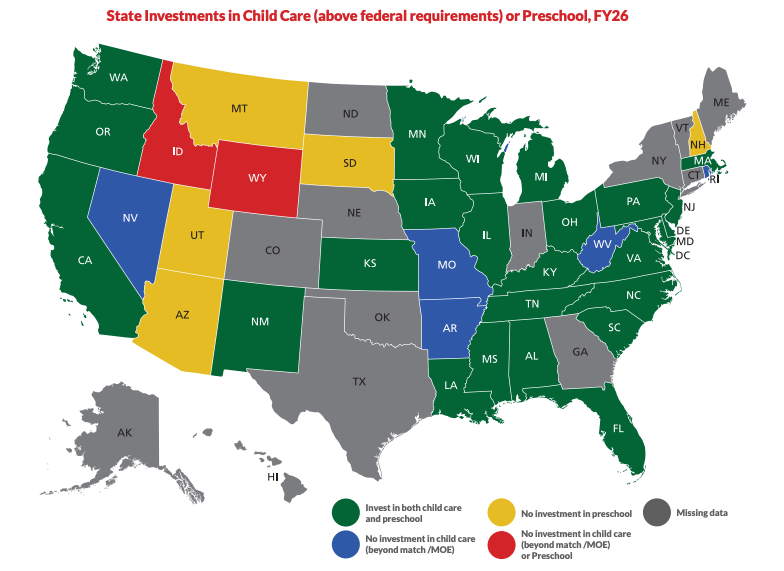
Access to quality early care and education, a cornerstone for child development and family economic stability, is increasingly becoming a postcode lottery. A stark reality is emerging: the amount of money a state dedicates to its childcare and preschool systems directly dictates the availability and affordability of these crucial services for its residents. This disparity has profound implications for educators, policymakers, and, most importantly, the children and families who rely on these systems every single year.
The Uneven Landscape of State Childcare Funding
Despite federal efforts to bolster early childhood education, the reality on the ground is a patchwork of vastly different investment levels across the states. While federal funding often requires a minimum state match, many states contribute only that baseline, leaving significant gaps in what families can access. This lack of additional state commitment is not merely an abstract budgetary issue; it directly translates into fewer childcare slots, higher costs for parents, and diminished quality of care.
A critical report from Child Care Aware of America, analyzing fiscal year 2026 state funding for childcare and preschool, revealed that seven states – Arkansas, Idaho, Missouri, Nevada, Rhode Island, West Virginia, and Wyoming – contribute no additional funds beyond the federal minimum. Furthermore, a separate group of states, including Arizona, Idaho, Montana, New Hampshire, South Dakota, Utah, and Wyoming, fail to invest more in preschool than is strictly mandated.
“What we want is that, if and when families need it, there’s childcare that’s available, that’s affordable and high quality. We’re seeing a lot of gaps in that promise right now.”
— Anne Hedgepeth, Senior Vice President of Policy and Research, Child Care Aware of America
The reasons behind these funding disparities are complex, often rooted in political considerations and the perennial challenge of balancing state budgets each year. The expiration of federal funding from the American Rescue Plan Act, which provided a significant infusion of resources, has exacerbated the situation. Coupled with reduced tax revenues and federal program cuts, many states are facing tough choices that disproportionately affect early childhood education.
The Ripple Effect: Declining Supply and Rising Costs
The direct consequence of insufficient state funding is a tangible decline in the supply of licensed childcare centers. After a period of growth following the pandemic, fueled by temporary federal investments, the number of available slots has begun to shrink. This trend is particularly concerning as nearly half of American children already live in areas designated as childcare deserts.
When states fail to adequately reimburse providers for the actual cost of care, it creates a precarious financial situation for these vital businesses. This often leads to decisions to close classrooms or entire programs, further diminishing the available supply. The impact is a frustrating cycle for parents struggling to find care and for providers fighting to stay afloat.
This lack of investment also means that states are often unable to expand their subsidy programs to reach all eligible families, or even to serve those already on waiting lists. The result? More parents are forced to pay out-of-pocket for care, a burden that can be insurmountable for many.
The Growing Challenge of Childcare Waitlists
A significant indicator of the growing crisis is the proliferation of childcare waitlists. Over a dozen states have recently implemented or expanded these lists, a clear sign that demand for care far outstrips supply. This situation leaves families in limbo, uncertain about when or if they will be able to secure reliable care for their child.
These waitlists not only create immense stress for parents but also negatively impact childcare providers. The inability to enroll new families can threaten the financial stability of programs, leading to closures and a further reduction in the overall childcare infrastructure. The entire system, from families to providers, suffers under the strain of inadequate funding.
Disparities in Spending Per Child
The financial commitment to early care and education varies dramatically from state to state, creating an uneven playing field for families. Analysis of total investments for children under age five across 37 states revealed a staggering range in per-child spending, from less than $500 to over $5,000. This disparity highlights how the state a child is born in can significantly influence their access to foundational learning opportunities.
Washington, D.C., stands out as a high spender, while eleven other states invest between $1,500 and $9,900 per child. These differences underscore the critical role state-level policy and funding decisions play in shaping the early childhood landscape.
“We do have really different experiences state-to-state, based in part, on what states are putting into their childcare and early learning systems.”
— Anne Hedgepeth, Senior Vice President of Policy and Research, Child Care Aware of America
Families who move between states often find themselves navigating vastly different systems, a disorienting and challenging experience. More broadly, these disparities hinder the national goal of ensuring all children arrive at kindergarten ready to learn, as readiness levels are heavily influenced by the quality and availability of early care and education.
Navigating the Fiscal Cliff Ahead
The current landscape of childcare funding is poised to become even more challenging. State budgets are anticipating a difficult period, partly due to the absorption of cuts from federal legislation like the One Big Beautiful Bill Act, which significantly reduced funding for programs such as SNAP and Medicaid. There is a palpable concern that states may feel compelled to further reduce their investments in childcare and early childhood education to offset these reductions.
While some states have begun to address these issues in recent legislative sessions, the full impact of these fiscal pressures is likely to be felt in the coming year’s legislative sessions. This outlook suggests a period of significant strain for early childhood education systems across the country.
A Glimmer of Hope: Room for Improvement
Despite the concerning trends, there are signs that some states are recognizing the need for greater investment. Nearly two-thirds of governors have discussed childcare and early childhood education in their state of the state addresses this year, indicating a growing awareness of the issue. Furthermore, all states are currently meeting the federal match requirement for childcare funding, a baseline that was not always met in previous years.
However, the movement is not uniformly positive. Child Care Aware of America’s data indicates that six states – Florida, Kansas, Kentucky, North Carolina, New Hampshire, and Rhode Island – actually decreased their own spending on childcare and preschool in fiscal year 2026 compared to the previous year. West Virginia also shifted from investing in childcare in fiscal year 2025 to not doing so in fiscal year 2026.
Actionable Insights for Educators and Advocates
The disparities in childcare funding present both challenges and opportunities for educators and advocates. Understanding the funding landscape in your specific state is the first step toward effective advocacy. This involves:
- Researching State Budgets: Familiarize yourself with your state's budget allocation for early childhood education and childcare. Look for reports from organizations like Child Care Aware of America and your state's specific child care resource and referral agency.
- Identifying Funding Gaps: Pinpoint where your state falls short in meeting the actual costs of care or in expanding access to subsidies. This data can be powerful when presented to policymakers.
- Engaging with Legislators: Reach out to your state representatives and senators to share the impact of funding decisions on families and providers in their districts. Personal stories and data are most effective.
- Building Coalitions: Connect with other educators, parents, and advocacy groups to amplify your message and create a united front for increased investment.
- Leveraging Federal Opportunities: Stay informed about federal initiatives and funding streams that can supplement state efforts.
For educators, the current environment underscores the importance of efficient and engaging teaching practices. Tools that maximize instructional time and student engagement are invaluable. Platforms offering AI lesson plan generation and AI grading can free up precious time for educators to focus on direct student interaction and advocacy efforts. Similarly, utilizing MentofyCove classroom games can boost student participation and learning retention, making the most of every instructional moment.
The Path Forward: A Call for Equitable Investment
The evidence is clear: access to early care and education is deeply intertwined with state-level financial commitments. The current uneven system leaves too many children without the foundational support they need to thrive, impacting their readiness for kindergarten and their long-term educational trajectories. This is not just an issue for parents; it's a matter of national importance for the future of child development and economic prosperity.
The call to action is direct and urgent: increased investment is needed to grow the supply of high-quality, affordable childcare. Congress has the power to act by increasing funding for these essential programs, building on past bipartisan support. Closing the existing gap requires a concerted effort to ensure that every child, regardless of their ZIP code, has the opportunity for a strong start in life.




 Explore AI Teaching Tools
Comments (0)
Please login to comment
No comments yet
Be the first to comment on this article