
Skyways of Tomorrow: Malaysia Charts Course for the Low Altitude Economy
Imagine a future where vital medicines are whisked across cities by silent drones, emergency responders bypass gridlock to deliver life-saving supplies, and swift "flying taxis" ferry passengers above the urban sprawl. This vision, once confined to science fiction, is rapidly becoming a tangible reality, with governments and aviation authorities worldwide already embarking on ambitious experiments.
In bustling metropolises across the United States and China, drones are already a common sight, delivering everything from meals and groceries to critical medical packages. Meanwhile, in Dubai, pilotless air taxis are on the cusp of transforming commutes, promising journeys from shopping malls to airports in mere minutes. This burgeoning sector, known as the Low Altitude Economy (LAE), is poised to redefine transportation, logistics, public services, and industry by harnessing the airspace typically below 1,000 metres.
As the Civil Aviation Authority of Malaysia (CAAM) prepares to host a pivotal forum on this subject, understanding the LAE is no longer a niche concern but a crucial insight into aviation's most dynamic frontier. This guide delves into what the Low Altitude Economy truly entails, the compelling reasons behind global investment, and its profound implications for our future.
Unlocking the Airspace: What is the Low Altitude Economy?
The Low Altitude Economy encompasses a spectrum of economic activities that leverage the airspace situated significantly below conventional commercial aircraft routes. Typically operating below 1,000 metres, this domain is the exclusive territory of technologies like drones, unmanned aircraft, and the forthcoming generation of electric air vehicles.
This new layer of economic activity unfolds above our roads and buildings but remains well beneath the flight paths of commercial airplanes. Instead of relying on cars, trucks, and motorcycles to move goods on the ground, the LAE envisions a substantial portion of this movement migrating to the skies.
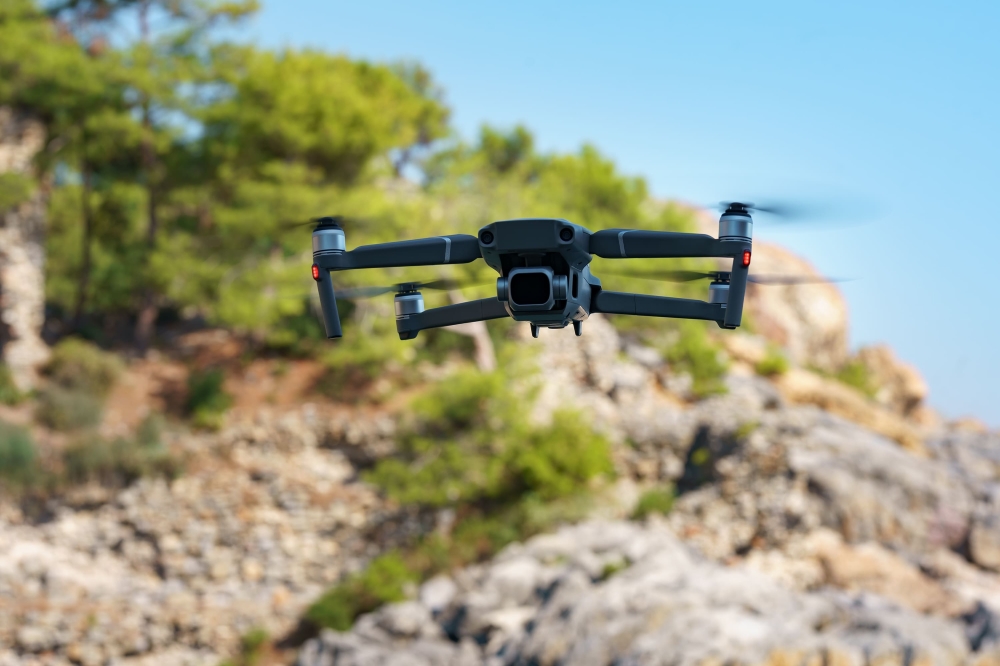
The applications are vast and varied, ranging from delivery drones and agricultural drones used for crop monitoring and spraying, to drones employed for infrastructure inspection, mapping, surveying, and critical emergency and medical services. Most recently, the spotlight has turned to pilotless aircraft known as Electric Vertical Take-Off and Landing (eVTOL) vehicles, colloquially termed "flying taxis."
Transforming Daily Life: The Drone Revolution
For the average consumer, the most immediate impact of the LAE will likely be felt in logistics. Imagine receiving a parcel, a meal, or essential supplies delivered directly to a designated point by a drone, bypassing traffic congestion, tolls, and parking woes in a fraction of the time.
In geographically challenging regions, such as parts of Malaysia where villages are isolated by rivers, mountains, and poor road infrastructure, drones offer a lifeline. They can transport medicines, vaccines, and emergency supplies with unprecedented speed, far surpassing the capabilities of traditional vehicles.
Emergency services stand to gain immensely, with the rapid deployment of drones carrying vital medical equipment, advanced communication devices, or sophisticated search-and-rescue technology. For states like Sabah, this could translate into life-saving interventions that go far beyond mere convenience.
Beyond Deliveries: Industrial and Public Service Applications
The industrial applications of drones within the LAE are equally significant. In Malaysia, drones are already integral to the operations of energy companies, used for meticulous inspections of pipelines and power lines. Plantation operators leverage them for precise crop monitoring and targeted spraying, dramatically enhancing efficiency and sustainability.
Surveyors are also embracing drone technology for detailed mapping, land management, security operations, and aerial photography. These unmanned aircraft are proving indispensable across sectors like agriculture, infrastructure maintenance, and surveillance, streamlining processes and improving outcomes.
The Dawn of Flying Taxis: eVTOLs Take Flight
Perhaps the most captivating aspect of the LAE is the rapid development of eVTOL aircraft, often dubbed "flying cars." These innovative, electrically powered aircraft are designed for vertical take-off and landing, akin to helicopters, but operate with significantly reduced noise, at lower altitudes, and with more economical running costs.
Across China, the United States, Europe, and the Middle East, substantial investments, running into billions of dollars, are fueling the development of commercial passenger services utilizing eVTOLs. Several entities are now on the verge of making these services a reality.
Global Pioneers in Urban Air Mobility
In China, multiple companies are actively testing and deploying these vehicles, with current applications focusing on trial flights, scenic tours, and pre-programmed fixed-route journeys in cities like Hefei and Guangzhou. Some eVTOL aircraft have already secured approvals from the Civil Aviation Administration of China (CAAC), bringing commercial operations closer than ever.
Dubai has taken a significant leap forward, completing the construction of its inaugural air taxi station. Operations are anticipated to commence later this year, with the facility reportedly designed to accommodate up to 42,000 landings and 170,000 passengers annually.
These fully electric, zero-emission eVTOLs are envisioned to carry up to four passengers and a pilot, reaching speeds of up to 320 km/h. The initial phase of Dubai's service aims to connect four key locations, including the international airport, downtown, Palm Jumeirah, and Dubai Marina, with fares projected to be comparable to premium ground transportation services.
Such journeys are expected to slash travel times dramatically, reducing commutes from approximately 45 minutes to a mere 10 to 15 minutes. This form of urban air mobility holds the potential to alleviate congestion and provide rapid transit links between airports, business hubs, and suburban districts. While these vehicles typically accommodate a smaller number of passengers per trip, typically up to six for short distances, larger models are being developed to carry up to ten.
Malaysia's Strategic Position in the Emerging Industry
Globally, the LAE sector is still in its nascent stages, leading to a wide variance in market size estimates. China has proactively integrated the Low Altitude Economy into its national development strategies, transitioning from development to deployment. In contrast, many Western companies are still navigating the complex processes of certification, testing, and commercial rollout.
The United States is actively conducting urban air mobility trials through its aviation regulators and private sector partnerships. The European Union, meanwhile, is developing sophisticated "U-space" systems designed to safely manage a high density of drones operating within shared airspace in countries like Germany, Italy, and France.
China projects its LAE market could reach a staggering 1.5 trillion yuan (approximately RM885 billion) in value, potentially exceeding two trillion yuan by 2030 and reaching 3.5 trillion yuan by 2035. Market research indicates a robust growth trajectory for air taxis, with the global market expected to expand from US$1.32 billion in 2024 to US$7.74 billion by 2033, exhibiting an impressive annual growth rate of 21.72 percent.
Financial analysts project that the global LAE generated US$4.6 billion in 2024, with forecasts suggesting it could reach US$8 billion to US$15 billion in 2025, US$23.5 billion by 2030, and an astounding US$210 billion by 2045. This 2030 projection represents a significant compound annual growth rate of 31.2 percent over five years.
While Malaysia has yet to release an official estimate for its LAE market potential, former Prime Minister Datuk Seri Ismail Sabri Yaakob previously highlighted the drone industry's capacity to contribute RM50.71 billion to the nation's gross domestic product and generate 100,000 job opportunities by 2030. Sarawak, in particular, has expressed keen interest in positioning itself to capitalize on this emerging market, exploring opportunities in drone logistics, smart city applications, and technology-driven industries.
Navigating the Skies: Existing Regulations in Malaysia
Malaysia is not entering this new domain without a foundation. Drone operations are already governed by CAAM under existing aviation regulations. These rules impose stringent restrictions on flight zones, altitude limits, pilot qualifications, safety protocols, and the necessary permissions for specific activities.
Under current regulations, operators must submit applications at least 14 days prior to their intended activity. Drones are generally restricted to a maximum altitude of 120 metres, must remain within the operator's visual line of sight, and are permitted to fly only during daylight hours.
CAAM mandates that drones must maintain a safe distance of at least 4.5 kilometres from airports and military bases, and are prohibited from restricted airspace. They must also remain at least 50 metres away from people, vehicles, vessels, or buildings. Flying directly over crowds exceeding 1,000 people is forbidden, as is the dropping of any objects or animals.
Furthermore, drones themselves must undergo certification by the Standard and Industrial Research Institute of Malaysia (Sirim) and operate on approved radio frequencies. Non-compliance can lead to substantial penalties, including fines of up to RM50,000 and imprisonment of up to three years for individuals, while companies face fines of up to RM100,000.
A Blueprint for the Future of Malaysian Aviation
Malaysia has strategically identified unmanned aerial vehicles (UAVs), advanced air mobility, and drone manufacturing and services as key growth sectors within the Malaysian Aerospace Industry Blueprint 2030 (MAIB 2030) and the Malaysia Drone Technology Action Plan 2022-2030 (MDTAP30). The overarching vision is to establish Malaysia as the premier aerospace and DroneTech hub in Southeast Asia.
These blueprints outline ambitious targets for applications in agriculture, including precision farming, infrastructure monitoring, security and surveillance, such as border control, and the crucial delivery of medical supplies to rural areas. Transport Minister Datuk Seri Anthony Loke has indicated that CAAM is actively developing a more comprehensive regulatory framework specifically tailored for the Low Altitude Economy, aiming to foster industry growth while upholding the highest safety standards.
Concerns and Challenges on the Horizon
Like any transformative technology, the LAE is met with both immense enthusiasm and considerable scepticism. While drones and flying taxis promise unprecedented speed and convenience, they also introduce a new set of challenges and risks, including the potential for mid-air collisions, aircraft failures, and significant privacy and security concerns.
As an increasing number of drones, delivery aircraft, and future air taxis share the same airspace, the possibility of collisions between aircraft, or with buildings, power lines, and other infrastructure, becomes a pressing issue. Regulators are particularly concerned about the implications of a technical failure in a passenger-carrying aircraft falling onto populated areas.
Unlike the highly regulated corridors of commercial aviation, the LAE could eventually involve thousands of aircraft operating simultaneously over urban environments. Even small drones pose a risk if they crash into people or vehicles, while larger cargo drones and passenger-carrying eVTOLs present greater dangers due to their weight and speed.
This raises critical questions about accountability in the event of accidents. Beyond physical safety, privacy concerns loom large, both digitally and in everyday life. Low-altitude aircraft rely heavily on software, GPS navigation, and wireless communications, making them potentially vulnerable to hacking, GPS spoofing, or signal interference, which could lead to hijacking or cyberattacks on air traffic management systems.
The integration of cameras, sensors, and imaging systems on drones also sparks public unease regarding aircraft frequently flying over homes, schools, and private properties. Debates are already underway in some countries concerning stricter regulations on data collection and photography by drone operators.
The Ultimate Hurdle: Affordability
Perhaps the most significant challenge facing the widespread adoption of the LAE is cost. Even with the most advanced technology, the entire edifice of future skyways will crumble if the services cannot be made affordable for the general population. While drone deliveries in some regions may already be cost-effective, air taxi fares remain prohibitively high for the average individual.
The Next Frontier Above Our Heads
In Malaysia, the Low Altitude Economy is still in its nascent exploratory phase. Regulators, industry stakeholders, and government bodies are actively grappling with complex questions surrounding safety, privacy, infrastructure development, and affordability before drones and air taxis can seamlessly integrate into daily life.
However, much like the internet in its early days, the global advancement of this technology is progressing at a pace that often outstrips public perception. As Malaysia begins to explore this previously untapped domain, the conversation is shifting from "if" such technology is possible to "how" best to ensure it serves the nation's and its people's needs effectively and responsibly.







 Explore AI Teaching Tools
Comments (0)
Please login to comment
No comments yet
Be the first to comment on this article