
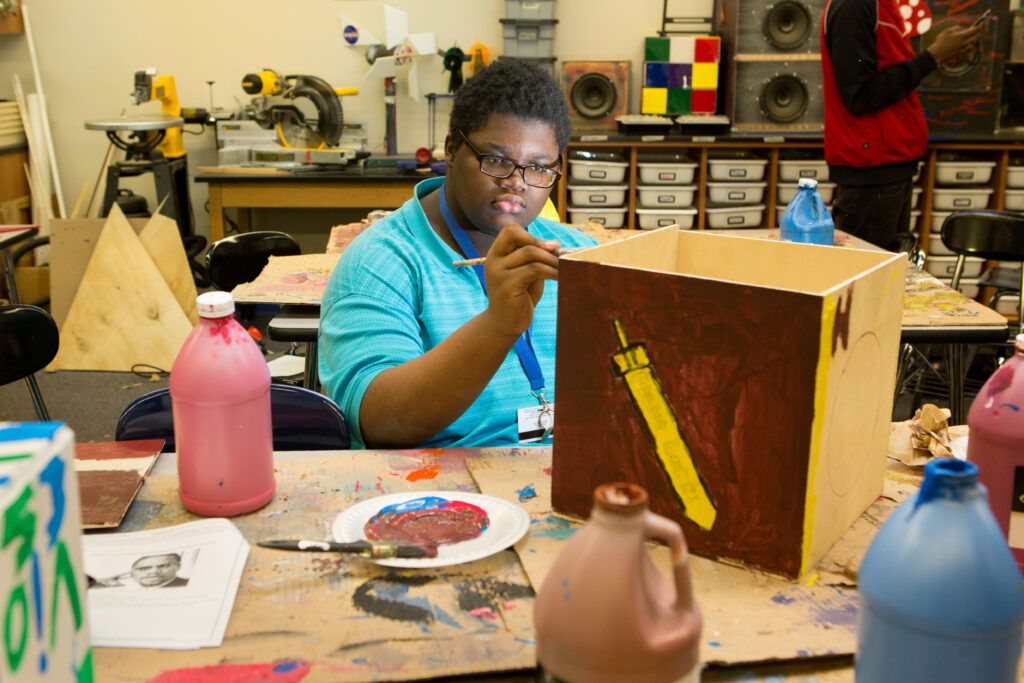
Unlocking Student Potential: The Vital Role of Media Arts in Modern Education
In today's rapidly evolving world, the definition of "arts" is expanding beyond traditional canvases and stages.
Media arts, encompassing a dynamic fusion of technology and creativity, is emerging as a cornerstone of a comprehensive education.
This article explores why these digital art forms are not just beneficial, but essential for students navigating the complexities of the 21st century, equipping them with critical skills for academic success, personal expression, and future careers.
1.
Defining Media Arts: Beyond Traditional Disciplines
Media arts represents a significant evolution in the landscape of artistic expression and education.
While often grouped with traditional disciplines like painting, sculpture, music, and theater, media arts carves out its own unique space by integrating technology as a fundamental component of creation and communication.
This field is characterized by its machine-based nature and its multimodal approach, engaging multiple senses and leveraging various media platforms.
At its core, media arts is about using technology to create, communicate, and explore.
This can manifest in a vast array of forms, from the visual storytelling of animation and video production to the interactive experiences of web design and digital graphics.
It's a discipline that inherently bridges the gap between the tangible world of artistic aesthetics and the ever-advancing realm of high-tech innovation.
This fusion allows students to access and engage with other art disciplines, enriching their understanding and practice across the entire spectrum of creative endeavors.
The Multimodal Nature of Media Arts
What truly distinguishes media arts is its multimodal and multisensory approach.
Unlike a purely visual art form or a solely auditory one, media arts often combines elements from both, and more.
For instance, a student creating a video project seamlessly merges audio and visual components, crafting a richer and more immersive experience.
This inherent interdisciplinarity allows for a deeper exploration of artistic concepts and provides students with a versatile toolkit for expressing complex ideas.
2.
Why Media Arts is Crucial for Today's Students
The imperative for students to master media arts is rooted in the fundamental realities of the world they inhabit and will inherit.
These vital forms of production and design are no longer niche skills but are becoming standard expectations in various educational settings and professional fields.
Equipping students with proficiency in media arts is paramount for several key reasons:
- Creative Expression: It empowers students to articulate their unique perspectives and ideas through compelling digital mediums.
- Academic Development: It enhances critical thinking, problem-solving, and analytical skills as students learn to deconstruct and create complex media messages.
- Career Preparation: It provides a strong foundation for a wide range of emerging and established careers in the digital economy.
- Critical Literacies: It cultivates the ability to analyze, interpret, and critically evaluate the vast amounts of multimedia information encountered daily.
In an era defined by constant digital interaction, understanding how media is constructed and consumed is as vital as traditional literacy.
This understanding is particularly significant in regions with thriving creative economies, where media arts areas are experiencing substantial growth and play a key role in societal evolution.
Navigating the Digital Landscape
Students today are bombarded with information from countless digital sources.
Media arts education provides them with the essential multiliteracies needed to not only consume this information but also to critically assess its validity and purpose.
This includes discerning fact from fiction, identifying misinformation, and understanding the persuasive techniques embedded within various media forms.
This critical engagement is fundamental for responsible citizenship in a digital age.
3.
Media Arts as a Distinct Genre: Reflecting Our Digital Society
The recognition of media arts as its own distinct genre is a testament to its profound reflection of our current digital society.
It moves beyond simply being a tool for other arts and establishes itself as a powerful medium with its own aesthetic principles, methodologies, and cultural impact.
This recognition is crucial for legitimizing the field and ensuring its robust integration into educational curricula.
By studying media arts, students are not just learning technical skills; they are developing a nuanced understanding of how messages are constructed, disseminated, and received in the contemporary world.
This prepares them to be not just passive consumers but active and responsible contributors to this evolving landscape.
They learn to construct their own messages, products, and experiences, thereby becoming empowered participants in society.
Preparing for an Evolving World
The rapid pace of technological advancement means that the media landscape is constantly shifting.
Media arts education provides a structured and supportive environment for students to grapple with these changes.
It equips them with the adaptability and critical thinking necessary to navigate new platforms, technologies, and communication paradigms.
This proactive approach ensures that students are not left behind but are instead at the forefront of digital innovation and cultural discourse.
4.
The Impact of Artificial Intelligence on Media Arts Education
The emergence of Artificial Intelligence (AI) presents a transformative, rather than a disruptive, force within the realm of media arts.
AI itself can be understood as a sophisticated media art form, characterized by its machine-based intelligence and its ability to generate multimodal outputs.
Consequently, AI is poised to become an integral aspect of media arts education and the broader industry.
Media arts education offers a crucial framework for students to engage with AI responsibly and effectively.
It provides a safe and rigorous environment where students can develop critical thinking skills necessary to manage and skillfully wield the power of AI.
This educational approach grounds the abstract capabilities of AI within the embodied practices of the arts, infusing it with aesthetics, culture, and humanistic values that AI inherently lacks.
This integration is essential for developing a comprehensive understanding of AI's potential and its ethical implications.
AI as a Tool and a Subject of Study
Students will learn to utilize AI as a powerful tool for creative production, enhancing their capabilities in areas like content generation, data analysis, and interactive design.
Simultaneously, they will study AI as a subject, critically examining its algorithms, biases, and societal impacts.
This dual approach ensures that students are not only proficient users of AI but also informed and ethical contributors to its development and application.
This becomes a major component of the multiliteracies required across media technology and digital culture.
5.
Practical Applications and Future Opportunities
The skills cultivated through media arts education translate directly into a wide array of practical applications and promising future career paths.
Students who engage deeply with these disciplines develop a portfolio of abilities that are highly sought after in today's job market.
These skills extend far beyond purely technical proficiency, encompassing creativity, problem-solving, collaboration, and communication.
Consider the following areas where media arts expertise is invaluable:
- Digital Content Creation: Producing engaging videos, animations, podcasts, and interactive media for various platforms.
- Web and App Development: Designing user-friendly and visually appealing websites and mobile applications.
- Graphic Design and Branding: Creating visual identities and marketing materials for businesses and organizations.
- Game Design and Development: Contributing to the creation of immersive and interactive entertainment experiences.
- Virtual and Augmented Reality: Developing cutting-edge immersive content and experiences.
- Digital Marketing and Social Media Management: Crafting compelling online campaigns and managing brand presence.
- Data Visualization: Translating complex data into understandable and engaging visual formats.
The demand for individuals who can effectively communicate and create in digital spaces is only expected to grow.
Media arts education provides students with the foundational knowledge and practical experience to thrive in these dynamic and expanding fields.
Fostering Innovation and Entrepreneurship
Beyond traditional employment, media arts education also fosters a spirit of innovation and entrepreneurship.
By learning to conceptualize, design, and produce their own digital projects, students gain the confidence and skills to pursue independent ventures.
They can develop their own creative businesses, launch innovative digital products, or contribute to the burgeoning creator economy.
This empowers them to be not just job seekers but also job creators, driving economic growth and technological advancement.
Conclusion
The integration of media arts into the educational fabric is no longer an option but a necessity.
It is a vital discipline that equips students with the critical thinking, creative expression, and technical proficiencies required to navigate and contribute to our increasingly digital world.
By embracing media arts, educational institutions empower students to become not only informed consumers of media but also adept creators, critical thinkers, and innovative problem-solvers, prepared for the challenges and opportunities of the 21st century and beyond.





 Explore AI Teaching Tools
Comments (0)
Please login to comment
No comments yet
Be the first to comment on this article