
Districts Pivot to Evidence-Based Innovation Amidst Budget Squeeze
In an era of unprecedented fiscal pressure, school district leaders are finding themselves at a critical juncture, tasked with making significant budget decisions with dwindling resources and little room for error. Yet, many are navigating these complex choices without robust evidence of what truly impacts student learning in their own classrooms. This isn't a failure of will, but a systemic challenge: few existing frameworks are designed to foster real-time learning and adaptation within the intricate ecosystem of a school district.
The Imperative for Smarter Bets in Education
For those at the helm of education, access to high-quality, actionable data is no longer a luxury but a necessity. Without a strong foundation of research, data, and collaborative networks, district leaders risk operating in isolation. This can lead to redundant efforts, with different schools or departments inadvertently testing similar strategies without a unified mechanism to discern what works, what falters, and the underlying reasons why.
Jillian Doggett, director of the League of Innovative Schools at Digital Promise, articulates this shift succinctly. "Right now, education research and development (R&D) isn’t about experimentation; it’s about making smarter bets with limited resources," she explains. The goal, Doggett emphasizes, is to embed R&D deeply within a district's operational fabric.
This means moving away from a top-down adoption model, where programs are rolled out district-wide before local leaders have gathered meaningful evidence of their efficacy and suitability. "R&D has to be embedded in a district’s DNA so that we are not making decisions based on assumptions of what we think works, or on what worked five or 10 years ago," Doggett adds.
Pioneering New Paths to Student Success
Dr. Robert Hill, superintendent and chief executive officer of the Springfield City School District in Ohio, champions a forward-thinking approach. He believes that genuinely meeting students' diverse needs requires venturing beyond established educational paradigms. For Hill, research and development serves as a vital engine for testing novel strategies, facilitating rapid learning, and generating robust evidence before scaling initiatives.
"Through R&D, we can think outside the box, build evidence through continuous improvement and then advance policy, with funding attached, that actually supports kids," Hill states, underscoring the direct link between innovation and student well-being.
District-Led Innovation in Action
Hill's conviction in the power of R&D to elevate student outcomes propelled him to join a national advisory group of district leaders. This collective is dedicated to making education research more responsive to the immediate needs of schools and students. Prioritizing research and development has already yielded tangible improvements within his district.
As part of a cohort focused on chronic absenteeism, Hill and his team collaborated with peer districts. They rigorously tested various strategies, meticulously analyzed real-time attendance data, and refined their approaches based on what was demonstrably influencing student engagement. Instead of relying on a single, unproven program or outdated assumptions, the district adopted an inclusive innovation model to pinpoint the most effective interventions.
"Research and development has helped us better engage our students," Hill shares. "By aligning student interests to career pathways and connecting that with labor market data, we are actually seeing forward progress on our academic outcomes." This data-driven, student-centered approach is transforming how the district addresses persistent challenges.
For Dr. Audra Pittman, superintendent of the Calistoga Joint Unified School District in rural California, engaging in education research and development is crucial for ensuring her district operates with an unwavering commitment to equity. Her philosophy of innovation is rooted in the principle that if current practices are not serving all students effectively, districts have a moral obligation to persistently explore and implement new solutions.
Through a structured research partnership, Pittman's district is actively investigating how families and school staff can collaborate more effectively. The aim is to cultivate a cohesive, district-wide engagement and support system built upon a co-design framework. This work goes beyond simply asking "does it work?" to probing deeper questions: "for whom does it work, under what specific conditions, and why?"
This collaborative partnership empowers Pittman's team to pilot new ideas thoughtfully, striking a delicate balance between fostering innovation and respecting the realities of limited time and human capacity. It’s a model that prioritizes learning and adaptation, ensuring that new initiatives are not only promising but also practical and impactful.
The Power of Collaboration in Scaling Success
Beyond the direct benefits of education research and development, Pittman highlights the profound impact of strong connections with peers across the nation. These collaborations are instrumental in transforming localized insights into widespread, systemic change. "There's a lot of good work that’s occurring across our nation," Pittman observes.
Through participation in a national learning network, leaders like Hill and Pittman engage in a continuous cycle of testing, sharing, and refining practices. This occurs within issue-focused cohorts, through innovative partnerships, and via regular in-person convenings. As a superintendent managing the demands of a busy district, Pittman understands the challenge of identifying new methods that can be trusted and effectively implemented.
Engaging with fellow leaders who are actively testing emerging approaches and transparently sharing evidence of their impact has significantly streamlined and informed her decision-making processes. Doggett has witnessed firsthand the transformative benefits districts experience from this hands-on approach to research and development. These benefits include access to valuable research partnerships, shared tools, and crucial opportunities for cross-system learning.
"That connective tissue allows district-led R&D to move quickly, learn in real time and extend beyond individual districts," Doggett explains, emphasizing the multiplier effect of collective action.
Bridging the Gap: From Policy to Practice
The collaborative endeavors of district leaders are not only pivotal for advancing research and development but are also essential for shaping effective policy. "It’s necessary to have conversations with [policymakers] to express the challenges we are facing, the flexibility that’s necessary to advance an R&D model, and the funding that’s associated with that," Hill asserts.
Traditional funding structures often compel districts to commit to specific programs upfront, leaving minimal flexibility for the iterative testing that is the hallmark of effective research and development. Consequently, districts are frequently compelled to opt for perceived certainty over genuine learning—even when that certainty is more assumption than proven fact.
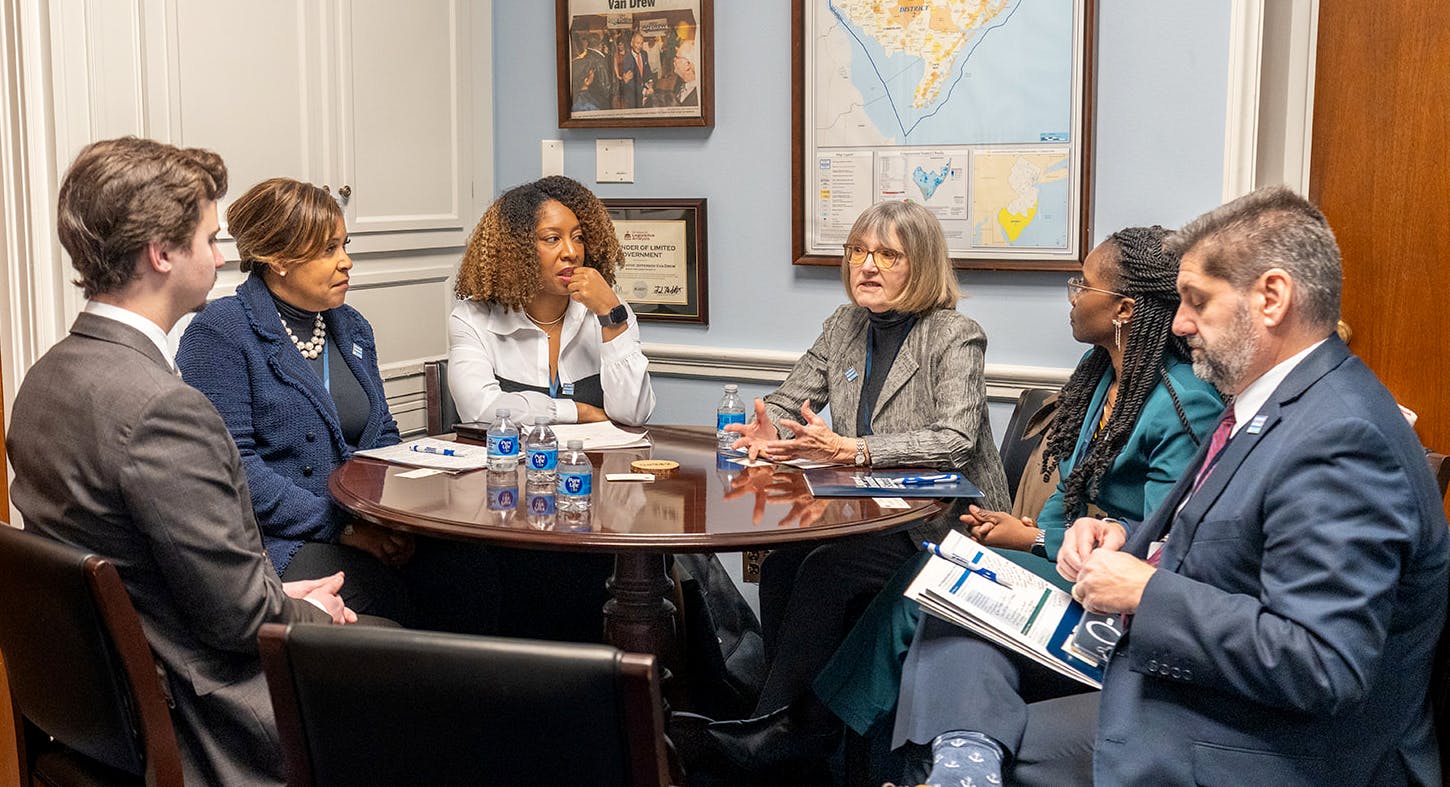
Late last year, Hill, Pittman, and a cadre of other district leaders convened in Washington, D.C. Their collective mission was to advocate for a reimagined approach to funding that would more effectively support robust education R&D. During these critical meetings, leaders shared compelling accounts of how collaborative research and development efforts have driven significant improvements in teaching and learning.
They also discussed actionable strategies for scaling these effective practices more broadly. Their unified call to action included a plea for sustained investment, increased flexibility to dismantle barriers to innovation, and more transparent sharing of research results to accelerate learning and advance equity across the nation. "When you’re surrounded by districts from across the nation, you are reminded that education … is truly a bipartisan issue," Pittman reflected.
"We are somewhat divided now, and this is an opportunity to bring us back together." This sentiment underscores the unifying potential of collaborative, evidence-based approaches to education reform.







 Explore AI Teaching Tools
Comments (0)
Please login to comment
No comments yet
Be the first to comment on this article