
Optimizing Teacher Placement: Ensuring Every Student Benefits from Experienced educators
In the dynamic world of education, the placement of teachers significantly impacts student success and overall school effectiveness.While experience often correlates with pedagogical mastery, data suggests a persistent imbalance in how educators are deployed, with newer teachers frequently finding themselves in the most challenging classroom environments.
This article explores this critical issue, offering insights and strategies for creating a more equitable and effective educational landscape for teachers and students alike.
The Uneven Distribution of Teaching Talent
Research consistently indicates that more experienced teachers are generally more adept at achieving their instructional goals.This suggests a logical approach where seasoned educators, those with a deeper understanding of pedagogy and classroom management, would be strategically placed in classrooms facing the greatest academic and social hurdles.
While many education systems strive for such a balance, a discernible pattern emerges in certain regions: younger teachers, often under the age of 30, are disproportionately assigned to the most demanding teaching contexts.
Conversely, their more experienced counterparts frequently find themselves in less challenging school settings.
This disparity is particularly pronounced when examining specific student needs.
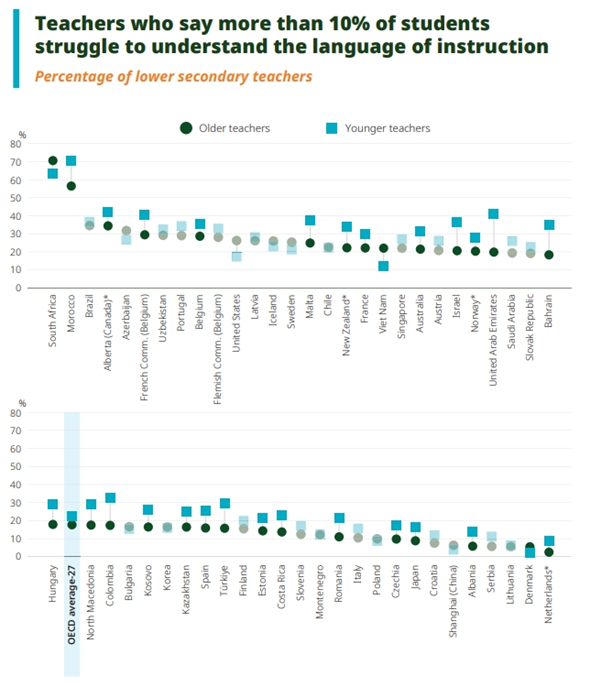
Data from international surveys reveals significant gaps.
For instance, in several countries, teachers under 30 are substantially more likely than their older colleagues to report working with students who have language difficulties.
A similar trend is observed regarding students with special educational needs.
In a notable number of surveyed education systems, younger teachers are more frequently tasked with supporting classes that include a high proportion of students with special needs.
This pattern extends to addressing behavioral challenges as well.
In many educational environments, novice teachers are significantly more likely to report dealing with classrooms where a considerable percentage of students exhibit antisocial or disruptive behaviors.
While one interpretation might suggest that older teachers are simply better equipped to manage challenging behaviors, leading them to report fewer issues, the data strongly points towards a systemic distribution challenge.
These disparities do not merely impact the well-being and professional development of young teachers; they also directly affect the learning trajectories of students and the broader health of the education system.
The Impact on Novice Teachers
Younger, less experienced teachers are often thrust into complex classroom situations during a crucial period of their professional development.This is precisely when they are honing their classroom management skills and building confidence.
Studies indicate that a significant portion of novice teachers identify the need for specialized training in classroom management, often at a higher rate than their more experienced colleagues.
Compounding this, new teachers may also face situations with limited institutional support.
These challenging circumstances increase the likelihood of burnout and can even lead to early departures from the profession.
Consequences for Students
When teachers in demanding classrooms struggle or leave the profession, the students who are already facing significant disadvantages are the ones who suffer most.This creates a cycle of instability, hindering the implementation of long-term strategies aimed at improving educational outcomes.
Students in these environments may experience frequent teacher turnover, disrupting their learning continuity and potentially impacting their academic progress and emotional well-being.
The very students who could benefit most from consistent, skilled instruction are often the ones who experience the least.
Strategies for Equitable Teacher Deployment
Addressing this mismatch between teaching contexts and teacher preparedness requires thoughtful policy interventions and robust support systems.The goal is to ensure that all students, regardless of their background or the challenges their school faces, have access to high-quality instruction from well-supported educators.
Policy Interventions for Balanced Distribution
Several countries have implemented innovative policies to promote a more equitable distribution of teaching talent.One effective approach involves mandatory teacher rotation systems.
In countries like Japan and Korea, teachers are expected to move between schools throughout their careers.
This ensures that all schools, including those in underserved areas, benefit from the expertise of experienced educators and that novice teachers gain exposure to a variety of teaching environments.
Such systems can help to level the playing field and prevent the concentration of less experienced teachers in the most challenging schools.
Incentivizing Placement in Difficult Schools
To attract skilled educators to schools facing greater challenges, various incentives can be employed.These can include: * **Financial Incentives:** Targeted financial rewards, often referred to as "pay rewards," can be a powerful tool.
When well-designed, these incentives can encourage teachers to work in tougher schools and can be more cost-effective than broad salary increases.
These might include bonuses, housing allowances, or stipends for working in high-need areas. * **Career Advancement Opportunities:** Offering accelerated career progression pathways can be highly motivating.
This could involve opportunities for leadership roles, specialized professional development, or mentorship programs designed to support teachers in challenging environments. * **Improved Working Conditions:** Beyond financial incentives, improving the overall working conditions in difficult schools is crucial.
This can involve reducing class sizes, providing additional planning time, offering access to specialized support staff (e.g., counselors, learning specialists), and ensuring adequate resources and materials.
The Power of Collaboration and Mentorship
Beyond individual incentives, fostering a collaborative environment can significantly enhance teacher effectiveness and retention.Programs that pair high-performing schools with lower-performing ones, allowing for the sharing of best practices and mutual learning, can be highly beneficial.
For example, initiatives where teachers and school leaders from different types of schools observe classes together and discuss effective pedagogical strategies can foster a culture of continuous improvement.
Mentorship programs are also vital, particularly for novice teachers.
Pairing new educators with experienced mentors can provide invaluable guidance, support, and a safe space to discuss challenges.
This not only helps new teachers develop their skills but also fosters a sense of belonging and reduces the likelihood of burnout.
Leveraging Technology for Enhanced Support
In remote or underserved regions where access to experienced educators might be limited, technology can play a transformative role.Digital platforms can deliver high-quality instruction and professional development to students and teachers regardless of their geographical location.
This can include: * **Live-Streamed Lessons:** Allowing "master teachers" to deliver lessons remotely to students in underserved schools. * **Virtual Mentoring:** Connecting novice teachers with experienced mentors through online platforms for ongoing support and guidance. * **Shared Digital Resources:** Providing access to a wealth of educational materials and professional development modules that can be accessed anytime, anywhere.
Rethinking Teacher Development and Support
The long-term success of any education system hinges on its ability to attract, develop, and retain talented teachers.This requires a fundamental shift in how we approach teacher deployment, professional development, and the creation of supportive work environments.
Differentiated Career Paths
Countries like New Zealand and Singapore have introduced differentiated career tracks that allow teachers to advance their careers and expertise while remaining in the classroom.This offers alternative pathways for professional growth beyond traditional administrative roles, recognizing and rewarding teaching excellence within the core educational mission.
Such models provide opportunities for teachers to specialize, lead professional development initiatives, or become pedagogical coaches, all while continuing to directly impact student learning.
Creating Valued and Rewarding Work Environments
Ultimately, making disadvantaged schools places where teachers feel valued, supported, and rewarded is paramount.This involves more than just financial incentives; it requires fostering a positive school culture, providing strong and supportive leadership, encouraging collaboration among staff, and ensuring that teachers have the resources they need to succeed.
When teachers feel appreciated and empowered, their job satisfaction increases, leading to greater retention and improved student outcomes.
The current situation, where veteran teachers may gravitate towards institutions with higher academic reputations, better resources, and lighter workloads, is unlikely to change without a concerted effort to rebalance these factors.
Policymakers and education leaders must actively work to create environments in all schools that are conducive to both teacher well-being and student success.
This involves a commitment to smart deployment strategies, robust support mechanisms, and a recognition of the critical role that experienced educators play in shaping the future.
By investing in our teachers and ensuring they are placed where they can have the greatest impact, we invest in a brighter future for all students.
Conclusion
The equitable distribution of teaching talent is a cornerstone of effective education.While experience often correlates with pedagogical prowess, data reveals a persistent imbalance, with younger teachers frequently bearing the brunt of challenging classroom environments.
This not only impacts the professional lives of educators but also has profound consequences for students, particularly those already facing disadvantages.
By implementing strategic policies such as teacher rotation, offering targeted incentives, fostering collaboration, leveraging technology, and creating supportive work environments, education systems can move towards a more balanced and effective model.
Mentofy is committed to supporting educators through comprehensive professional development and resources, empowering them to thrive in all teaching contexts and ensuring that every student benefits from the best possible education.






 Explore AI Teaching Tools
Comments (0)
Please login to comment
No comments yet
Be the first to comment on this article