
California schools' Pandemic Comeback: Strategies for Student Learning Recovery
Five years after the unprecedented disruption of the global pandemic, many students across California are demonstrating remarkable resilience, with some schools successfully navigating the challenges to return to pre-COVID academic achievement levels.
This article delves into the innovative approaches and effective strategies that have propelled these districts forward, offering valuable insights for educators and learning platforms worldwide.
We explore how dedicated districts have re-energized student learning, fostered holistic development, and embraced new educational paradigms to ensure that learning continues to thrive, even in the face of adversity.
The Lingering Impact of the Pandemic on Student Achievement
The global health crisis brought about significant setbacks in education, impacting learning trajectories for millions of students.
In California, the effects were palpable, with notable declines in core academic areas.
Research indicates that the pandemic erased nearly two decades of progress in mathematics and reading proficiency nationwide.
Specifically, between 2019 and 2022, California saw a decrease in average math proficiency by 6.4 percentage points and a drop in reading proficiency by 4 percentage points.
This period underscored the critical importance of sustained in-person instruction and highlighted the vulnerability of students, particularly those from disadvantaged backgrounds, to extended periods of remote learning.
While the overall impact was substantial, studies suggest that early school reopenings and the strategic deployment of federal recovery funds played a modest yet positive role in mitigating some of these losses.
This emphasizes the crucial balance between public health considerations and the imperative of keeping schools open and accessible when it is safe to do so.
Prioritizing high-need students during reopening phases also emerged as a key factor in supporting academic recovery.
The infusion of federal stimulus dollars provided much-needed resources, enabling districts to implement various support systems and extend learning opportunities.
Leveraging Federal Investments for Enhanced Learning and Staff Support
Federal recovery investments, while not directly correlating with immediate test score increases, proved instrumental when districts strategically blended, braided, and sequenced multiple funding streams.
This multifaceted approach allowed schools to extend instructional learning time, bolster staffing levels, and implement targeted learning supports for students.
The analysis of statewide data reveals that districts that effectively channeled these funds into teacher retention efforts and expanded learning time witnessed more significant improvements in student attendance.
Attendance is a fundamental pillar of academic success, and its recovery is a strong indicator of broader student engagement and progress.
The effective use of COVID relief funds was more impactful than the sheer amount of funding received.
Longitudinal case studies of nine California districts revealed substantial organizational changes that have the potential for lasting positive effects.
One significant structural reform involved a renewed emphasis on student well-being.
Prior to the pandemic, student well-being was often considered secondary to academic instruction.
However, the crisis starkly illuminated the necessity of integrating life skills and emotional support into the educational framework.
Consequently, districts invested in new program materials and reallocated resources to hire additional counselors, social workers, and psychologists, thereby increasing student access to school-based support services.
Some districts even took the proactive step of establishing new community centers designed to foster a sense of belonging and provide a central hub for students and their families.
Cross-Sector Partnerships for Whole-Child Development
The pandemic exacerbated an existing national mental health crisis, with prolonged school closures, social isolation, economic anxieties, and the profound loss of loved ones taking a significant toll on students.
In 2021, a concerning 42% of high school students nationwide reported persistent feelings of sadness or hopelessness, and a staggering 32% had contemplated or attempted suicide.
As schools reopened, educators found themselves not only addressing academic learning gaps but also grappling with the complex needs of students related to basic necessities, mental health, and essential life skills, such as interpersonal communication and emotional regulation.
In response, some districts pivoted towards fostering whole-child development.
For instance, Compton Unified School District forged partnerships with community health providers to offer essential health care services, including vaccinations and routine check-ups.
Similarly, Del Norte Unified School District leveraged Medi-Cal reimbursements to facilitate access to mental health counseling and therapy sessions for its students.
The challenges stemming from the pandemic, encompassing academic, behavioral, and life-skills deficits, are likely to persist for years to come.
Therefore, strengthening cross-sector collaborations with public health agencies, social service organizations, and housing authorities is paramount to better equip schools in addressing these multifaceted needs and supporting the holistic development of every student.
School Innovations Driving a Rebound in Student Learning
Beyond overall spending, the strategic allocation of COVID relief funds by districts proved to be a critical driver of student recovery.
The case studies highlighted several key innovations that are likely to endure.
A significant reform involved a deliberate investment in student well-being, recognizing its integral role in academic success.
Districts re-prioritized the integration of life skills into their curriculum and redirected resources to expand their mental health support staff, including counselors, social workers, and psychologists.
This enhanced support network aimed to create a more nurturing and stable environment conducive to learning.
On a smaller, yet equally vital scale, districts invested in career pathway programs.
Institutions like Compton Unified and Milpitas Unified have developed diverse pathways, ranging from e-sports and computer science to early childhood education.
These programs often include on-the-job internships and industry-recognized certifications, playing a crucial role in engaging students and connecting them with tangible employment opportunities.
Such initiatives not only enhance academic engagement but also provide students with a clear vision for their future careers, fostering a sense of purpose and motivation.
Rethinking School Structures and Classroom Practices
Districts also experimented with novel approaches to the fundamental structure of schooling and classroom practices.
Glendale Unified, for example, implemented a seven-period block schedule for its middle and high school students.
This innovative schedule allowed students to incorporate an elective course that aligned with their personal interests, fostering greater engagement and exploration beyond core subjects.
In Poway Unified, a more individualized approach was adopted, where small groups of students met with dedicated teachers and classroom aides to focus on specific skill areas, providing targeted support and personalized attention.
These structural and pedagogical shifts demonstrate a commitment to adapting educational delivery to meet the evolving needs of students.
By offering more flexibility, personalized support, and opportunities for interest-driven learning, schools are actively working to re-engage students and accelerate their academic and personal growth.
The focus is shifting towards creating learning environments that are not only academically rigorous but also responsive to the diverse needs and aspirations of each student.
Digital Innovations: Enhancing Engagement and Addressing Learning Gaps
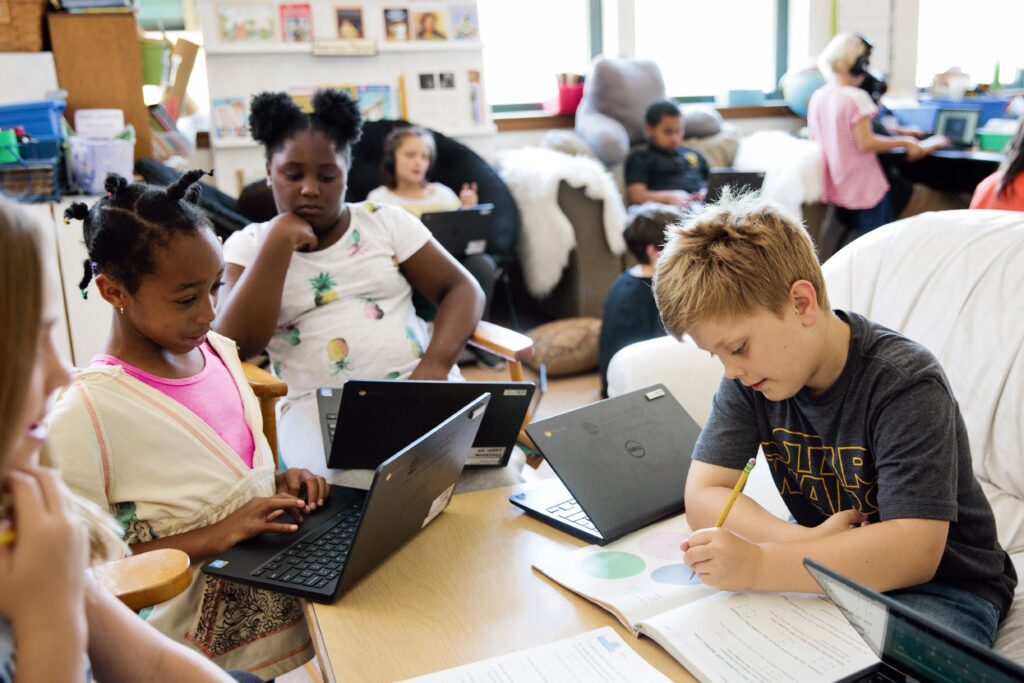
Many districts have embraced digital innovations as a powerful tool to motivate and engage students.
In Poway Unified, for instance, coaches are embedded within classrooms, collaborating with teachers to establish dynamic learning stations.
This model allows advanced students to work collaboratively in teams, freeing up teachers to provide more focused, direct instruction to students who may be at risk of falling behind.
This blended approach leverages technology and differentiated instruction to maximize learning outcomes for all students.
However, the digital divide, while narrowed since the initial shift to remote learning, remains a persistent challenge.
In the spring of 2020, a significant portion of California households with school-aged children – approximately 40% – lacked reliable internet access or adequate devices for distance learning.
While remarkable progress has been made in improving device access, advancements in internet connectivity have been less substantial.
This disparity can be attributed to several factors, including the absence of pre-existing infrastructure in certain areas and ongoing affordability challenges.
Federal and state governments have made substantial investments, such as the federal Broadband Equity, Access, and Deployment Program and California Senate Bill 356, to address these barriers to universal broadband access.
Nevertheless, communities continue to face considerable hurdles in building out necessary infrastructure and ensuring affordable internet solutions for all residents.
Building Resilience for Future Learning Disruptions
The pandemic presented an unprecedented opportunity to reimagine and revitalize public education.
Given the increasing frequency and intensity of natural disasters and other unforeseen events, learning disruptions are likely to become a more common reality for communities across the United States.
By drawing valuable lessons from the resilience and success demonstrated by districts that have navigated the pandemic effectively, we can better prepare for future disruptions.
This proactive approach will enable us to build a more robust and adaptable public education system that consistently supports all students, ensuring that their learning journeys remain uninterrupted and their academic potential is fully realized.
Conclusion
The journey of pandemic recovery in California schools highlights a critical shift in educational philosophy and practice.
Districts that have successfully fostered a rebound in student learning have done so by embracing a holistic approach, prioritizing student well-being, investing in their educators, and strategically leveraging resources.
Innovations in school structures, classroom practices, and digital integration, coupled with strong cross-sector partnerships, have proven instrumental.
While challenges like the digital divide persist, the lessons learned offer a roadmap for building a more resilient and equitable education system capable of meeting the needs of all students, not just in California, but globally.
The focus on comprehensive support, personalized learning, and adaptable strategies is key to ensuring that every student has the opportunity to thrive, regardless of the circumstances.






 Explore AI Teaching Tools
Comments (0)
Please login to comment
No comments yet
Be the first to comment on this article